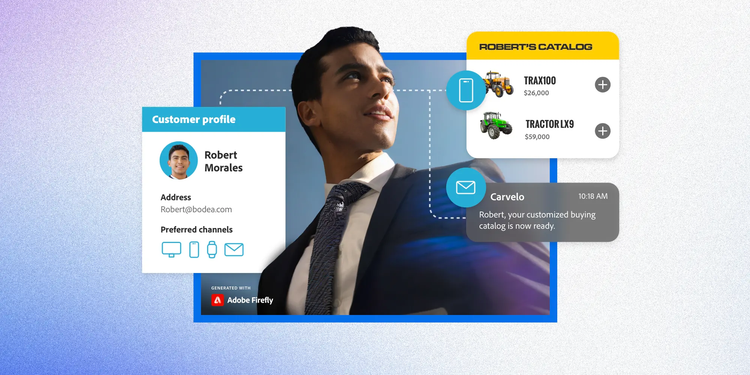
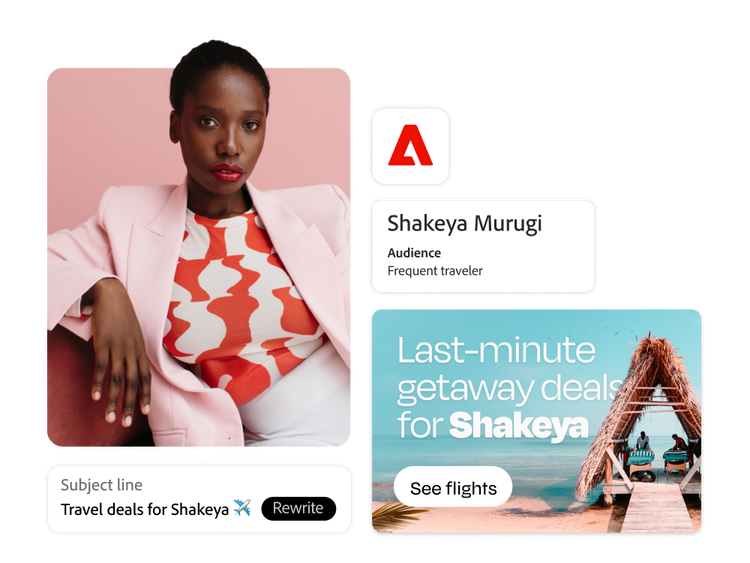
For most people, online shopping goes well beyond visiting a company’s website. Consumers now engage with brands across multiple digital channels – search engines, AI search engines, AI assistants, voice assistants, mobile apps, social media, and more. They expect these experiences to be intuitive and highly personalised.
To stay ahead, brands need to deliver exceptional experiences across every channel, and fast. But for developers working with legacy or fragmented content management systems (CMS), this is no small task.
That’s why businesses of all sizes are increasingly turning to a headless CMS to improve the speed and agility of their digital experiences.
What is a headless CMS?
A ‘headless’ CMS is a content management system that lets you take content from a CMS and deliver it to any front end using the framework of your choice. It separates content from the presentation layer (the head), creating blocks of content that can be delivered in a channel-neutral format to power any channel or experience. This means you can create content once and reuse it everywhere.
Headless content management systems expose content as JavaScript Object Notation (JSON) through well-defined APIs, such as GraphQL or RESTful APIs. Brands then decide how to build their front end, using technologies like Node.js to create dynamic websites. Either way, the CMS doesn’t define the presentation layer.
Watch the video below to see Adobe Experience Manager Sites headless CMS in action and how it can support your omnichannel content strategy.
https://video.tv.adobe.com/v/332865?hidetitle=true
A headless CMS vs. a traditional CMS
A headless CMS separates content from its presentation so the same content can appear on any channel or device, while a traditional CMS binds content and presentation together. This means a traditional CMS typically delivers content through a single channel – usually a web browser. A headless CMS, on the other hand, uses APIs to present a single set of content across multiple channels. That’s why a headless CMS is sometimes called an ‘API-first’ CMS.
The table below details why a headless CMS offers greater flexibility and supports a wider variety of use cases than a traditional CMS.
Benefits of a headless CMS
As brands grow, they add new channels – new social accounts, mobile apps, and more. Without a headless CMS, brands can find themselves duplicating content across multiple platforms, slowing down workflows and reducing content velocity. For example, the same piece of content might need to be customised, coded, and uploaded into a website CMS, a mobile app CMS, and an IoT framework.
A headless CMS removes all these redundancies by unifying content in a single hub, delivering a better customer experience while making it easier for developers to build and ship quickly. Here are just a few of the benefits of a headless CMS.
An effective developer experience
A headless CMS lets developers work faster and more effectively. For example, back-end and front-end developers can work in parallel, provided their efforts are well-coordinated. Equally, developers are no longer tied to a specific application stack to create an experience. With a headless CMS, they can choose the tools and frameworks they know best to build purpose-built applications for delivering content that uses APIs to communicate with back-end content repositories.
Tip: The Adobe Developer Portal for AEM Headless is a great resource for developers who want to learn more about working with a headless CMS.
Simple content updates
Content is constantly evolving as product specs and marketing messages change. When you use multiple traditional CMS platforms, every piece of content on every channel has to be updated individually. With a headless CMS, you can make a change once and push it everywhere in a single action.
Smoother and faster scaling
When you rely on multiple traditional content management systems, adding new channels and touchpoints can mean installing and learning a new CMS, as well as duplicating and customising all your content. With a headless CMS, none of this is necessary – you simply connect it to your new channel.
Consistent brand experiences
When multiple traditional content management systems are in use, the same content can end up coded four or five times to suit four or five different front ends – and each version may look and feel slightly different. A headless CMS removes that problem by letting you reuse content without writing new code, so your customers get a consistent experience across every channel.
Greater security and availability
A headless CMS is more secure than a traditional CMS. Your content publishing tools can’t be accessed from your content database, and your database and other back-end resources can’t be reached from front-end display solutions – making you far less susceptible to DDoS attacks. From an availability standpoint, if the CMS goes offline, your website stays up and running because it’s serverless or hosted on a content delivery network (CDN) that’s separate from the CMS.
Headless CMS use cases
A headless CMS does more than enable a responsive, content-driven experience – it also supports a wide range of business and technical objectives. Once your teams see its potential, they’ll be keen to adopt it across your organisation.
Developers
A headless CMS gives developers the freedom to do what they do best – build faster and deliver exceptional experiences. It lets them work with their preferred systems and cut down on repetitive tasks. For example, with a headless CMS, there’s no need to maintain multiple content repositories or hand-code content updates requested by marketing.
Marketing
With a headless CMS, marketers can spend more time on strategy and content creation, and less time customising content for different channels or managing updates. Instead, they can collaborate on new content and make changes to existing content – all in one place.
Ecommerce teams
A headless CMS makes it straightforward to quickly add content and experiences to virtually any storefront via APIs. It also lets your developers build a highly customised user experience for commerce customers that can differentiate your brand. Read more about getting started with headless ecommerce.
Why use a headless CMS?
The key advantage of a headless CMS is helping enterprises deliver exceptional omnichannel experiences. It’s also an ideal option for fast-growing enterprises that want a future-proof framework for their IT and marketing teams.
But is a headless CMS the right fit for you? Ask yourself the following questions:
- Is personalising content across channels a slow, cumbersome process?
- Do your developers face a steep learning curve, without the freedom to choose the front-end stacks they’re used to?
- Do you have a static website and want to move to a dynamic content experience?
- Is a monolithic system slowing you down? Are you looking to adopt a more agile, decoupled approach and streamline your workflows?
If you answered ‘yes’ to any of these questions, it may be time to consider a headless CMS like Adobe Experience Manager Sites. Our customers are already using it to scale content-powered experiences across all their digital properties.
Find out how Adobe Experience Manager’s headless CMS can help you deliver exceptional experiences everywhere — watch this overview video.
Recommended for you
https://business.adobe.com/fragments/resources/cards/thank-you-collections/experience-manager-sites