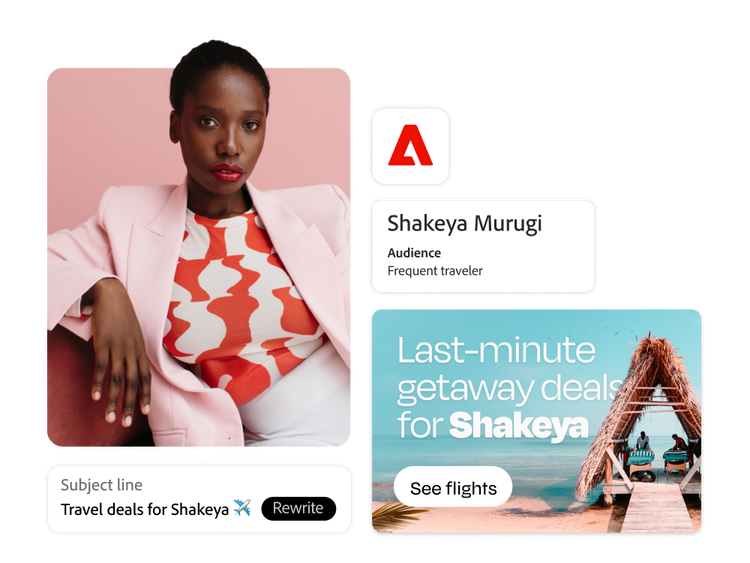
When a banking customer researches home loan rates on a mobile app and then walks into a branch only to be greeted with a generic product pitch, the organisation has failed at coordination, not at marketing. Customer journey orchestration solves this coordination problem by replacing static campaign schedules with adaptive, event-driven responses that shift as the customer's context changes. This article explains what orchestration is, how it works architecturally, and how Australian organisations can evaluate readiness.
What is customer journey orchestration and why does it matter for Australian organisations?
What is customer journey orchestration?
Many Australian organisations reach a tipping point where the number of channels they operate, website, app, email, branches, contact centre, outgrows what manual campaign scheduling can govern. The symptom is familiar: a customer receives contradictory product offers within the same week because each channel operates from its own playbook.
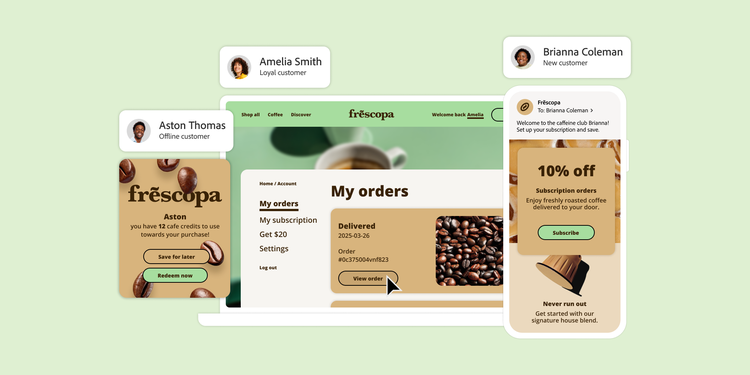
Customer journey orchestration is the practice of coordinating personalised, event-driven interactions across every channel a customer touches, using live behavioural signals rather than pre-scheduled batch sends. It replaces campaign-centric logic with adaptive responses that react as the customer's situation evolves, a basket abandonment, a service call, a branch visit.
Two distinct roles encounter this challenge. Marketing operations teams build and maintain the journeys themselves. CX or digital leaders own the outcome metrics, retention rate, customer lifetime value, and net promoter score, that orchestration is designed to move.
Why does customer journey orchestration matter for multi-channel organisations?
Without coordination, more channels create more noise rather than more value. Each additional touchpoint becomes another opportunity to send irrelevant or contradictory messages.
Australian retail operates across click-and-collect, marketplace, and in-store channels spread over vast geographic distances. A customer who abandons a basket on mobile and then enters a physical store in a regional town expects continuity. Orchestration adapts the follow-up channel and timing based on that in-store signal without requiring a separate campaign build.
In banking, customers interact across branch networks, mobile apps, online portals, and call centres. When a customer researches a home loan online and then visits a branch, orchestration ensures the adviser sees that research context, reducing friction and shortening the sales cycle rather than defaulting to a generic pitch.
Government digital services face a parallel challenge: coordinating citizen interactions across myGov, agency-specific portals, and physical service centres. Orchestration prevents contradictory messaging and reduces repeat contacts that drive up cost-to-serve.
The business implication is direct: organisations that coordinate cross-channel journeys eliminate redundant messaging and resolve friction before it escalates to churn.
How does orchestration differ from journey mapping and journey management?
Confusion between these three disciplines is common, and conflating them leads to under-investment in the wrong layer.
Journey mapping is a retrospective, workshop-driven exercise that produces a static visual of existing touchpoints. It answers "what does the customer journey look like today?" but cannot act on that insight. An Australian insurer might map its claims journey yet still send irrelevant cross-sell emails the following day because no system connects the map to execution.
Journey management adds measurement and governance, tracking stage-level KPIs and assigning ownership, but still operates on pre-planned campaign logic with batch sends.
Journey orchestration closes the loop: it ingests live behavioural signals and triggers the next-best action across channels within milliseconds, adapting the path as context changes.
Dimension
Journey Mapping
Journey Management
Journey Orchestration
Nature
Static artefact
Governed process
Dynamic system
Trigger type
Manual
Scheduled
Event-driven
Channel scope
Single-channel documentation
Multi-channel measurement
Omnichannel execution
Decisioning
None
Rule-based batch
AI-driven real-time
What does an orchestration architecture look like in practice?
Most competitor explanations describe implementation steps without explaining the underlying mechanism. The architecture has three interdependent components, each with a direct business consequence.
Unified customer profile. Behavioural, transactional, and declared-preference data from every channel feeds a single identity graph. This requires data normalisation across source systems so that a mobile app event and a branch interaction resolve to the same individual. Without this, the decisioning engine cannot distinguish a high-value repeat buyer from a first-time browser, the business cost is irrelevant messaging and wasted media spend.
Real-time decisioning engine. An AI-driven layer evaluates the customer's current context against business rules and propensity models to select the next-best action. Decisions occur in milliseconds rather than waiting for the next batch campaign run, which can mean the difference between recovering an abandoned basket and losing the sale entirely.
Channel execution layer. The selected action is delivered through the optimal channel, push notification, email, in-app message, or agent prompt, based on the customer's demonstrated preferences and recency of engagement. The system must also suppress actions when the customer has already converted or opted out.
Consider a telco customer in Brisbane who checks plan upgrade pricing on the provider's app, then calls the contact centre. Orchestration ensures the agent sees the pricing check and can proactively offer the upgrade rather than running through a generic retention script.
Effective data governance controls underpin the entire process. Organisations must ensure the behavioural signals feeding the orchestration engine comply with the Privacy Act 1988 and Australian Privacy Principles (APPs), and that consent is honoured at each channel touchpoint.
What challenges arise when implementing orchestration?
Orchestration fails most often not because of technology limitations but because of organisational and data readiness gaps.
Data silos. Many Australian enterprises still operate channel-specific databases, POS, CRM, web analytics, call-centre logs, that were never designed to share identifiers. Resolving identity across these systems, particularly when legacy platforms lack API-first architecture, is the single largest technical barrier.
Organisational alignment. Orchestration requires marketing, IT, and customer service to share ownership of the journey. In practice, this means dismantling campaign-centric team structures and establishing cross-functional journey squads, a shift that stalls without executive sponsorship.
Privacy Act 1988 and APPs compliance. Cross-channel data linkage must respect consent boundaries. Orchestration platforms must support granular consent management, for example, honouring a customer's preference to receive push notifications but not SMS, to avoid enforcement risk under the OAIC's regulatory framework.
Skill gaps. Real-time decisioning models need ongoing tuning and monitoring. Organisations without in-house data science capability may need to begin with rule-based orchestration before graduating to AI-driven models, accepting a slower but lower-risk path to maturity.
What trends are shaping orchestration in Australia?
The orchestration landscape is shifting from rule-defined paths to predictive, AI-driven models, but the transition is not uniform, and Australian organisations face specific pressures that shape adoption.
AI-powered content creation is accelerating the production of personalised assets at scale, enabling orchestration engines to serve variant creative per segment without manual design bottlenecks. This removes a practical constraint that previously limited how many journey branches an organisation could realistically maintain.
Generative AI is shifting decisioning from rule-based to predictive: instead of marketers defining every if/then path, AI models propose journey branches based on observed behavioural patterns and predicted outcomes. Organisations typically progress through a maturity curve, rule-based orchestration first, then AI-assisted recommendations with human approval, then fully autonomous decisioning for low-risk interactions.
Privacy-first orchestration is becoming non-negotiable. As the OAIC increases enforcement activity and consumers become more consent-aware, orchestration platforms must embed privacy controls natively. Consent becomes a real-time signal that shapes the journey, not a compliance checkbox applied after the fact.
Composable architecture is gaining traction among Australian enterprises that prefer modular orchestration stacks (CDP + decisioning + channel layer) rather than monolithic suites, allowing them to swap components as needs evolve without re-platforming entirely.
How should your organisation evaluate and adopt orchestration?
Adopting orchestration before your data foundation is ready creates inconsistent experiences that damage trust rather than build it. The right entry point depends on your current maturity.
If your organisation operates fewer than three active channels and a single customer database, start with journey mapping to identify friction points before investing in orchestration tooling. The complexity overhead is not yet justified and the ROI will be difficult to demonstrate internally.
If you operate across four or more channels with fragmented data, prioritise a customer data platform implementation first. Use data analysis and visualisation tools to identify where journey breakdowns occur before selecting orchestration technology.
If you already have a CDP and cross-channel presence, evaluate orchestration platforms on three criteria: real-time decisioning speed (milliseconds, not minutes), native channel integrations (reducing custom development), and AI model transparency (can you audit why a specific decision was made for a specific customer?).
Adobe Journey Optimizer, part of Adobe Experience Platform, provides an enterprise-tier example of this capability, combining real-time profile unification, AI-driven next-best-action decisioning, and native integrations across email, push, SMS, and web. It is designed for organisations that need to orchestrate individualised journeys at scale while maintaining robust data governance and privacy controls.
Decision checklist for internal alignment:
- Audit current channel count and data maturity.
- Define two to three high-impact journeys to pilot.
- Secure cross-functional sponsorship from marketing, IT, and customer service leadership.
- Select tooling that matches your current maturity, rule-based for early stages, AI-driven for scale.
Customer journey orchestration is not a single technology purchase, it is an operating model shift. The organisations that succeed are those that match ambition to readiness and build incrementally rather than attempting full automation on day one.
Discover how Adobe Journey Optimizer helps Australian organisations orchestrate real-time, personalised experiences across every channel. Explore Adobe Journey Optimizer.
Recommended for you
Title
Customer journey orchestration: what it is and how it works
CardDescription
Learn what customer journey orchestration is, how it differs from mapping and management, and how Australian organisations use it to deliver real-time, personalised experiences.
cardDate
2026-09-09
cardImage
primaryTag
caas:content-type/blog
Tags
caas:content-type/blog, caas:products/adobe-journey-optimizer, caas:topic/campaign-management, caas:blog-author/adobe-for-business-team