
What is multivariate analysis? A starter guide.

Adobe for Business Team

02-19-2026

Marketing leaders are inundated with many different data sources and metrics. But are they the right ones? Simple, single-variable reports, like click-through rates or last-touch attribution, can be dangerously misleading because they don't tell the whole story. This is the core difference when comparing univariate vs. multivariate analysis. While univariate analysis looks at one variable at a time, like KPIs, true business success is never the result of a single factor. It's the product of a complex interplay between the audience, the creative, the channel, the offer and dozens of other variables.

This post will cover:

What is multivariate analysis?
Why is multivariate analysis important?
When is multivariate analysis unnecessary?
How to conduct multivariate analysis
Multivariate analysis best practices
Operationalise multivariate analysis with Adobe Customer Journey Analytics

What is multivariate analysis?

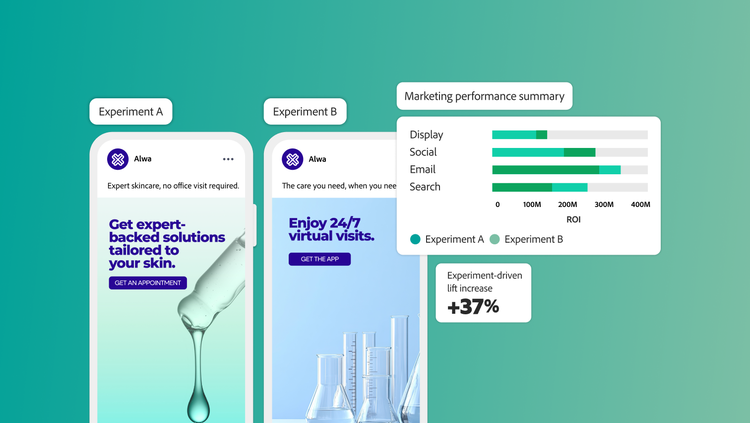
Multivariate analysis (MVA) is a statistical technique that examines multiple variables simultaneously. MVA provides the framework to analyse three or more variables, such as demographics, behaviour and trends, revealing patterns that remain hidden in isolation.

What are the different types of multivariate analysis?

Selecting the appropriate multivariate analysis technique requires a strategic understanding of your business variables and their relationships.

The critical first step is distinguishing between dependant and independent variables within your business context:

This determines which analytical framework your organisation should deploy:

Clearly defining your variables upfront ensures alignment between your analytical methodology and business objectives. Each technique requires specific data structures and assumptions since misalignment can lead to flawed insights and misguided strategic decisions.

Why is multivariate analysis important?

Adopting a multivariate approach to your marketing analytics provides a profound competitive advantage. It allows you to move from observing what happened to understanding why it happened, enabling you to influence what happens next. The benefits of data-driven decision-making with this method are clear.

Uncover the hidden drivers of conversion.

Is it the new ad creative, the specific audience segment, the time of day or the combination of all three that is driving sales? Multivariate analysis is the only way to answer this — identifying the most impactful combination of factors that lead to conversions.

Optimise the marketing mix and ROI.

By analysing how different channels and campaigns work together, you can make far more intelligent budget allocation decisions. Multivariate analysis provides this view, showing you where to invest for the highest return.

Enhance customer segmentation and personalisation.

This approach can reveal powerful new audience segments you didn't know existed. For example, you might discover that your most valuable customers are those who interact with both your mobile app and email newsletters. This insight allows for more precise and effective personalisation.

Predict customer behaviour and reduce churn.

By analysing the combined factors that precede customer churn, you can build predictive models that identify at-risk customers before they leave. This allows you to proactively intervene with retention campaigns, directly protecting your revenue base.

When is multivariate analysis unnecessary?

Multivariate analysis delivers significant value but isn't required for every business question. The key is matching analytical sophistication to decision-making needs.

Use simpler methods when:

Deploy multivariate analysis when:

Best practice: Staged approach

Begin with univariate analysis to establish baselines and understand individual metrics. Progress to bivariate analysis to explore relationships. Deploy multivariate techniques when you need to model complex interactions and develop actionable strategies. This ensures analytical efficiency while building the foundation for robust insights.

How to conduct multivariate analysis.

Five core analytical objectives.

Before selecting a technique, identify your business goal. Multivariate analysis addresses five distinct objectives:

The implementation process.

Phase 1: Strategic alignment

Phase 2: Model development

Validate statistical assumptions. Every technique requires specific conditions:

Build and evaluate. Estimate the model and assess the fit. Are results statistically significant and practically meaningful?

Interpret and validate. Translate outputs into business insights. Test findings against held-out data before making strategic decisions.

Phase 3: Operationalisation

Deploy insights to inform budget allocation, customer targeting, forecasting or other strategic actions.

Multivariate analysis best practices.

High-quality analysis requires high-quality data. Organisations that invest in consistent data collection and governance achieve more accurate results, faster insights and greater decision confidence. Establish strong data foundations before building complex models.

Complex techniques like neural networks carry significant costs: increased processing time, reduced stakeholder understanding and specialised maintenance requirements.

Use the simplest method that adequately addresses your business question. A model that stakeholders understand and trust often delivers more business value than a complex algorithm that's marginally more accurate but difficult to explain.

Match complexity to context.

Tailor your approach to the use case:

The optimal balance between analytical power and practical utility varies by application.

Operationalise multivariate analysis with Adobe Customer Journey Analytics.

Historically, multivariate statistical analysis has been a manual, time-consuming process reserved for statisticians who ran complex tests like multivariate regression analysis. The biggest challenge was that it was slow, expensive and inaccessible to marketing teams.

Today, the most significant change is its democratisation through technology. AI and machine learning are now embedded into modern analytics platforms, automating these complex calculations and surfacing insights for marketing leaders and their teams without requiring a degree in statistics.

While the strategic value of multivariate analysis is clear, the main challenge is making these powerful techniques accessible to marketing teams who need insights quickly, without statistical expertise or data science dependencies.

Customer Journey Analytics solves this problem.

Built for enterprise marketing organisations, Customer Journey Analytics delivers sophisticated multivariate capabilities through an intuitive platform:

Marketing teams gain the analytical depth of multivariate methods with the speed and accessibility that modern decision-making demands.

Ready to elevate your marketing analytics?

Discover Customer Journey Analytics and transform how your organisation turns data into a competitive advantage.

https://business.adobe.com/fragments/resources/cards/thank-you-collections/customer-journey-analytics