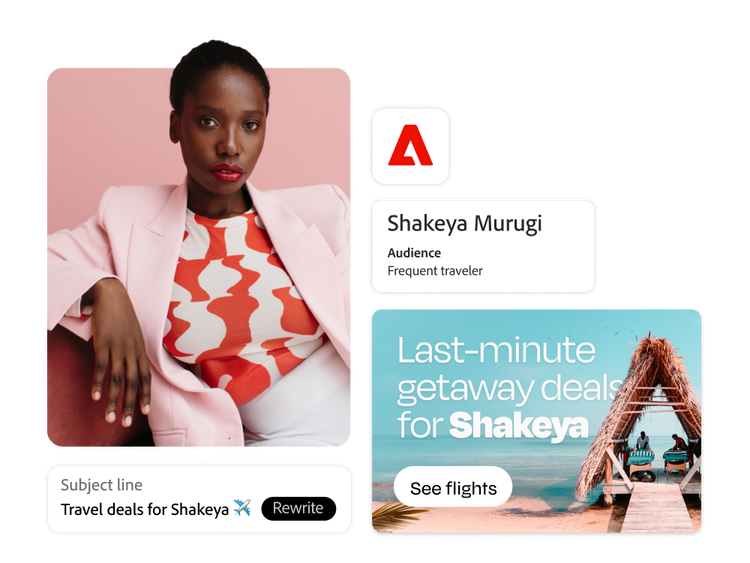
Today’s digital world is saturated with marketing campaigns. To save time and avoid information overload, people prefer to encounter messaging that matches their specific needs and wants. As technology advances and more data becomes available, businesses can tailor their advertising to better reach the right audiences and improve conversion rates.
At the same time, growing concerns around privacy and data use can’t be ignored. While personalisation is a powerful way to connect with potential customers, it’s important for marketers to be clear and responsible about how that data is collected and used.
This article will explore:
What is ad personalisation?
Ad personalisation is the practice of tailoring ads to individual users based on how relevant they’re likely to be at a given moment in their customer journey. To do this effectively, marketers rely on insights gathered from user behaviour and characteristics.
A wide range of data points can inform this process, including location, demographics, purchase history and general interests. Over time, this information is used to build user profiles that can be segmented and automated, making it easier to deliver more relevant, targeted campaigns and experiences.
How to create personalised ads.
Building a personalised campaign requires a mix of strategic segmentation and modern technology. The following steps will help to give you a foundation to find potential customers and filter your ads based on their preferences.
Identify an audience.
Get to know your customers and potential customers. To shape the perfect personalised experience, you’ll need to know who you’re aiming to target with your ad. Define which traits and characteristics make up the group you’d like to reach and collect data in areas where you have gaps.
Determine how you want to personalise.
Determine the end goal of your ad personalisation. This will allow you to plan the steps you’ll need to take to reach that destination. For example, if your objective is to get people to purchase a new product, your strategy should involve ads promoting it to consumers who have demonstrated a high buying intent.
Leverage generative AI and automation.
Generative AI tools can enhance Dynamic Creative Optimisation (DCO) by helping marketers create and test variations of headlines, images and calls-to-action. DCO platforms then use audience data and performance signals to automatically assemble and serve the most relevant combinations.
While some systems can generate new creative variations, most operate within predefined assets or brand guidelines, optimising ads for specific audience segments rather than fully individualised experiences.
Build unique landing pages.
After a consumer clicks an ad, you’ll want to ensure that the landing page is highly personalised as well. Rather than a “one-size-fits-all” approach, your landing page should be relevant to the ad and meet the user’s needs.
Prioritise ethical data practices.
Finally, focus on building trust with your audience through transparency and ethical data practices. If you avoid sharing details about how you use data or go too far with personalisation tactics, you can drive away customers. Prioritise adding value to their experiences and strengthening your credibility through clear messaging.
Personalised ad types and examples.
Personalisation can take many forms depending on where the user is in their journey. Here are some effective types:
Retargeted ads.
One of the most common uses of personalisation is reaching consumers who are already familiar with your product. For example, if a customer added a product to a basket online but didn’t end up buying it, you can leverage this data by sending them a targeted ad with that specific product. This reminder often nudges the customer to take action, increasing the likelihood of conversion.
Contextual advertising.
Contextual advertising places ads based on the content someone is currently viewing rather than their past behaviour. For instance, an ad for hiking boots appearing with an article about the “Best Trails in the Rockies” aligns with the user’s immediate interests, without relying on personal data or tracking.
Predictive recommendations.
Using machine learning, brands can promote products a user hasn’t interacted with yet but is likely to be interested in based on patterns across similar audiences or past behaviour. For example, a fitness apparel brand might show ads for running shoes to someone who recently purchased workout clothing and follows running-related content, even if they haven’t searched for shoes directly.
Effectiveness of personalised advertising.
Personalised advertising helps you to reach the right people at the right time, which can directly improve click-through and conversion rates. By focusing on audiences who have already shown interest in what you offer, you can reduce wasted ad spend and get more value from your campaigns.
For consumers, personalisation acts as a filter, making it easier to find products and content that matter to them. When done well, it can build trust and loyalty by turning ads from interruptions into helpful, relevant suggestions. This is important because expectations have shifted; most people now prefer brands that recognise their preferences and offer recommendations that feel tailored to them.
The key is the value exchange. Ultimately, your strategy should focus on solving specific pain points or simplifying the customer journey.
Measuring key performance indicators (KPIs).
To understand the impact of your personalisation efforts, you should track the following metrics:
- ROAS (Return on Ad Spend): Measures the gross revenue generated for every dollar spent on advertising
- CAC (Customer Acquisition Cost): Tracks how personalisation reduces the cost of winning a new customer by targeting higher-intent users
- LTV (Lifetime Value): Evaluates if personalised onboarding and ads lead to longer-term customer retention
- Conversion Rate Lift: The percentage increase in conversions when comparing personalised ads against generic "control" ads
Data and privacy in personalised ads.
Effective personalisation requires data, but methods have evolved from third-party tracking toward building direct relationships. As the use of third-party cookies declines, brands are shifting their focus to more reliable and transparent data sources, including:
- First-party data: This includes information you collect directly from your own channels, such as website interactions, app usage and purchase history. It is highly reliable because you own the data and the direct relationship with the user.
- Zero-party data: This is information a customer intentionally and proactively shares with you, such as preference centre selections, interactive quiz results or survey responses. Because users provide this specifically to receive a better experience, it is the most accurate and ethical data available.
This shift is driven by a surge in privacy consciousness. Frameworks like Apple’s App Tracking Transparency and consent management platforms now give users direct control over their digital footprint. By unifying these signals into a unified customer profile, brands can move beyond intrusive tracking to provide a seamless experience that balances high-value personalisation with transparency.
Getting started with ad personalisation.
Ad personalisation paves the way for reaching the right consumers and growing your business. When you’re ready to begin building your ad personalisation strategy, make sure to start by collecting sufficient data and exploring a solution suited to your needs.
Managing data and personalising ads can be easy with the right tools. Adobe Target can help your company deliver the right experiences to every single customer at scale, thanks to A/B and multivariate testing, unified customer profiles and precise optimisation.
If you’re looking to focus on creating content based on customer journey stages, you’ll want to consider Adobe Campaign. The solution makes it simple to control online and offline journeys, delivering personalised, unified experiences across channels.
Learn more from this Adobe Target video and interactive tour of Adobe Campaign.
Recommended for you
https://business.adobe.com/fragments/resources/cards/thank-you-collections/generic-dx