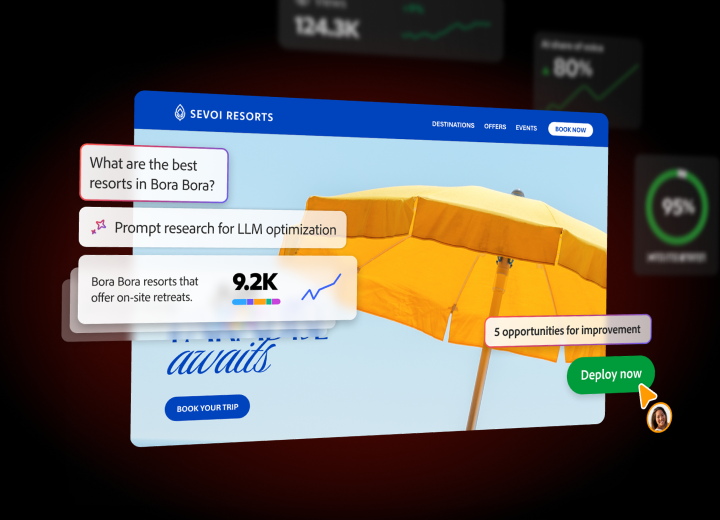
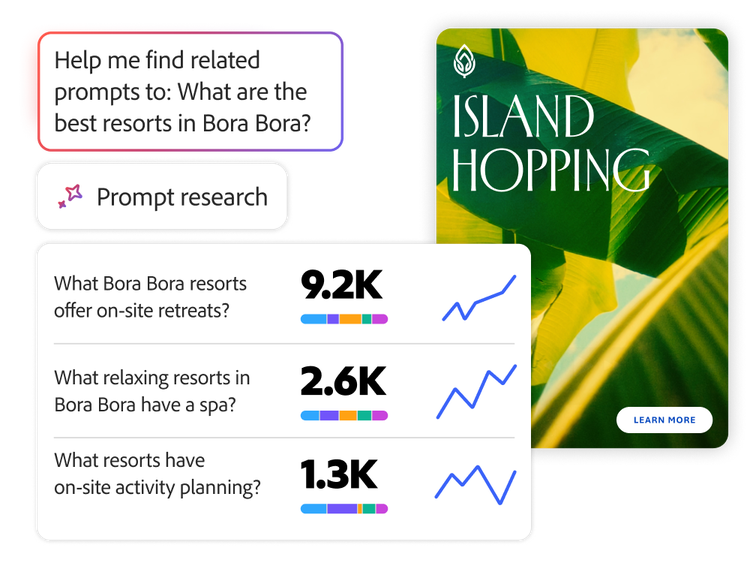
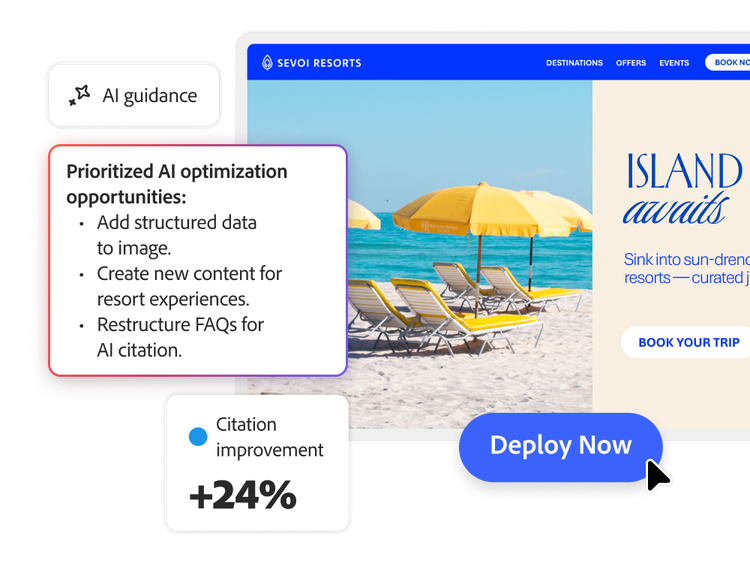
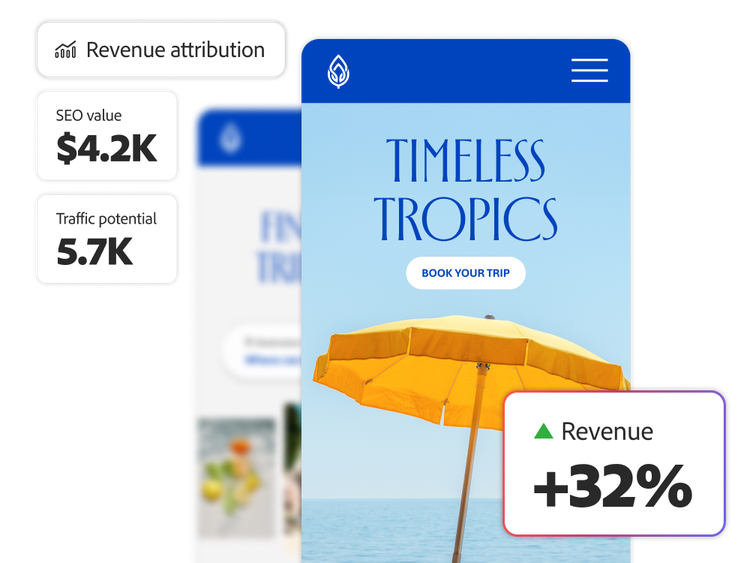
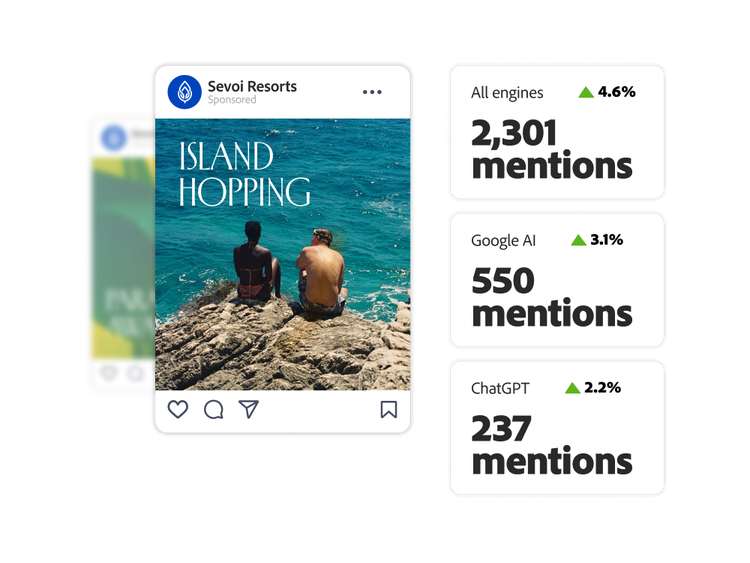
Adobe Brand Visibility is Adobe's unified generative engine optimisation (GEO) product for enterprises. It enables teams to measure brand presence across AI-generated answers, identify optimisation opportunities through SEO-powered analysis, deploy improvements at the CDN edge without engineering, collaborate across the full marketing organisation and prove business impact through native integration with existing analytics environments.
Adobe Brand Visibility is built for the AI era. While traditional SEO tools optimise for search engine rankings, Brand Visibility focuses on how AI systems — ChatGPT, Microsoft Copilot, Perplexity, Google AI Mode and others — discover, cite and represent your brand. It connects SEO signals to AI citation outcomes because AI-generated answers are built on the same foundations as search. You get both dimensions in one system.
Adobe Brand Visibility intercepts AI agent requests at the CDN layer and serves optimised content in minutes — with no CMS update, no engineering sprint and instant rollback. This is categorically different from a content publishing workflow. Optimisations target AI agents only and have no effect on human visitor experience or existing SEO signals.
Adobe Brand Visibility integrates natively with Adobe Analytics and Customer Journey Analytics. CDN log verification provides server-level confirmation that AI bots read your updated content and that signal is connected to revenue, conversions and engagement inside the reporting environment your organisation already uses. No customised tagging, no separate reporting silo.
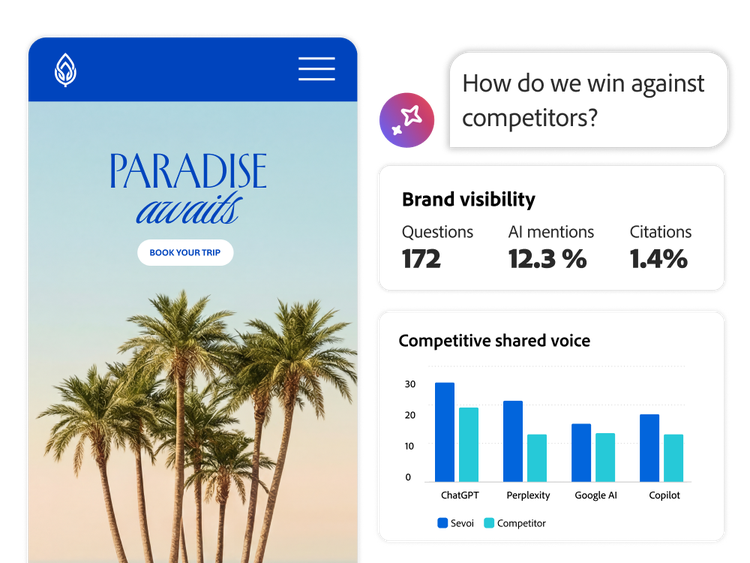
Brand Visibility tracks brand visibility across ten LLM families, including ChatGPT, Perplexity, Google AI Mode, Anthropic Claude and Microsoft Copilot, with competitive share-of-voice benchmarking against up to five direct competitors. Coverage spans more than 25 languages with state and city-level breakdowns.
No. CDN-edge deployment is compatible with Fastly, Akamai and Cloudflare — it's not exclusive to Adobe Experience Manager. The intelligence, opportunity identification and attribution capabilities work across technology stacks.
Adobe Brand Visibility is designed for the teams responsible for brand discoverability and digital growth, including SEO teams, content strategists, digital marketing teams, web experience teams, analytics practitioners and brand leaders. The tool provides a shared workspace that helps teams align around visibility opportunities, optimisation priorities and business outcomes.