ADOBE REAL-TIME CDP FEATURES

Harmonized data access

Give teams across the organization flexible access to actionable, up-to-date profiles and data, so they can confidently deliver consistent, engaging, and personalized experiences.

Experience Data Model (XDM)

Standardize how customer data is managed across teams, systems, and tools with an industry-standard, open-source data model that can be leveraged with B2C and B2B data from any channel.

  • Open-source model. Analyze consumer behavior by tapping into an extensible channel-agnostic data model.
  • Interoperability. Apply a thorough understanding of data across all business units to increase consistency between applications.
  • Pre-built schemas. Power internal workflows using out-of-the-box B2B and B2C data schemas, or customize them to intake insights faster and fulfill your unique enterprise data needs.

Data preparation

Validate data to ensure cleanliness and integrity during the ingestion process.

  • Data transformation. Apply manipulation functions — such as string, numeric, and data manipulation — to augment data pre-ingestion.
  • Custom calculations. In advance of mapping to XDM, create custom calculated fields that can be assigned to attributes.
  • Preview. View the data as it is manipulated for verification.

Monitoring

View the journey of your data — from ingestion to activation — to ensure you reach your goals.

  • Dashboard views. See data from sources, identity service, real-time customer profiles, audiences and finally — as it makes its way to activation — via destinations.
  • Easy filtering. View data by type, such as customer and account, prospect, and account profile enrichment.
  • Status update by stages. View specific metrics and statuses depending on the stage of your data.
  • Notifications. Receive specified notifications and alerts based on specific conditions.

Real-time customer profile data

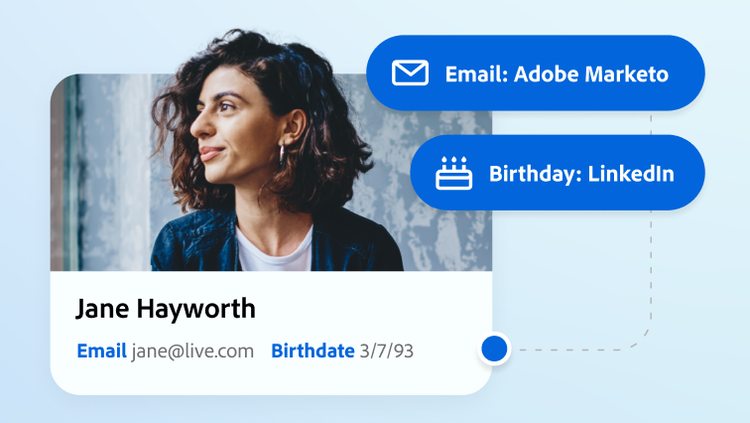
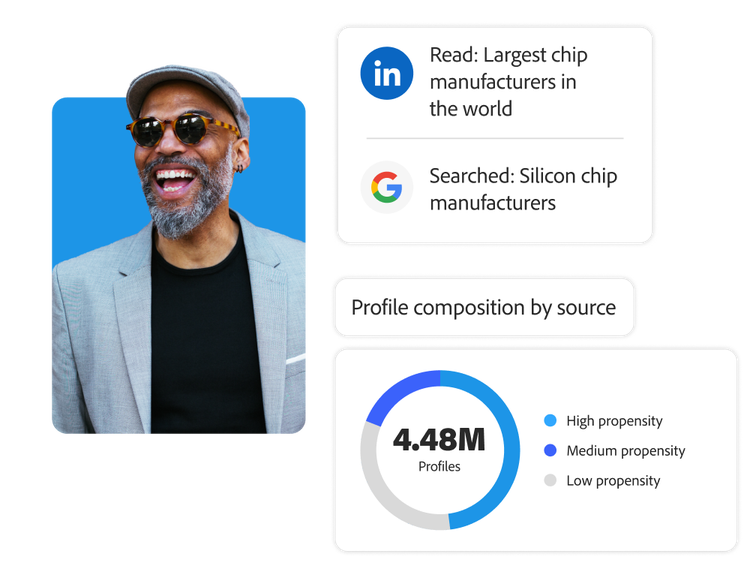
Establish a consistent customer view with a single, unified profile created from both online and offline sources. Profile data can be validated by building profile snapshots, metrics, and detailed views.

  • B2C, B2B, and hybrid profiles. Link B2C customer data and B2B account data within a single unified profile that spans audiences and lines of business.
  • Warehouse-specific workflows. Create and enrich audiences directly from customer data warehouses using a federated approach to minimize data movement.
  • Real-time. Update profiles instantly as customers interact with your brand.
  • Validation and dashboarding. Validate and understand profile data through profile snapshots, metrics, and detailed views.
  • Differentiated data for use cases. Maintain separation between customer and prospect profiles for flexibility in supporting various marketing motions.

Use case playbooks

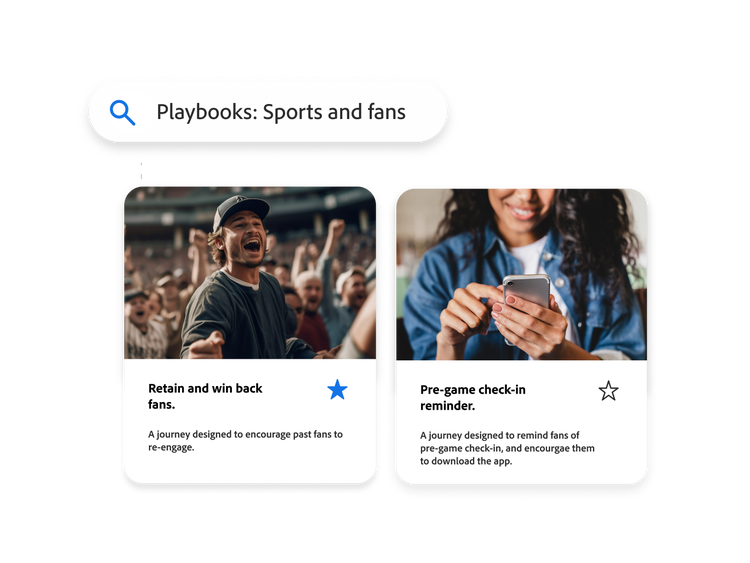
Accelerate time to value by leveraging a catalog of pre-defined, marketer-friendly workflow templates that allow teams to quickly ideate and stand-up new campaigns.

  • Industry-specific playbooks. Browse a catalog of more than 40 turnkey playbooks curated by industry for business-focused prioritization.
  • Auto-translated marketing goals. Use a customizable package of technical artifacts that can be integrated into an existing experience data model.
  • Marketing and technical team collaboration. Facilitate use-case prioritization with IT teams and align marketing strategy to enterprise KPIs via in-product workflows.
https://business.adobe.com/fragments/products/modal/videos/real-time-customer-data-platform/audience-management/use-case-playbooks#use-case-playbooks | Use-case playbooks demo video | :play-medium:

Product Support Agent conversation on product support.

Product Support Agent

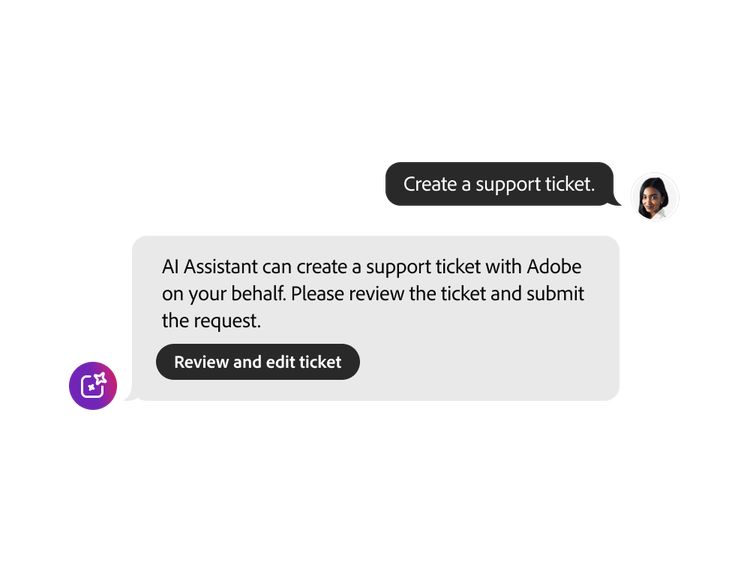
Empower your teams to quickly and easily troubleshoot, diagnose, and escalate product issues with Product Support Agent. Tap into interactive guidance for more efficient self-service support — powering faster time to resolution and increased productivity.

  • Troubleshooting. Use natural language prompts to get quick answers to common questions based on expert-curated documentation.
  • Case creation. Initiate support cases directly from AI Assistant, which automatically captures contextual insights such as chat logs, IDs, and issue descriptions for accelerated case resolution.
  • Case tracking. Seamlessly track the status of your support cases.

Learn more about Product Support Agent.

Content as a Service v3 - Learn more about Product Support Agent. - Tuesday, January 13, 2026 at 16:50


More about harmonized data.

https://main--da-bacom--adobecom.aem.live/fragments/products/cards/rtdcp/actionable-unified-profiles/more-actionable-data-profiles

Learn how to use harmonized data features.

Find what you need in Experience League, our vast collection of how-to content — including documentation, tutorials, and user guides.

Learn more | Learn more on how to use actionable unified profile features

Questions? We have answers.

How does Real-Time CDP turn data from different systems into one profile?
Real-Time CDP standardizes, validates, and connects data from online, offline, and pseudonymous sources into a single real-time customer profile. Each source is structured to a common data model, so a field means the same thing everywhere, validated as it is ingested so quality issues are caught early, and resolved to a person through identity matching so separate records become one profile. The result is one continuously updated view of each customer that activation, analysis, and orchestration all draw from, rather than a different version of the truth in each tool.
How does Real-Time CDP make sure every team is working from the same customer profile?
Every team works from the same profile because Real-Time CDP maintains one cohesive customer view that is continuously updated from all connected sources, rather than exporting copies to each tool. Standardized data structures, validation at ingestion, and identity resolution across devices and systems mean the profile a marketer targets, the one an analyst measures, and the one an orchestration tool acts on are the same record. That shared profile is what keeps audiences, reporting, and messaging consistent instead of drifting apart across teams.
How does Real-Time CDP match identities across devices and systems, and does it guess?
Real-Time CDP resolves identities deterministically, using known, matching identifiers across standard and custom namespaces rather than probabilistic guessing. Identity data is ingested, validated, and mapped into an identity graph that links a person's devices, logins, and identifiers, so an anonymous device and a known email can be recognized as the same person when a shared identifier appears. Because resolution is deterministic, the linkage is based on real matched identifiers, which is what lets you act on the unified profile with confidence for both known customers and prospects.
Do I have to map my data to Adobe's schema (XDM) to use Real-Time CDP?
Yes, data is organized to the Experience Data Model (XDM), and that standardization is what makes harmonization possible, but Real-Time CDP does much of the mapping for you. Prebuilt source connectors auto-map common fields to standard XDM schemas as data is ingested, and you review and adjust the mapping rather than modeling everything from scratch. Standard schema classes exist for both consumer and B2B (people and account) data, so the mapping effort scales with how custom your data is, not with every field.