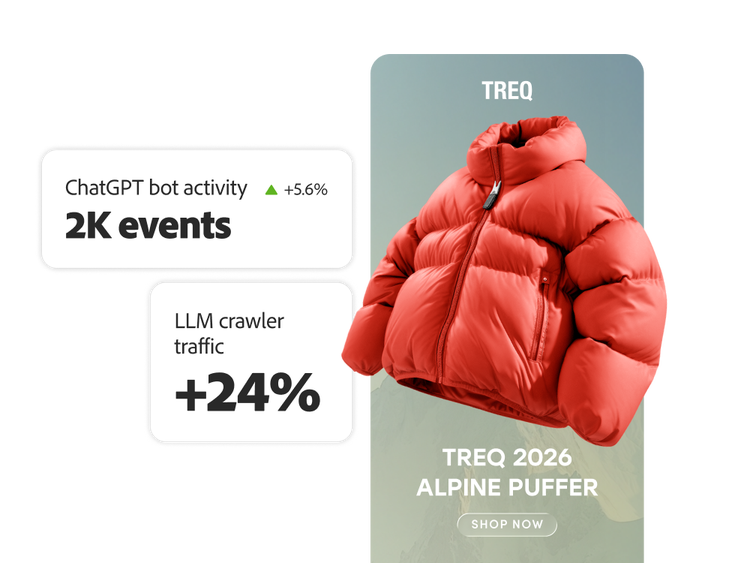
Adobe Customer Journey Analytics lets you tag and classify LLM and AI traffic using derived fields based on user agent, referrer, and query parameters, so you can separate AI-generated interactions from human behavior and keep KPIs accurate. You can then build segments and dashboards to trend AI traffic volume, journeys, and downstream conversions alongside your existing channels.
Conversation and AI interaction data is ingested into Adobe Experience Platform, modeled in Adobe Experience Data Model, including intents, topics, sentiment, and outcomes, and then joined with web, app, and offline datasets in Customer Journey Analytics to create full cross-channel journeys. This lets you attribute downstream behaviors — such as purchases, churn, or support resolution — to specific AI conversations and measure their impact on KPIs over time.
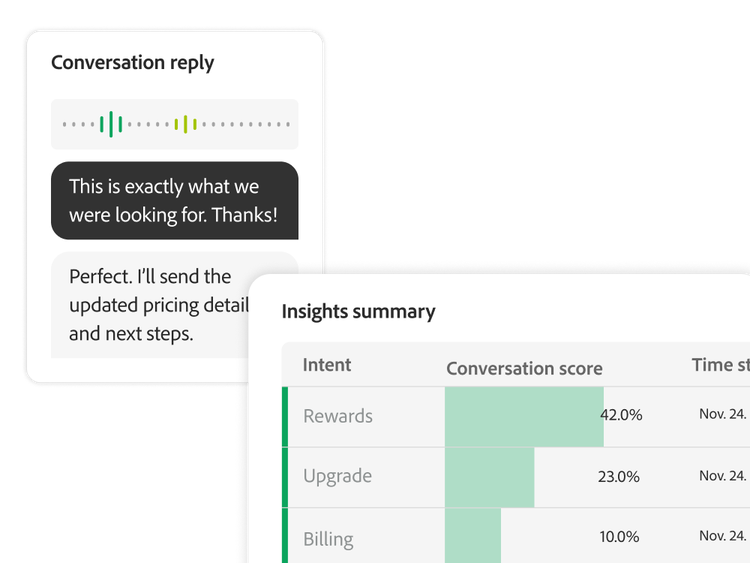
Conversational AI analytics uses natural language processing (NLP) or LLM models to extract signals like intent, topics, keywords, and sentiment from chat or voice transcripts, then combines them with journey data in Customer Journey Analytics for aggregate reporting and conversation replay. Tracking sentiment alongside outcomes helps you pinpoint experiences, intents, or flows that frustrate customers, prioritize fixes, and validate which changes improve satisfaction and conversion.
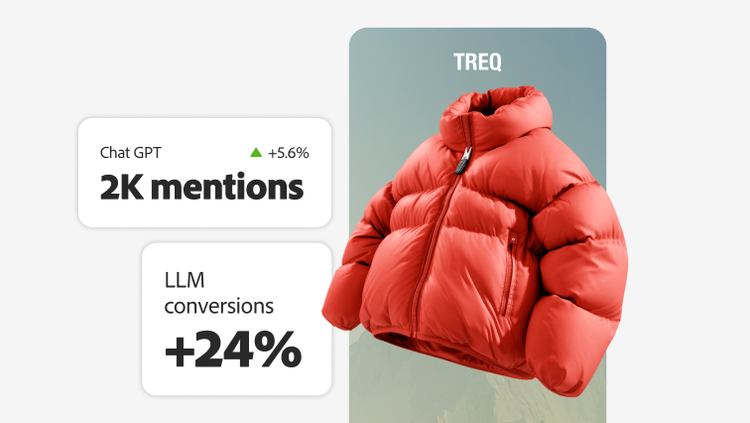
LLM insights, together with Adobe LLM Optimizer, shows where your brand is mentioned or cited in AI answers, how often AI agents crawl your content, and which prompts or topics you win or lose versus competitors. When this visibility data is connected into Customer Journey Analytics, you can see which AI-sourced visits drive engagement and revenue, guiding content and SEO investments that improve discoverability in AI-driven search.
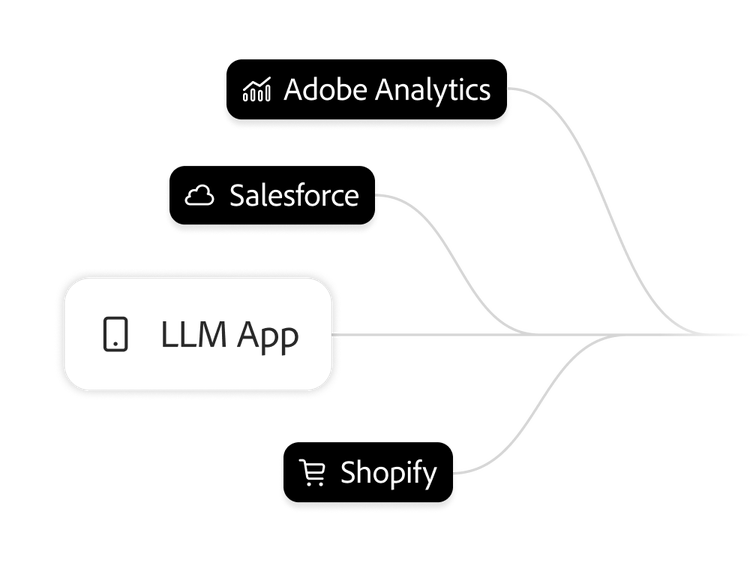
You typically combine AI interaction and log data, such as chat transcripts, bot metadata, content delivery network (CDN) or edge logs, and LLM Optimizer agentic and referral traffic, with your existing digital and offline datasets in Adobe Experience Platform, then connect them into Customer Journey Analytics for reporting. Optional integrations — like Customer AI, Adobe Journey Optimizer, and native LLM Optimizer to Customer Journey Analytics data sharing — enrich these journeys with predictions and AI visibility metrics, enabling end-to-end analysis from AI prompt to business outcome.