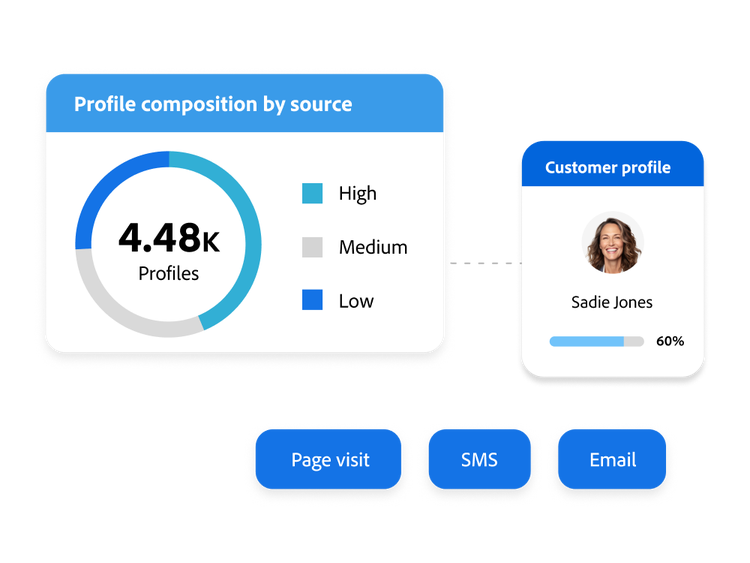
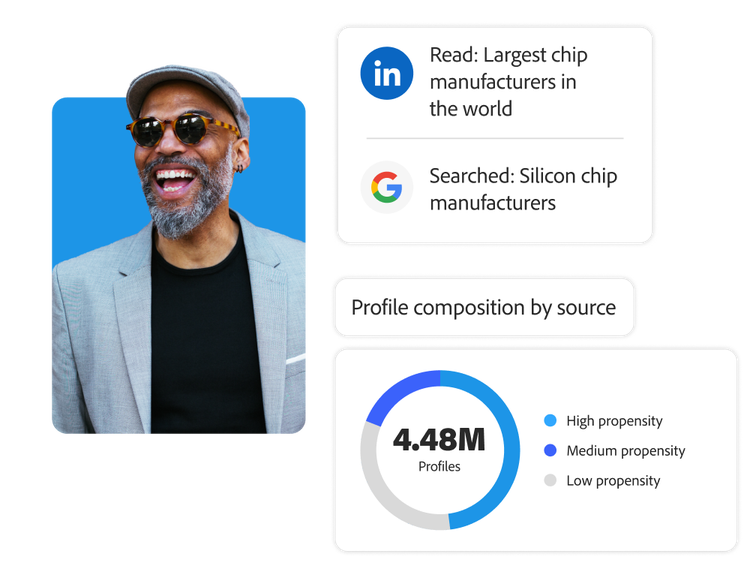
Real-Time CDP standardizes, validates, and connects data from online, offline, and pseudonymous sources into a single
real-time customer profile. Each source is structured to a common data model, so a field means the same thing everywhere, validated as it is ingested so quality issues are caught early, and resolved to a person through identity matching so separate records become one profile. The result is one continuously updated view of each customer that activation, analysis, and orchestration all draw from, rather than a different version of the truth in each tool.
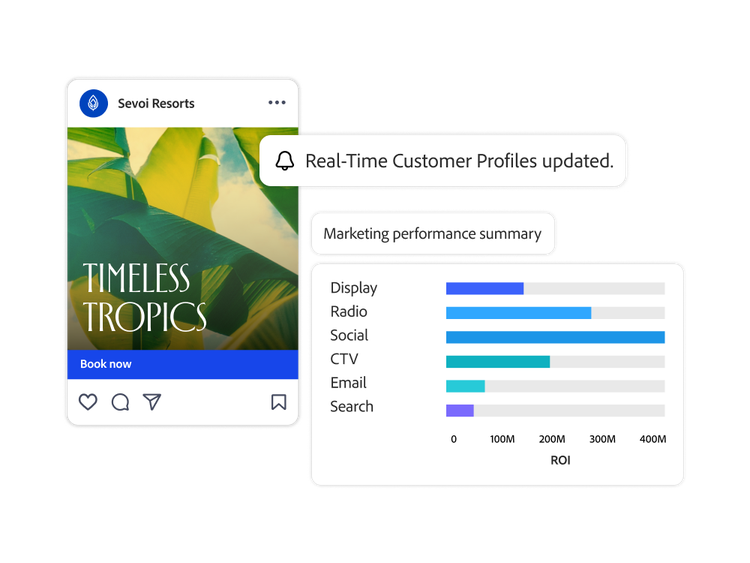
Every team works from the same profile because Real-Time CDP maintains one cohesive customer view that is continuously updated from all connected sources, rather than exporting copies to each tool. Standardized data structures, validation at ingestion, and identity resolution across devices and systems mean the profile a marketer targets, the one an analyst measures, and the one an orchestration tool acts on are the same record. That shared profile is what keeps
audiences, reporting, and messaging consistent instead of drifting apart across teams.
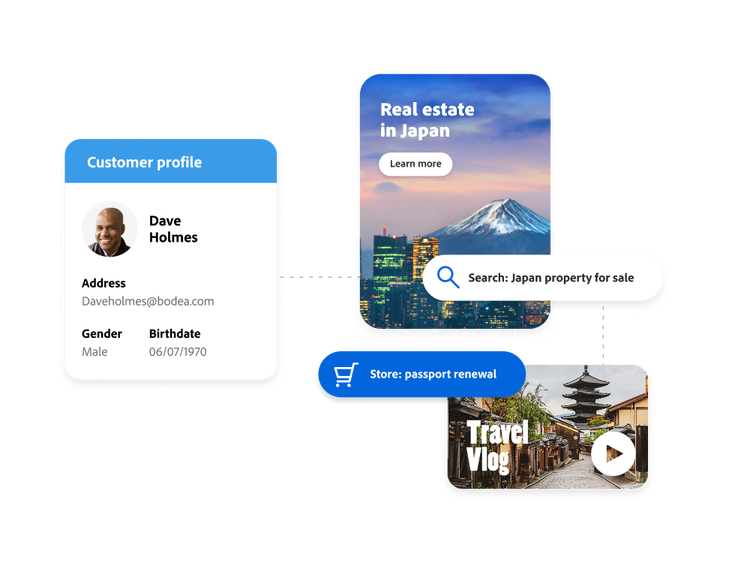
Real-Time CDP resolves identities deterministically, using known, matching identifiers across standard and custom namespaces rather than probabilistic guessing. Identity data is ingested, validated, and mapped into an identity graph that links a person's devices, logins, and identifiers, so an anonymous device and a known email can be recognized as the same person when a shared identifier appears. Because resolution is deterministic, the linkage is based on real matched identifiers, which is what lets you act on the unified profile with confidence for both known customers and prospects.
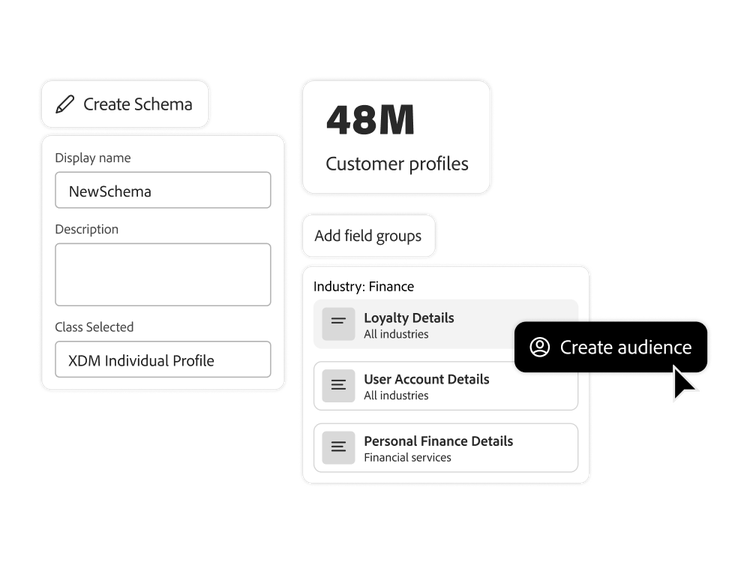
Yes, data is organized to the
Experience Data Model (XDM), and that standardization is what makes harmonization possible, but Real-Time CDP does much of the mapping for you. Prebuilt source connectors auto-map common fields to standard XDM schemas as data is ingested, and you review and adjust the mapping rather than modeling everything from scratch. Standard schema classes exist for both consumer and B2B (people and account) data, so the mapping effort scales with how custom your data is, not with every field.