Content as a Service v3 - marketo-engage - Tuesday, July 15, 2025 at 14:03
From AI experimentation to measurable growth.
B2B marketers are under pressure to do more than just deploy AI — they need to prove its value. And for B2B marketing automation teams, the real opportunity lies in applying AI with focus, grounding it in context, and tying every improvement to measurable business outcomes.
This guide outlines how to move beyond AI experimentation to drive productivity, deepen personalization, and deliver meaningful pipeline and revenue growth.
The pressure to measure the value of AI.
While AI adoption in B2B marketing is accelerating, leadership expectations are rising even faster. CMOs are being asked to prove AI’s impact on productivity, efficiency, personalization, and revenue impact. At the top of the list are new AI-driven go-to-market workflows and systems, reshaping how business teams plan, create, activate, and optimize experiences across the entire buying journey. For B2B marketing automation teams, AI is shifting to a daily reality — and the pressure to show results that scale is ever-present.

of B2B organizations said they believe agentic AI will coordinate their sales, marketing, and service journeys in real time.1
But here’s the hard fact: Marketers are still struggling with where to start, how to differentiate from what everyone else is doing, and how to demonstrate value both internally and externally. This includes marketing automation teams.
This guide explores how B2B marketing automation teams can overcome three fundamental challenges that often keep them from moving past AI experimentation and pilots to driving measurable business impact at scale.
Challenge 1: Proving value
The value proof: Start where the impact is clear.
To help B2B marketing operations (ops) teams begin to rethink how AI fits into their workflows, they first need to answer the practical question, “Which business problem should we focus on?” Many organizations have no shortage of AI ideas. What’s missing is clarity on which ones will actually drive meaningful business outcomes.
This is often where progress stalls, not because the technology isn’t ready, but because the starting point isn’t grounded in real impacts that matter to their teams and organization.
Why focus matters more than scale.
AI is not a solution to apply to every marketing challenge. Effective teams take a more focused approach. They start with a specific friction point that stands in the way of a key business goal and build from there. Such strong use cases tend to sit at the intersection of three things:
- A meaningful business priority
- A clear operational bottleneck
- A realistic path to execution
In marketing, these typically show up in areas where inefficiencies are both visible and measurable, such as campaign execution, data quality, and sales alignment.

a year are lost to inefficient workflows.2
What this looks like in practice.
Consider campaign execution. Many marketing automation teams still spend days coordinating lists, validating logic, and troubleshooting errors before launch. These steps slow down go‑to‑market efforts and introduce risk at the exact moment when speed matters most.
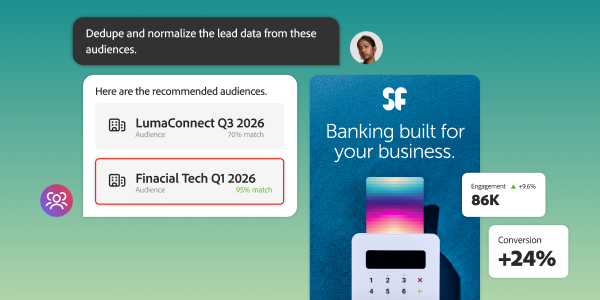
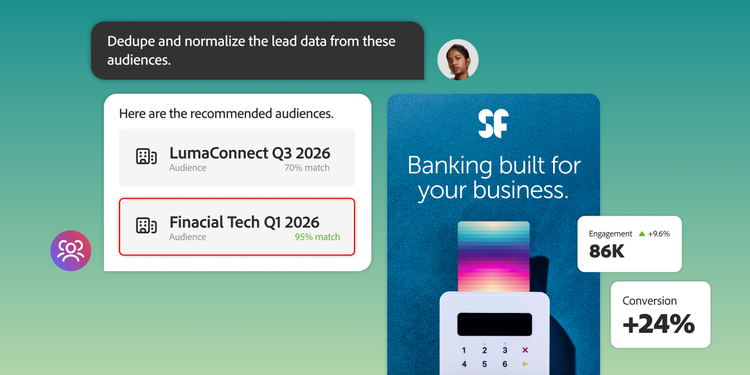
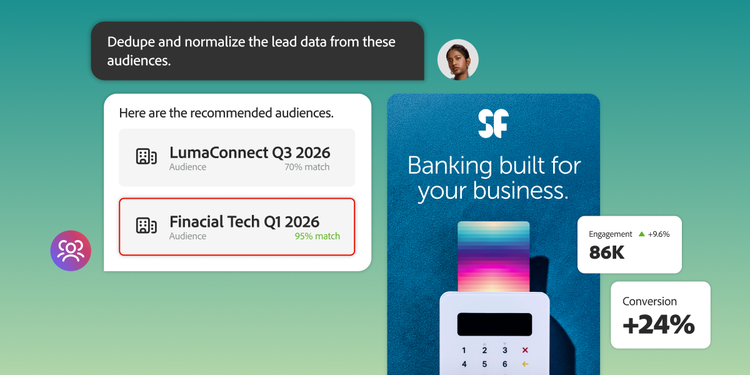
Embedding agentic AI into the campaign workflows of a marketing automation solution can alleviate much of the friction involved in manual operational work. For example, Adobe Marketo Engage can use natural language conversation via a chat panel, which enables practitioners to move away from executing complex, multi-step system processes to simply saying what it is they’re trying to accomplish — allowing them to finish tasks in a fraction of the time.
Campaigns can move from brief to execution-ready far more quickly, as AI agents help in building audiences, structuring flows, and validating logic along the way. Instead of catching issues after launch, marketing ops teams can benefit from automated checks that surface inconsistencies earlier in the process.
Similarly, data preparation — often treated as a separate, time-consuming task — can be integrated into the same agentic workflow. Lists can be enriched, normalized, and validated in real time prior to utilization, reducing downstream errors and improving performance across programs.

marketers lack confidence in their data.3
Individually, these may seem like incremental improvements. But together, they can create a step change in how efficiently and effectively B2B marketing can operate.
While starting with high-impact use cases is critical to realizing early business value from AI, marketing automation teams also need to look beyond efficiency to transform how they engage buyers and deliver more meaningful customer experiences.
Challenge 2: Advancing personalization
The mindset shift: From cost center to unlocking value with context.
For years, marketing automation has been built around efficiency — doing the same work faster and at scale. AI initially followed the same pattern: Automate tasks, reduce effort, and save time and money. But AI that’s embedded in your existing workflows opens up new ways to improve productivity — in some cases, exponentially. The real opportunity is much bigger.
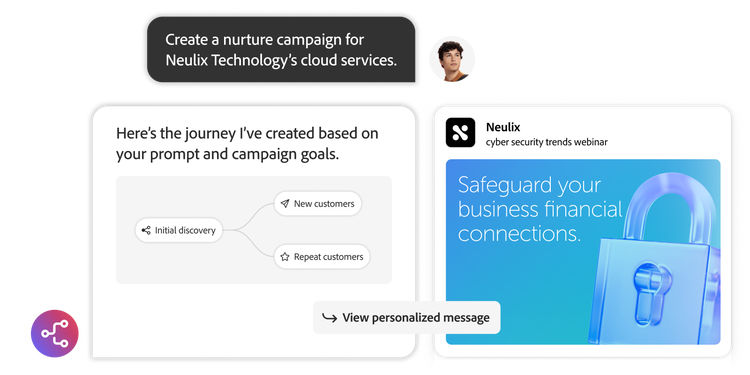
Leading teams are not just asking, “What can we automate?” They’re asking, “How can we compound value with AI?” This shift, from a cost center to a value driver mindset, fundamentally changes how AI is applied across the business.
Why context is the real differentiator.
Today, everyone has access to powerful AI models. What differentiates teams isn’t the technology. It’s how that technology is used to understand your business and customers.
Context is what allows AI to:
- Understand the needs of your customers as individuals, not just generic audiences.
- Apply your unique business rules, not generic logic.
- Capture institutional knowledge that would otherwise stay siloed or lost.
This is exactly where modern marketing platforms are evolving in the era of AI.
What this looks like in practice.
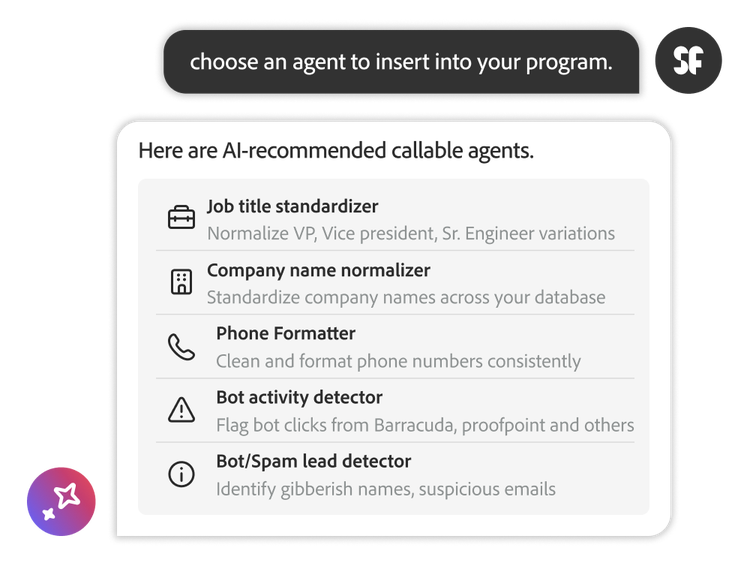
Instead of layering AI on top of workflows, teams are embedding intelligence directly into how work is already getting done. In Marketo Engage, this shift shows up in the ability to call agents within a Smart Campaign.
For example, when a buyer fills out a form on your website or attends a webinar, there is already a Smart Campaign that brings this buyer data into Marketo Engage, which may instantly trigger specific actions from that information. But now, by inserting a call to the list import agent skill in that Smart Campaign, it becomes even smarter, enriching and normalizing the form data before it even hits Marketo Engage. This has the immediate impact of improving everything that data touches, such as your lead score, sales routing, segmentation, and personalization tokens. No changes are made to existing workflows — they just become more effective.
Here’s another example. B2B marketing automation teams often spend a good deal of time manually building complex audience segments that are based on specific organizational rules. Perhaps interest in product X maps to downloading certain guides, attending a webinar on a specific topic, or visiting a gated landing page related to that product.
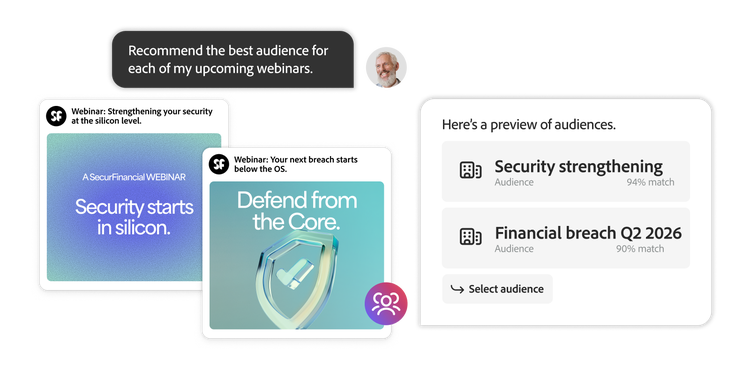
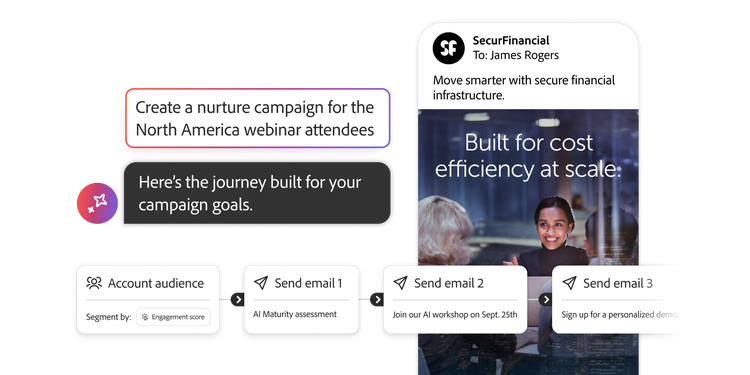
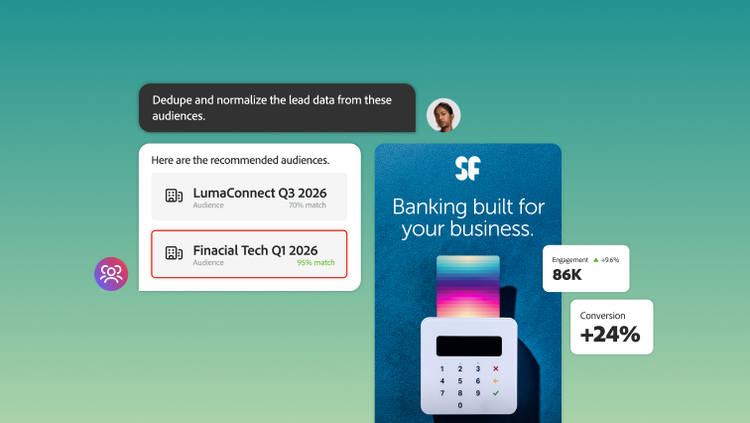
Now, audience segmentation and targeting can be quickly defined using natural language through an agentic user experience to describe who they want to target. From there, systems can interpret behavioral signals and intent patterns to generate dynamic audiences that continuously refine themselves through further engagement.
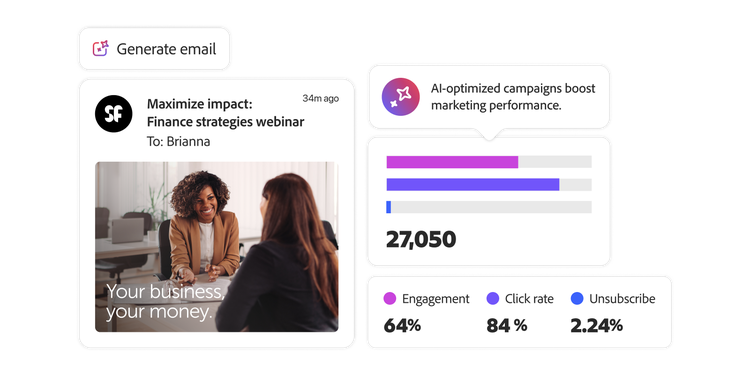
Content creation is also becoming more contextual. Generative AI can draft email copy, subject lines, and follow-up messages based on campaign goals and audience context, all within the tools marketers already use. This means teams spend less time producing better-performing content and more time shaping strategy. When these capabilities come together in platforms like Marketo Engage, the result isn’t just faster execution, but more intelligent decision making at every step of the journey.
The impact isn’t just speed. It’s better decisions, made earlier, with better inputs. And over time, those improvements compound, turning incremental efficiency gains into more substantial and resilient value.
As B2B marketing teams use AI for more intelligent, context-aware engagement, the real opportunity lies in connecting those efforts to tangible business results.
Challenge 3: Showing pipeline and revenue growth
The real talk on AI: Translate usage into business value.
Even when AI starts to deliver results, many B2B marketing teams face a final hurdle: Connecting their work to outcomes that the business actually cares about.

of organizations rank unclear ROI or business cases as a key implementation barrier.4
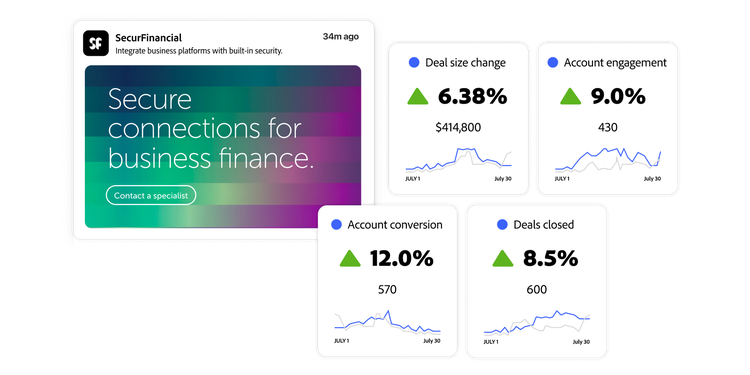
B2B marketers often measure success through engagement, efficiency, or campaign performance. Leadership, however, is focused on a different set of metrics — revenue growth, pipeline velocity, deal size, and win rates. Bridging that gap is essential.
From activity to outcomes.
To demonstrate value, marketing ops teams need to rethink their work through a business lens. That means shifting from reporting what was done to explaining what changed as a result.
For example:
- Faster campaign execution translates into shorter time-to-market and increased pipeline velocity.
- Improved data quality leads to more accurate targeting and higher conversion rates.
- Better alignment with sales results in faster response times and stronger deal progression.
The work itself doesn’t change, but the way it’s framed does.
What this looks like in practice.
To better understand how to connect marketing operations work to outcomes that business leaders care about, imagine a B2B SaaS company that’s implementing AI-powered data quality improvements. Many teams focus on why the data is not clean (siloed systems, poorly designed forms, etc.) and perhaps how much time is saved by not manually removing duplicates or normalizing data. Instead of emphasizing these deficiencies and improvements, teams should make it clear to leaders how the improved data will make an immediate and significant impact on the business.
For example, Marketo Engage can provide more precise customer segmentation and personalization that can translate into more attendees at an upcoming event, a greater pipeline, and ultimately higher revenue in the same timeframe.
By focusing on how the data will impact a specific campaign or event in the near term, you can demonstrate how this improvement delivered measurable and meaningful value in very specific ways — laying the groundwork for more advanced AI use cases. Rather than highlighting efficiency and adoption, this approach helps leaders understand how prioritizing context compounds value and can lead to a more sustainable competitive advantage.
From experimentation to impact: The way forward for AI-powered B2B marketing.
AI in B2B marketing can provide more impact by focusing on strategically applying it at the friction points of workflows and cross-team handoffs. Organizations seeing the greatest value share a few common traits:
- They focus on building meaningful context around their data and workflows.
- They start with targeted use cases, rather than broad transformations.
- And they continuously connect their efforts back to priority business outcomes.
This is what allows AI to move beyond producing isolated efficiencies to how marketing actually operates.
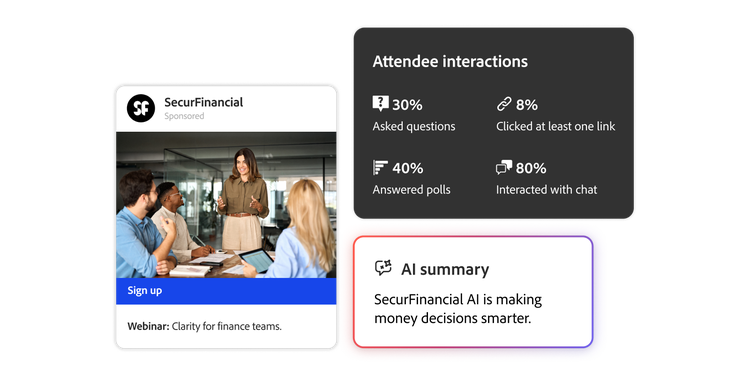
The advantage isn’t the AI. It’s how you use it.
Every organization now has access to powerful AI capabilities. It isn’t here to replace B2B marketers. It’s here to elevate them. It frees teams from manual toil, equips them with real‑time intelligence, and gives them the tools to orchestrate experiences that feel personal, timely, and effortless across the entire lifecycle. What sets B2B marketing teams apart is how effectively they apply these capabilities to their specific challenges, customers, and goals.
The more context that your marketing ops teams can build around your data, workflows, and customer understanding, the more value AI can unlock for your organization. Over time, that advantage compounds — creating faster execution, deeper personalization, and stronger alignment to revenue. And in a landscape where differentiation is increasingly difficult, that’s what sets leading B2B marketing teams apart.
The market momentum is undeniable: Enterprises are prioritizing agentic capabilities to automate complex work, differentiate, and grow. And customer‑facing teams are at the front of that curve.
Adobe Marketo Engage can help you overcome the time and capacity constraints that your marketing ops team faces today, helping them move from manual and complicated operational tasks to the strategic, high-value work that drives decision making and business impact.
Title
Advancing AI in B2B marketing automation.
cardDate
2026-07-31
cardImage
CardDescription
Navigate current AI challenges in B2B marketing to improve execution, scale personalization, and drive measurable business value with AI.
primaryTag
caas:content-type/guide
Tags
caas:content-type/guide; caas:products/marketo-engage-bizible
Let’s talk about what Adobe can do for your business.