AI is a marketer’s window into audiences' imaginations.
Marketers often face a creative challenge when they start a new project and are deeply influenced by their backgrounds and communities. But what happens when a 35-year-old in Los Angeles needs to create a campaign that connects with 20-year-olds in Sweden or 50-year-olds in Australia?
Now imagine you could talk to a stranger already knowing how they see themselves.
What if you could strike up a conversation with a stranger already knowing how they see themselves? You can offer them their favourite drink, bond over a love for cats or unironically comment on their great mullet. Grabbing the attention of strangers is what marketers do all the time and what people create using generative artificial intelligence (GenAI) is a window into an audience’s imagination.
We analysed millions of creative generative AI prompts from across the world over the last two years and found that the data can tell us:
- what is the reality for a given demographic (country, generation)
- how people perceive themselves and their worlds
- what associations people have with objects, places or things
- what is popular and trending right now
These are comprehensive insights into the self-images, aspirations and imaginations of audiences that no dataset, survey or focus group will reveal to you. AI creativity data is not just for ideation — it's a real-time guide to an audience's subconscious.
Reality: Holding up a mirror to the world.
In exploring Firefly prompt data, we found that people create what they know. If you live in the mountains, you’ll create more mountains and if you have a cat, you’ll create more cats. If people around you have moustaches, braids or mullets, you’ll create people with those features.
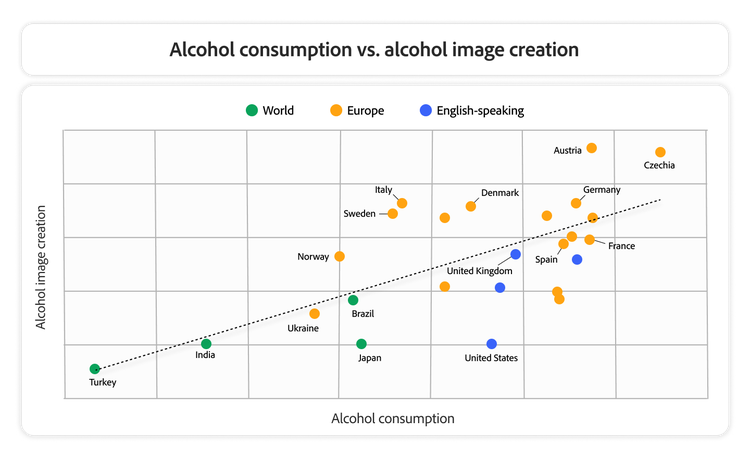
For example, countries that consume more alcohol create more generative AI images of beer, wine, liquor and cocktails. The relationship between creation and consumption becomes clear when you plot them against each other.
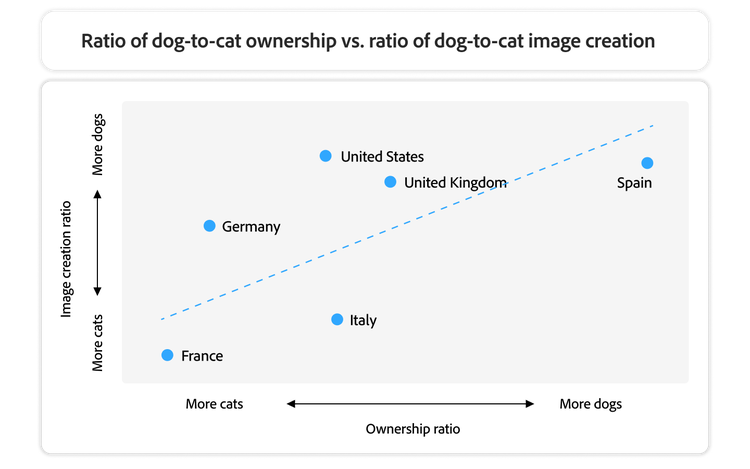
Another example can be found in the prompts pet users put in their AI-generated imagery. We compared the ratio of dog to cat ownership by country and the ratio of dog to cat images created using AI in that country and once again, we see a clear linear relationship.
Now, you may be able to find raw stats about alcohol consumption or pet ownership for many countries, but that’s still inherently limited. You’d be hard pressed to find the same data with generational breakdowns. And there are plenty of subjects you can explore via creativity where there is no hard data. For example, it can be difficult to find any data about where certain hair styles are more popular. Enter prompt data.
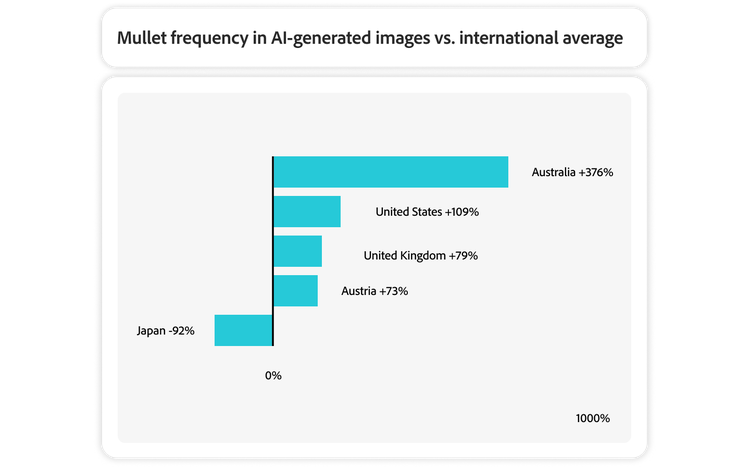
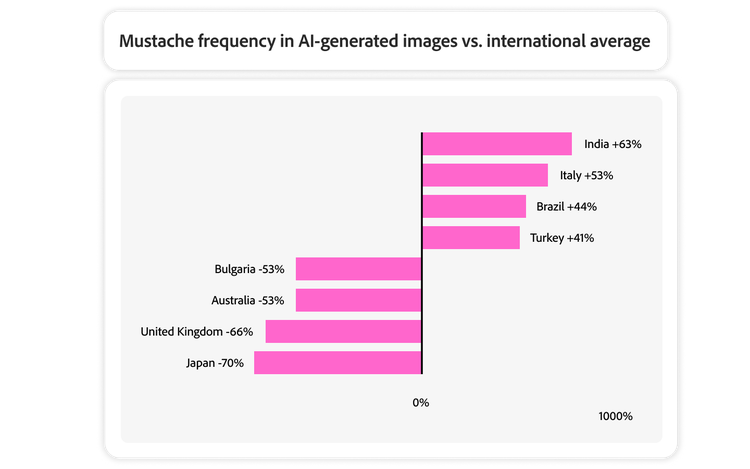
In short, AI creativity data can tell us things about reality that we can’t otherwise measure or observe.
Perception: Cultural identity vs. consumption.
The outliers in our alcohol data tell an equally compelling story. Japan and the US under-create alcohol imagery relative to their consumption levels, while Italy, Sweden, Austria and Czechia over-create them. This suggests that creative output reflects not just consumption habits, but cultural identity and self-perception and that these countries’ image of themselves deviates from the observed pattern.
We see this again when we compare the types of alcohol consumed — wine, beer and liquor — to the types of alcohol-related images created.
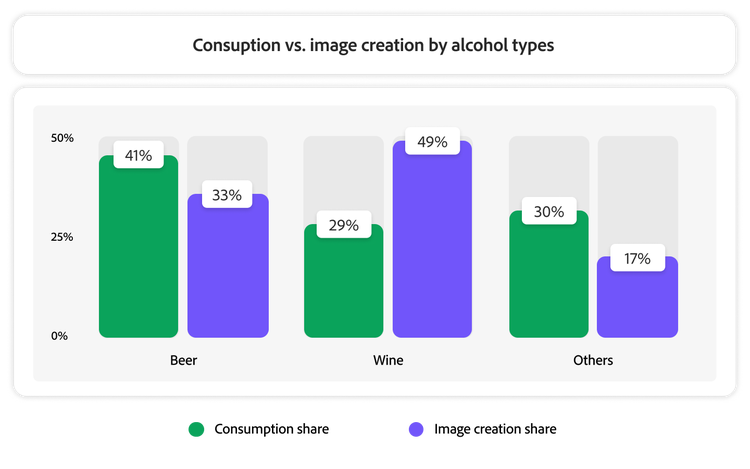
People drink more beer, but they create more wine-themed images. In other words, they imagine themes and settings where they are drinking wine — it’s core to the scenes they are drawn to, that they see themselves in. This “creativity index” is more representative of people’s perceptions of themselves and others than any consumption data could indicate.
Associations: Filling in the scene.
A challenge for creatives isn’t just figuring out what to portray — it’s also how to most effectively portray it. A marketer needs to figure out how to style subjects for different geographies and generations, picking the right colours and scenes for ads across every demographic.
Say you know you want to portray a scene with wine, beer or liquor — what should be in that image? Where and how do people perceive themselves when drinking, say wine? Knowing how much wine, beer or liquor is consumed doesn’t tell us the associations people have with them, but creative data can uncover these associations.
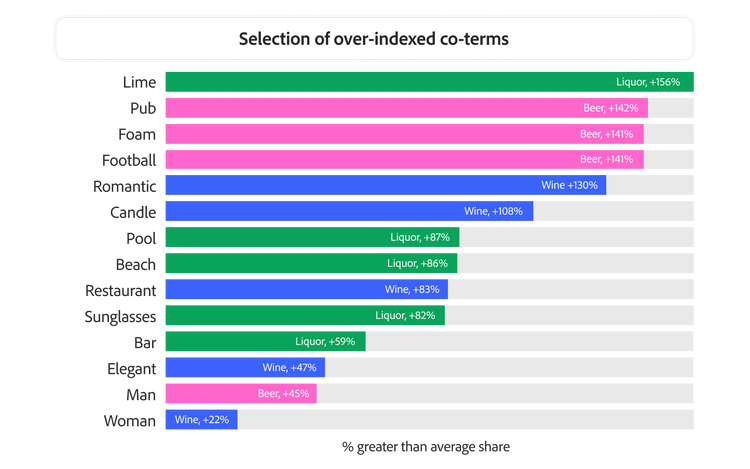
We can see that when people think of wine, they think of romantic, elegant scenes. When people think of beer, they think of frothy brews, pubs and watching sports. When people think of liquor or cocktails, they imagine a summer beach or pool scene and a lime garnish.
Trends: Capturing the zeitgeist.
The world moves fast — trends come and go in the span of months, if not weeks and they move out of sync across geographies and generations. If a marketer wants their content to be relevant and their creative pipeline takes a few weeks, they can’t start with insights that may be months, if not years, behind. They need real-time data that can tell them what is trending now.
Datasets that can surface trends can be hard to come by, but creative prompts provide a timely window into the zeitgeist that marketers can leverage. For example, many of us watched White Lotus season 3. If not, there’s a good chance you heard about it. Well, it turns out that it had a broad impact on our collective imagination.
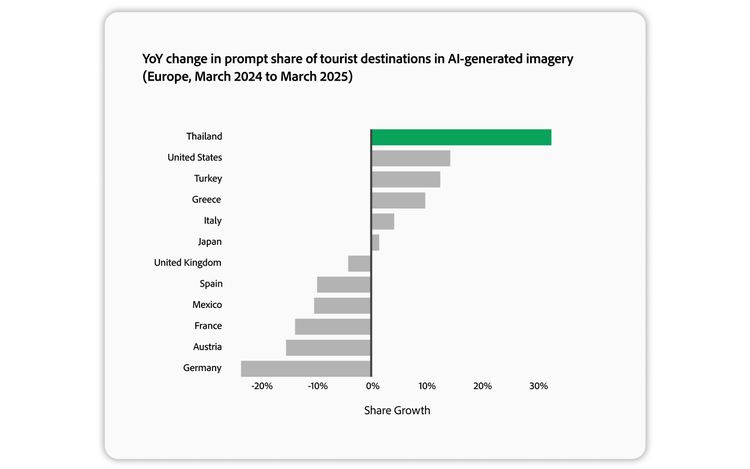
The season took place in Thailand. And it turns out that in March 2025, as White Lotus was roaring toward its season finale, Thailand saw a large pop in its presence in the AI images people were creating.
We all have our bubbles and sense of what’s cool right now for us, but our own perspectives are limited — creativity can show us what’s breaking through for whom as it’s happening, providing marketers with a leg up.
Creativity data as a marketing compass.
AI creativity data is an incredibly rich trove for marketers. It can serve as a dataset in the absence of data. It can stand in for a focus group or survey, telling us how people say they see themselves, imagine the world and what associations they have. It can surface trends that are outside your bubble, across the globe and across generations. It also accounts for the fact that people’s private perceptions may not align with their public projections and proclamations. Remember, people may tell you they love biking to work, but their AI creations may tell you they still imagine themselves cruising up to the office in a red sports car.
What we’ve examined and shared so far is really just the tip of the iceberg. Now, when you’re staring at a blank page and you’re trying to create relevant, personalised content for a specific targeted audience, you can arm yourself with creativity data that can both ground and enhance your process.
Insights are based on Adobe Digital Insights analysis of the prompts that have been used to generate over 22 billion AI assets in Adobe Firefly.
Recommended for you
https://business.adobe.com/fragments/resources/cards/thank-you-collections/digital-insights