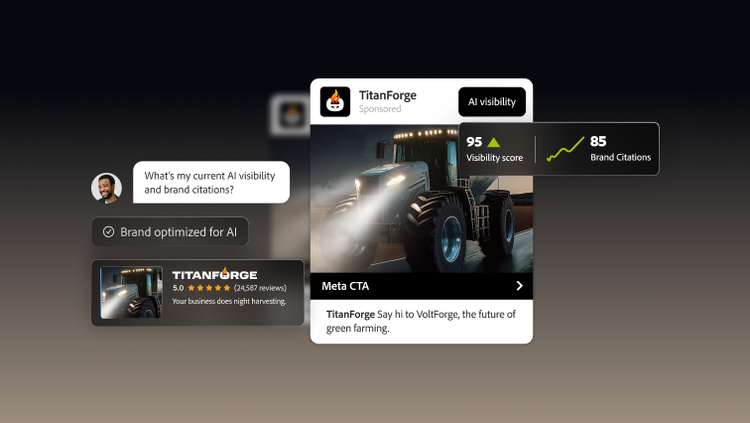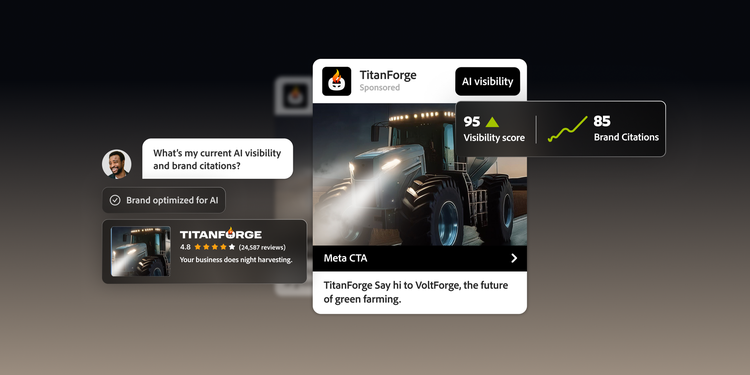
For decades, industrial manufacturing brands earned consideration through reputation, built on years in the field, engineering credibility, recognised customers and a name buyers knew. AI search is changing that dynamic, shifting the focus from reputation alone to recommendation. Today, buyers use tools such as ChatGPT, Perplexity, Gemini and Claude to compare suppliers, research products and narrow options. Instead of returning a page of links, these tools often generate a direct answer, drawing on a mix of brand signals, owned content and third-party sources.
That creates a new visibility challenge for manufacturers. In industrial AI search, reputation gets you mentioned, but evidence gets you cited. It is no longer enough to ask, “How strong is our brand?”, the more useful question is, “What information is available about us across the sources AI search draws from, and is that information accurate, consistent and useful?” That is the practical challenge behind generative engine optimisation (GEO), the practice of improving how brands are represented in AI-generated search results.
Getting mentioned and getting cited are different.
AI visibility has two distinct scoreboards. The first is brand mention where your company name appears in the answer a buyer reads. This is the visible form of AI presence. It can put your brand into consideration and reinforce awareness. The second is citation: where an AI platform surfaces a page, domain or third-party source as evidence behind its response. Your company may not be named prominently in the answer, yet the sources that describe your products, capabilities or category can shape what the buyer learns. However, these measures do not necessarily move together.
A well-known industrial manufacturer may be mentioned often because it is a familiar and relevant name in its category. At the same time, the supporting sources in AI-generated answers may come from distributors, technical publishers, marketplaces, product databases, trade publications or niche specialists. That distinction matters. Reputation can help to earn a mention, but clear, credible and consistent information across the sources that appear in AI answers helps determine the story buyers encounter. If you only measure whether an AI platform mentions your name, you are watching only half the board.
Your channel is your biggest citation risk.
In the industrial manufacturing sector, the hardest part of building AI visibility is usually not your own website. It is your channel. Distributors and dealers often run on outdated content that never catches up after a specification change or product update. AI platforms do not distinguish between your source and theirs. They cite whichever is easiest to find. If your distributor network is large or tiered, that's your primary citation risk, not just an afterthought. That risk sits with a second reality — the competitive field for AI visibility is still wide open.
Industrial AI visibility is still open.
In traditional search, many categories become highly concentrated. A small group of companies holds the top positions and everyone else competes for limited visibility. AI visibility can be measured similarly by examining how much of a category’s presence is held by the top brands. High concentration suggests that a small group dominates the answers. Lower concentration suggests that visibility is spread across more companies. Industrial manufacturing is relatively open.
In the 2026 AI Visibility Index, the top three brands accounted for 42.2% of industrial AI visibility, making industrial the second least concentrated of the 22 categories studied. By comparison, the top three brands in news and media held 82.9% of visibility. That does not mean industrial visibility is easy to win. It means the category is not yet controlled by a small, entrenched group of brands.
For manufacturers, that creates room for improvement. A focused programme can strengthen how the market describes your company, improve the accuracy of third-party information and build a more useful content footprint across the places buyers and AI platforms rely on.
The buyer is already using AI.
Gartner found that 45% of B2B buyers used generative AI during a recent purchase, primarily to research vendors and products. Buyers reported using an average of seven information sources and 69% said they turn to sales representatives or technical experts to validate AI-generated insights. AI is not replacing technical sales, expertise or relationships. It is increasingly shaping the research and consideration that happens before a buyer speaks with your team.
McKinsey’s 2026 Global B2B Pulse Survey found that buyers now use an average of 10 channels throughout the purchasing journey. It also identified inconsistent information and lack of knowledgeable support as leading reasons buyers switch suppliers.
For industrial brands, this raises the standard. When product details, capabilities, certifications, use cases or company positioning differ across sources, buyers notice. Moreover, AI systems can surface that same inconsistency at scale. Consistency is no longer just brand housekeeping. It is part of the buying experience.
What manufacturers should do now.
The manufacturers that improve AI visibility will not treat this as a one-time content project. They will treat it as an ongoing market intelligence and brand consistency programme.
That effort typically involves four practical moves:
- Identify your citation landscape: Determine which publishers, databases, distributors, technical sources and third-party domains appear in AI answers for the questions your buyers ask.
- Audit what those sources say about you: Review how they describe your company, products, specifications, differentiators and category role. Look for omissions, inaccuracies and conflicting language.
- Make your story consistent: Align core product facts, technical details, positioning and proof points across your website and the external sources that matter to buyers.
- Build authority across owned and third-party channels: Your website remains essential, but it is only one part of the information environment. Technical content, credible coverage, partner pages, community participation and accurate product data also matter.
The goal is not to manipulate an AI answer. The goal is to ensure that wherever buyers or AI platforms look, they find a clear, credible and consistent account of who you are and why you belong in the conversation.
The window is open.
Industrial AI visibility is still developing. That is exactly why manufacturers should act now. The brands that build a reliable presence early, across their own sites and the broader ecosystem of sources buyers rely on, will be better positioned as AI-assisted research becomes a standard part of industrial buying. Brands that wait may find that the market has already defined them through channels they never reviewed.
Want to know where you stand?
Adobe’s Customer Innovation team has developed a brand-visibility benchmark for industrial manufacturers. It maps how brands in a category appear across major AI platforms, identifies the sources shaping those answers and highlights opportunities to improve visibility.
Explore how Adobe can benchmark your brand to help you to understand how AI platforms describe your business today and how your visibility compares with peers. Fill in this form if you are interested.
Disclosure: This article draws on research co-published by Adobe and Semrush. Adobe’s Digital Strategy Group offers related AI visibility benchmarking services.