Adobe Workfront Features
Centralised work
Connect teams, tools and work across the organisation — the shared operating layer for enterprise marketing. Adobe Workfront centralises intake, execution and coordination in one platform where humans and agents work on the same plan.
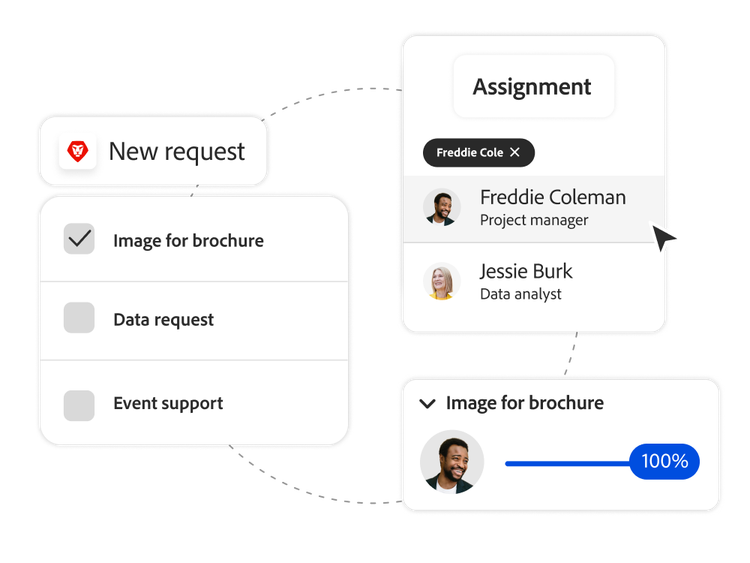
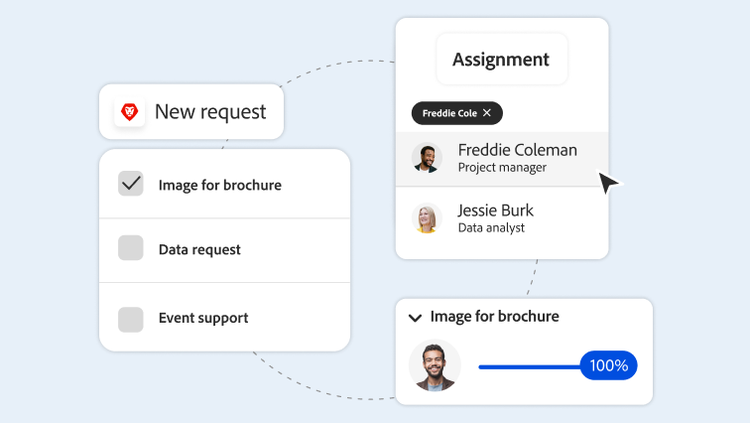
Consolidate intake in one place.
Improve your project request process and help ensure incoming work is vetted against priorities by consolidating intake channels into one place.
- Request queues. Share user-friendly intake forms across your teams — so the business can use the right process for each request and requests live in one place for evaluation and accountability.
- Customised form and fields. Create customised fields in your request forms to capture the information your projects need and set permissions on data fields to streamline forms and make them easier to use.
- Automated routing. Set up system rules so that requests are automatically routed to the right individuals or job roles you specify.
- Work capacity resourcing. View suggested allocations for team members based on currently assigned work.
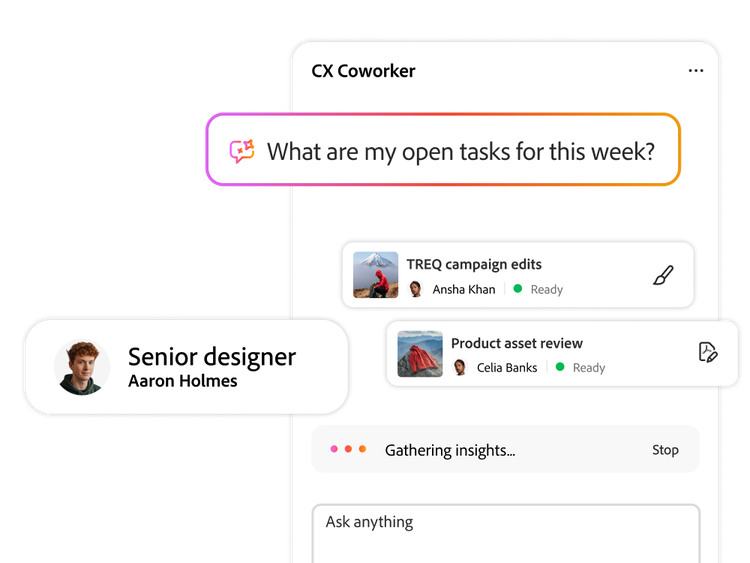
Prioritise daily work with AI.
Stay on top of workflows with an AI-powered experience designed to help task owners easily manage, prioritise and track their daily tasks.
- Greater task clarity. View when items are due so you can manage, prioritise and complete them on time. Help increase productivity with easier access to project context and the ability to perform tasks quickly.
- Single, focused view. Keep track of all your tasks with a view that helps reduce clutter and lets you focus on what’s important.
- Calendar view. Use the calendar view for a visual representation of your tasks and issues each month.
- AI summarisation. Use AI to get summaries of updates, uploaded documents, approvals and other changes to your active projects over a 24-hour, three-day or week-long period. Review AI summaries for accuracy before relying on them.
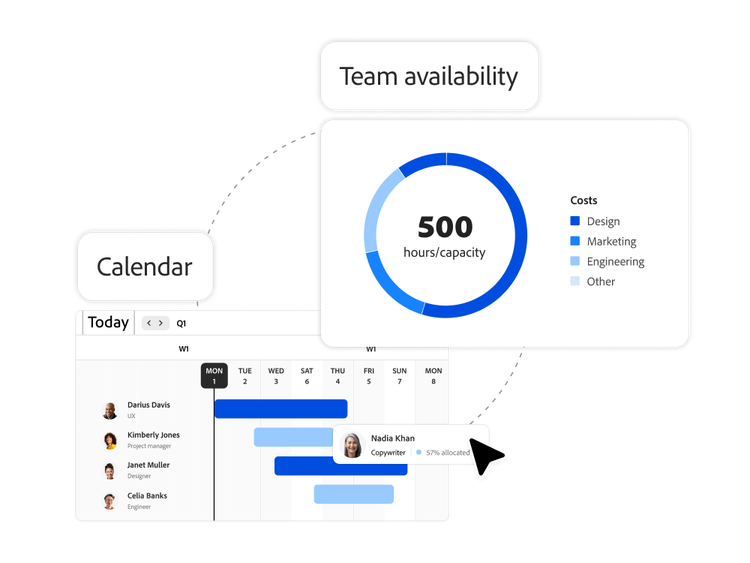
Manage resources and capacity end-to-end.
Help ensure the right people and assets are aligned to the right priorities with enterprise‑level capacity planning. Workfront gives operations leaders end‑to‑end visibility from forecast to execution — so teams can confidently plan work, balance workloads and adapt as priorities change.
- Forecasting and availability. Know when to take on new work with time‑phased forecasting that shows future capacity across teams, roles and regions.
- Top‑down and bottom‑up planning. Plan capacity at the portfolio or team level, then refine staffing based on planned effort, skills and assignments.
- Utilisation and performance. Track utilisation from forecast to actuals to help understand the impact of resource shifts and continuously improve performance.
- Advanced filters and views. Drill into the exact teams, roles, skills or time frames you need to prioritise and assign work with enterprise‑ready views.
- Non‑labour resources. Plan and manage equipment, materials, meeting rooms and shared assets with calendar‑based booking — so more constraints are visible, not just people’s availability.
Connect resource plans to financial outcomes.
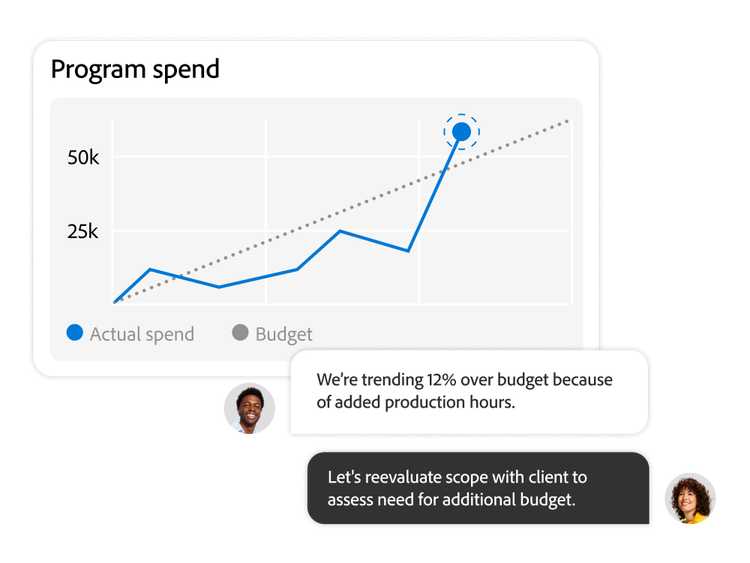
Help keep work profitable and predictable by connecting resource plans directly to financial outcomes. Workfront brings financial structure and governance into day‑to‑day execution, giving finance and operations a shared view of project financials.
- Rate cards and cost structures. Define labour and non‑labour rates, overtime rules and cost structures that reflect how your enterprise actually operates.
- Cost, margin and ROI visibility. Estimate and track costs and margins using planned effort and actuals — so leaders can understand ROI before and during execution.
- Financially aligned planning. Tie budgets and financial assumptions directly to resource plans, helping keep delivery and finance aligned from day one.
- Enterprise governance. Support complex multiteam and multiregion operations with consistent financial logic and auditable planning data. Workfront supports financial tracking and reporting but isn’t a replacement for dedicated financial or billing software.

Improve agency and brand collaboration (coming soon).
Extend collaboration beyond a single organisation by connecting Workfront instances across agencies and brands — so both sides of a client relationship work from one connected operating layer.
- Shared requests. Route incoming work directly between agency and brand teams.
- Connected workflows. Coordinate across separate Workfront environments without duplicated effort or fragmented systems.
- Accelerated delivery. Close the gap between agency execution and brand review with shared operating structure.
Learn more about work centralisation.
Learn how to use work centralisation features.
Find what you need in Experience League, our vast collection of how-to content — including documentation, tutorials and user guides.
Learn more | Learn more Experience League manage work information.
Questions? We have answers.
What are common workflow challenges?
Why is centralisation key to workflow optimisation?
How does Adobe Workfront function as a marketing system of record?
How does Adobe Workfront handle resource and capacity planning?
What financial governance capabilities does centralised workflow management provide?