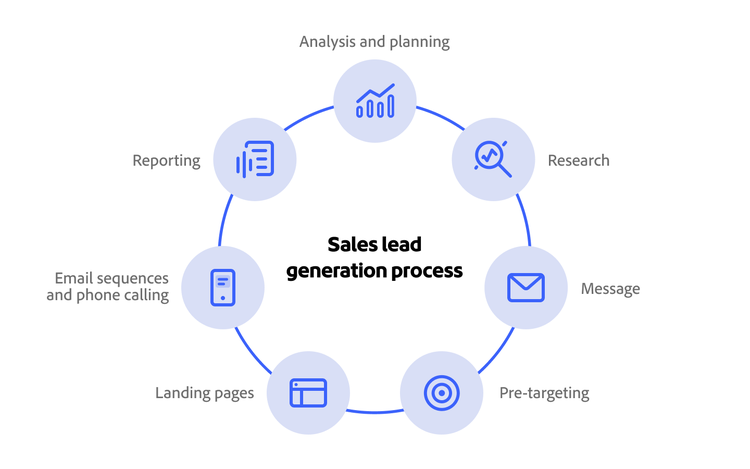
A random assortment of tactics is not a strategy. To elevate lead generation from a series of disconnected activities into a predictable revenue engine, a more structured approach is required. This involves designing your process around the following four interconnected pillars. Together, they form a comprehensive framework that transforms how you manage data, engage buyers, align with sales and ultimately, measure your impact on the business.
Pillar 1: Actionable profiles and audiences.
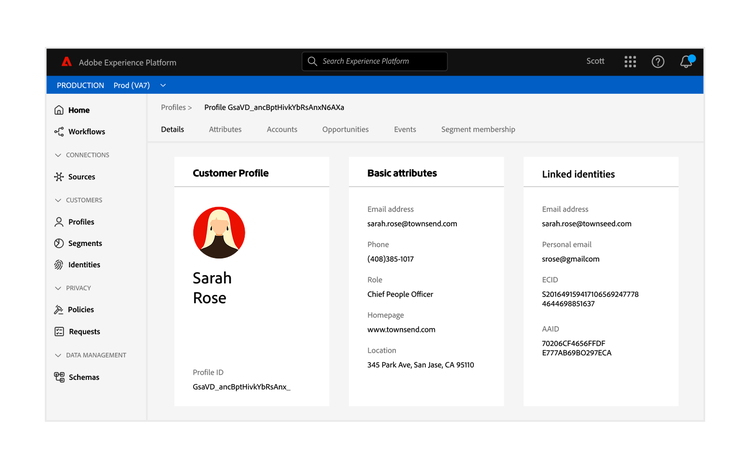
A successful lead generation strategy begins with a deep understanding of who you're targeting. Most organisations struggle with siloed customer data, making it difficult to engage prospects with relevance and consistency. The first step in a modern lead generation process is to centralise and enrich your data to create a single source of truth.
- Unify lead and account data: Your process must automate the capture and continuous enrichment of both lead- and account-level profiles. This creates a holistic view that combines demographic, firmographic and behavioural data.
- Build precise, dynamic audiences: Move beyond broad strokes. Use dynamic smart lists to build highly targeted audiences based on real-time behaviours, CRM data and customised attributes, ensuring your campaigns always reach the most relevant prospects.
- Ensure CRM synergy: A modern process requires seamless, bi-directional integration with your CRM. This ensures that marketing and sales teams are always working from the same, up to date information, eliminating critical data gaps.
Pillar 2: Orchestrating omnichannel journeys.
Today's B2B buyers self-educate across numerous channels before ever speaking to sales. Your lead generation process must meet them where they are with consistent and personalised experiences. This requires a central hub to orchestrate campaigns across every touchpoint, from initial awareness to deep consideration.
- Move beyond batch emails: Evolve from simple email blasts to sophisticated, automated nurture campaigns that adapt to buyer behaviour in real time.
- Co-ordinate across channels: Execute cohesive campaigns across a wide variety of digital channels, including email, your website, events, webinars and AI-powered chat, all from a single platform.
- Personalise at scale: Leverage dynamic content to automatically tailor messaging, offers and imagery based on a prospect's profile data and engagement history, increasing relevance and conversion rates.
Pillar 3: Fostering sales and marketing synergy.
The gap between marketing and sales is where revenue is lost. A critical function of the lead generation process is to bridge this divide, transforming lead handoffs into a seamless, data-driven revenue funnel. This requires shared data, insights and a clear understanding of when a prospect is ready for sales engagement.
- Implement intelligent lead scoring: Move beyond basic scoring. Develop a robust model that prioritises the most engaged leads based on a combination of profile data and cross-channel behaviours, ensuring sales focuses on the opportunities most likely to close.
- Equip sales with actionable intelligence: Provide your sales team with direct visibility into a prospect's marketing engagement history from within their CRM interface. Knowing which emails a prospect opened, which webpages they visited and which content they downloaded allows for more timely and relevant conversations.
- Automate alerts and actions: Trigger real-time alerts to sales when a prospect shows significant buying signals, ensuring swift follow-up when interest is at its peak.
Pillar 4: Measuring and maximising marketing ROI.
To justify investments and influence corporate strategy, marketing leaders must prove` their direct contribution to the bottom line. The entire lead generation process is ultimately measured by its ability to prove and optimise for ROI. This requires modern analytics that go beyond vanity metrics to connect every marketing activity directly to pipeline and revenue.
- Embrace every-touch attribution: Understand the complete buyer's journey and utilise multi-touch attribution models to see how every channel and campaign contributes to pipeline and revenue, not just the first or last touch.
- Visualise performance: Leverage pre-configured, interactive dashboards to analyse campaign effectiveness, channel ROI and overall marketing impact from a single interface.
- Optimise investments: Use these revenue-based insights to make data-driven decisions about where to invest your next marketing dollar, shifting budget to the highest-performing channels and campaigns to maximise growth.