The way travellers discover, plan and book their journeys is changing faster than the industry can keep up. Generative AI tools like ChatGPT, Gemini and Perplexity are no longer novelties — they’re becoming the new front door to travel. According to Adobe Digital Insights, traffic to travel sites from GenAI sources has surged by 3,500% year-over-year and more than half of consumers now use AI assistants as their starting point for trip research.
At first glance, this may seem like a marketer’s dream — GenAI-referred visitors spend more time on site, explore deeper content and show lower bounce rates.
But there’s a catch. These users are often still in research mode, which means conversion lags behind engagement. For travel brands, this signals a fundamental need to rethink not only how they attract customers but also how they nurture them through a longer and more fragmented decision cycle.
How to get your travel content cited by GenAI platforms?
For years, Search Engine Optimisation was the golden rule of digital visibility. If you could win on Google, you could win over customers. But Generative AI doesn’t simply index — it interprets, summarises and recommends.
That shift changes the game entirely. Brands must now think in terms of Generative Engine Optimisation (GEO), which is the practice of structuring content so it can be cited and recommended by AI systems.
In travel, this is harder than it sounds. Inventory is scattered across Online Travel Agencies (OTAs), brand sites and metasearch platforms. Structured product feeds for hotels, flights and experiences are rare. Integrations with GenAI tools are limited. And unlike retail, there’s no standard ‘book now’ schema for travel. The result is that AI struggles to surface offers as easily as it does for, say, trainers or electronics.
How are brands finding success in reaching customers?
The answer lies in a two-part strategy: optimising AI discovery while tailoring site experiences to the new wave of traffic it generates.
On the discovery side, brands need to publish content in conversational, question-driven formats that mirror how people engage with AI assistants. FAQs, practical guides and side-by-side comparisons go a long way in making content more summarisable. Rich imagery with metadata helps, as do user-generated reviews and mentions that build credibility.
And as GenAI platforms begin to test sponsored recommendations, brands will need to prepare for a world where paid visibility becomes increasingly important here as it is on traditional search.
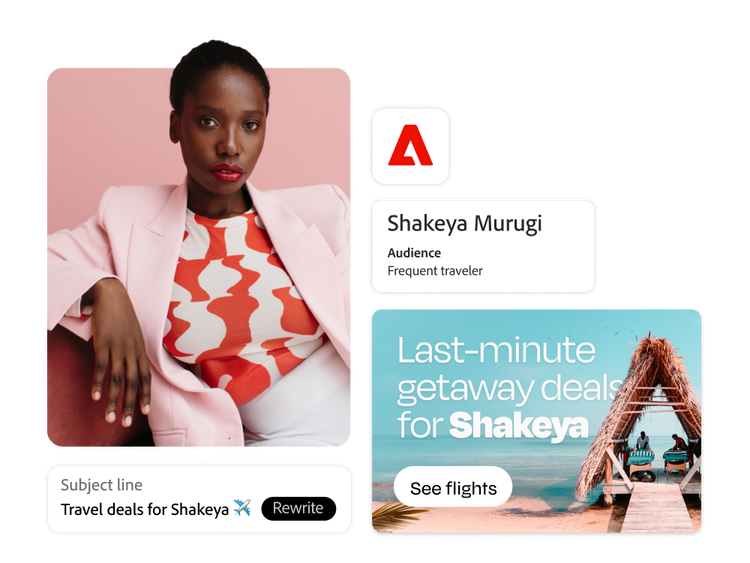
But discovery is only half the battle. Once travellers land on a brand’s site, the experience must meet the needs of this new audience. Personalisation becomes essential — especially when referral signals indicate the traveller is still in research mode.
Retargeting windows should extend to match longer decision cycles and trust must be reinforced with transparent reviews, clear comparisons and assistant-style discovery tools.
Features like wish lists and save-for-later options can make the experience feel less transactional and more supportive of how people naturally plan their trips.
This shift is especially relevant to Gen Z and Millennial travellers, who are leading the adoption of AI tools. They’re not just looking for destinations — they’re filtering choices through lifestyle, identity and values. Solo adventures, wellness escapes and flexible itineraries are top of mind.
The questions they bring to AI are telling:
- What’s the best cruise for solo Gen Z travellers?
- When is the cheapest time to fly to Bali?
- What should I pack for Iceland in winter?
Brands that anticipate and answer these questions at scale will be the ones that connect most meaningfully with this generation.
Adobe’s role in shaping AI-led travel journeys.
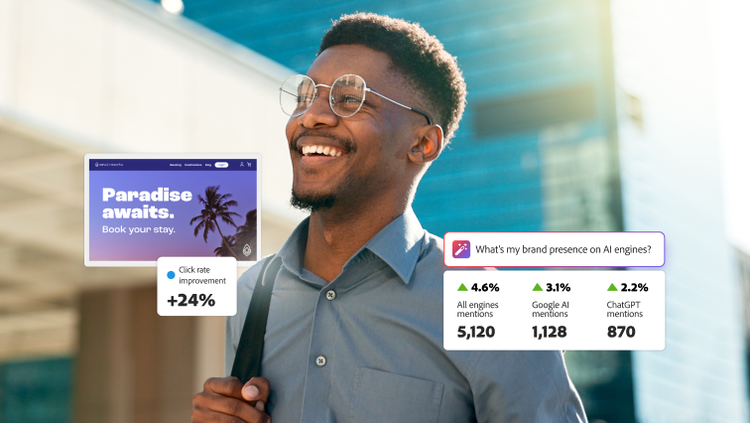
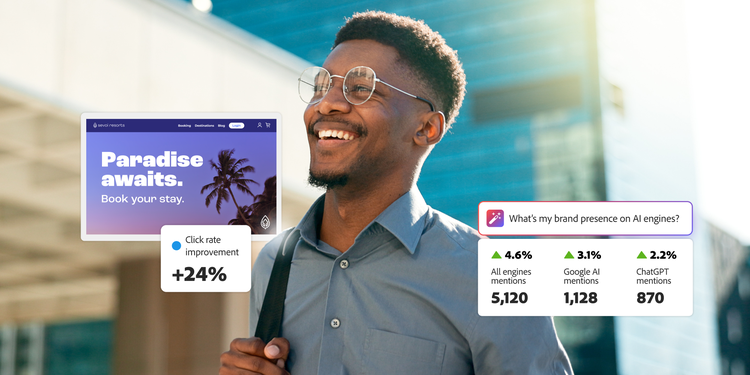
Adobe is helping travel companies navigate this transformation with tools like the Adobe Brand Visibility, formerly Adobe LLM Optimizer, which identifies where owned content is being cited by AI platforms, benchmarks visibility against competitors and recommends both content and technical improvements.
Crucially, it also ties AI visibility back to business performance. And with native integration into Adobe Experience Manager Sites, brands can act on these insights without needing specialised expertise.
What’s clear is that Generative AI is not a passing trend. It represents a structural shift in how travellers make decisions. Winning in this environment will require new strategies, new content models and new ways of measuring authority.
Your website is no longer the only front door to your brand. Authority must be built and earned across the broader ecosystem. The question isn’t whether to adapt — but how fast you can.
Learn how Adobe Brand Visibility can help travel brands structure content for GenAI discovery and tie it back to business impact.
For a deeper understanding, take an interactive tour and learn how to make your content more discoverable by AI platforms.
Julie is an entrepreneurial executive with over 25 years of experience defining strategy, creating categories, driving performance and achieving hyper-growth objectives backed by data-driven insights for Fortune 500 brands in both Travel and Retail/CPG. In 2013, she pioneered one of the first micro services architectures, creating a headless approach to how services are delivered to customers. This improved both topline growth and operational efficiency, delivering speed to market through a focus on automation. She was recruited in 2016 to serve as a global executive advisor to Travel, Hospitality & Dining brands — informing C-level executives, senior leadership and their board of directors with thought leadership inspiring and supporting brands on their digital transformation around the world for Adobe.