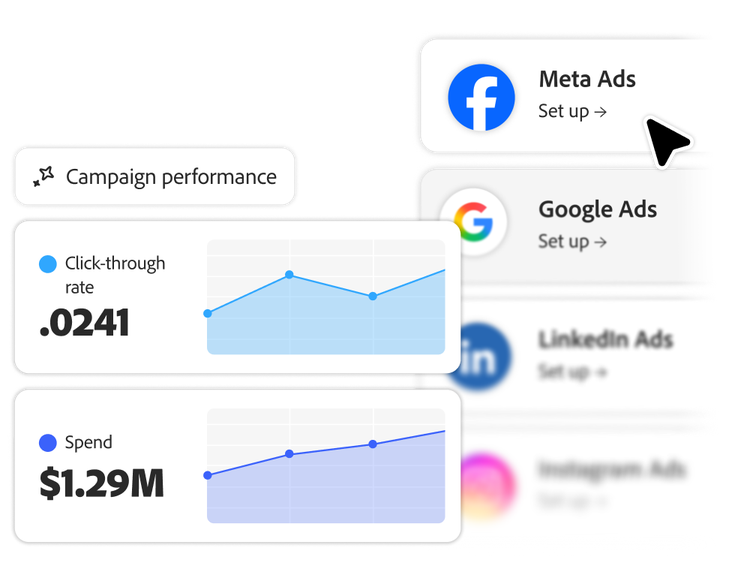
Adobe Marketing Campaign Analytics connects to paid media data via Adobe Experience Platform paid media connectors and ETL partners, so it can bring in performance data from leading search, social, programmatic and retail media platforms. Specific coverage depends on your connector configuration, but it is designed to support major networks such as Google Ads, Meta properties and other top ad platforms as those integrations are enabled.
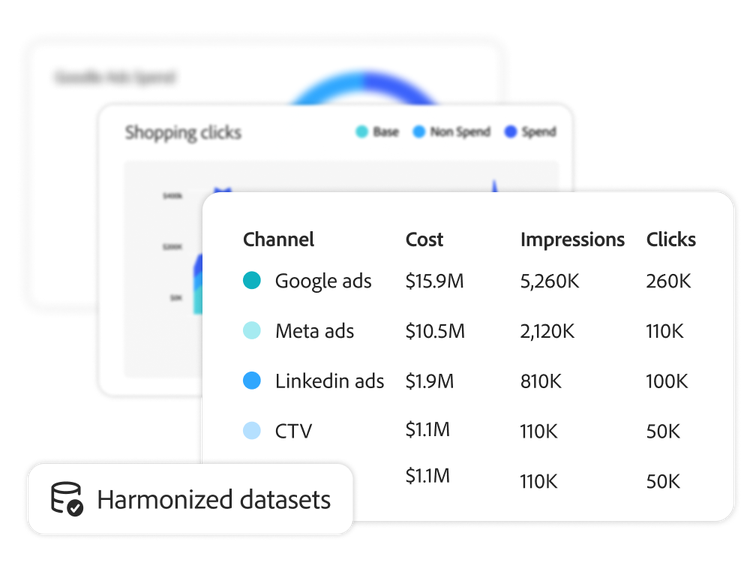
Adobe Marketing Campaign Analytics uses a common, cross-channel schema to normalise publisher data—standardising spend, impressions, clicks, conversions and key metadata like campaign, channel and creative. This lets marketers compare performance "apples to apples" across platforms and roll everything up into consistent, executive-ready views.
Once paid media sources are connected and validated, Adobe Marketing Campaign Analytics begins ingesting and harmonising data on its scheduled refresh cadence. Teams can typically start exploring unified performance views as soon as the first full data loads are processed, without needing customised modelling or SQL.
Adobe Marketing Campaign Analytics ties media spend and exposure metrics to downstream outcomes—such as conversions, revenue or pipeline—to calculate KPIs like ROI, ROAS and cost per outcome by channel, campaign and publisher. In advanced configurations, it can also leverage AI-powered measurement models from Adobe Mix Modeler to estimate the incremental impact of paid media on business results.
By unifying paid, owned and earned marketing data, Adobe Marketing Campaign Analytics shows which channels and campaigns are driving the strongest results and where performance is lagging. Marketers can compare publishers, tactics and audiences side by side, then use those insights — optionally combined with Mix Modeler's planning features — to shift budgets and optimise campaigns across the full funnel.