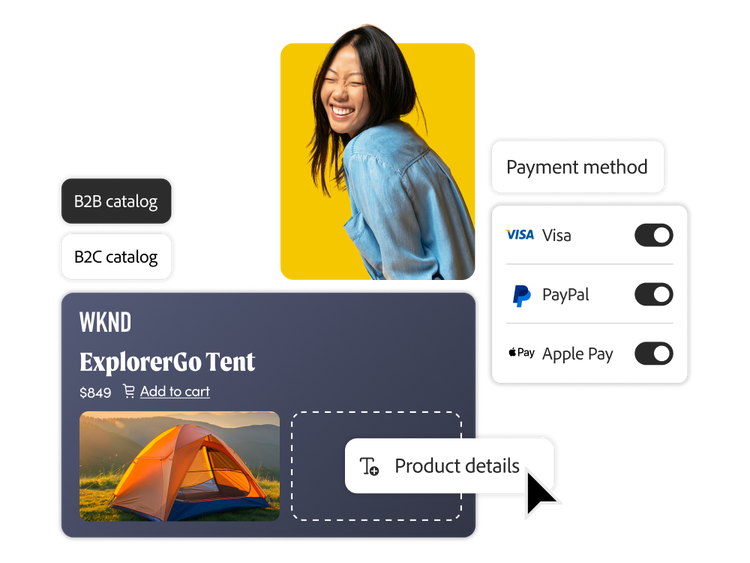
LLM-optimised product discovery focuses on structuring and enriching product catalogues and product detail pages so large language models (LLMs) can clearly understand what products do, how they’re used and why they matter. For ecommerce brands, this improves how products are interpreted and surfaced in AI search experiences — increasing the likelihood they appear in AI-generated summaries, recommendations and conversational shopping results aligned with shopper intent.
Agentic commerce is a model where agents act on behalf of shoppers to research products, compare options and complete transactions. Adobe Commerce supports both the Unified Commerce Protocol (UCP) from Google and Agentic Commerce Protocol (ACP) from OpenAI. This allows agents to securely access product data, check availability and pricing and complete transactions on the customer’s behalf.
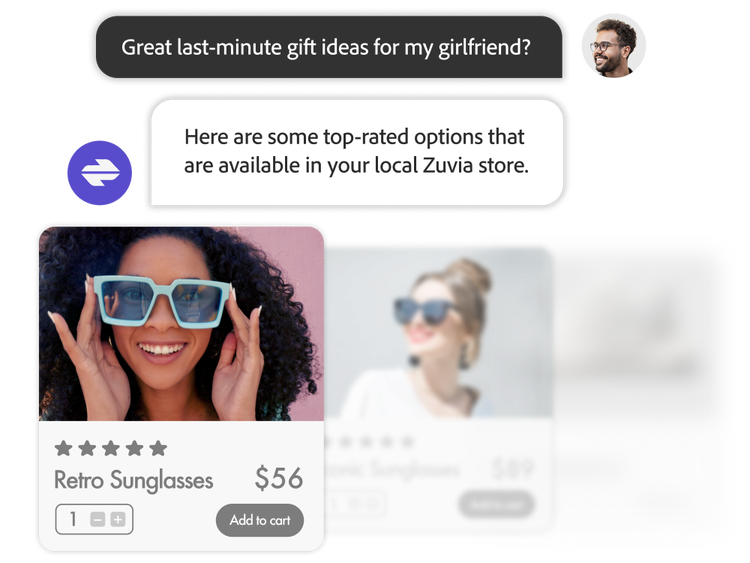
Conversational commerce enables shoppers to interact with AI assistants or chat experiences that can answer questions, guide discovery and suggest relevant products or bundles using real-time, accurate product information. By reducing uncertainty and helping customers make confident decisions, brands can improve conversion rates, increase average order value and drive repeat purchases.
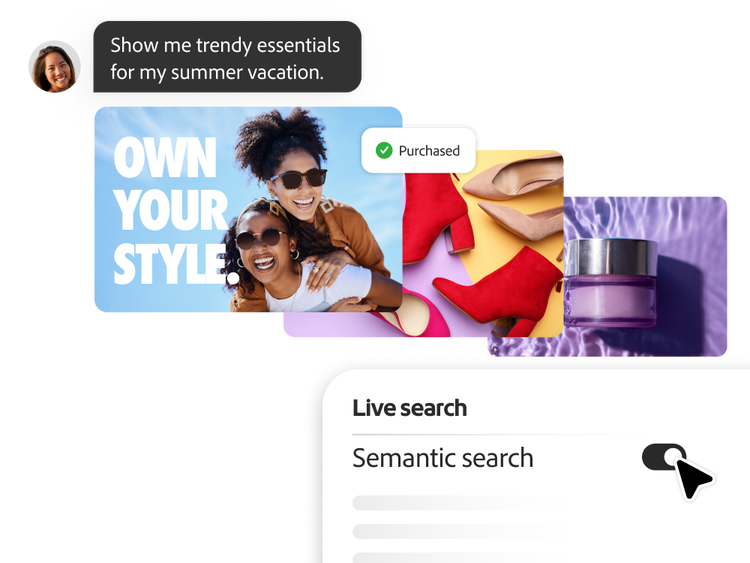
Semantic Search uses AI to understand the intent and meaning behind a shopper's query, rather than relying solely on exact keyword matches. It analyses the context of both search queries and product catalogue data to identify products that are relevant, even when shoppers use different words, phrases or natural language than what's in your catalogue. This helps reduce zero-result searches, improves product discovery and enables shoppers to find the products they're looking for faster — without requiring extensive manual merchandising or synonym management.
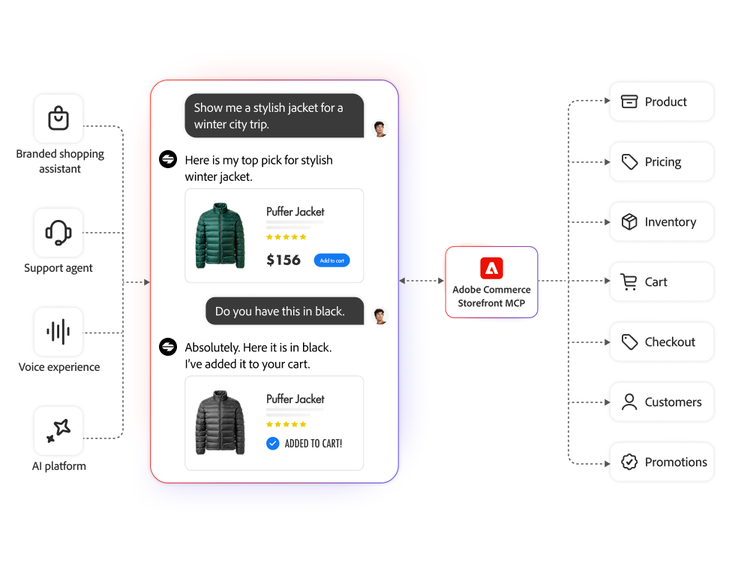
MCP (Model Context Protocol) is an open standard that allows AI agents to securely connect to your live data. The Adobe Commerce Shop Front MCP server exposes tools that agents can use to search your product catalogue, retrieve real-time pricing and inventory, manage basket contents and complete checkout — all without requiring customised point-to-point integrations. This means any compatible AI assistant or agent can deliver accurate, on-brand shopping experiences powered by your actual store data.