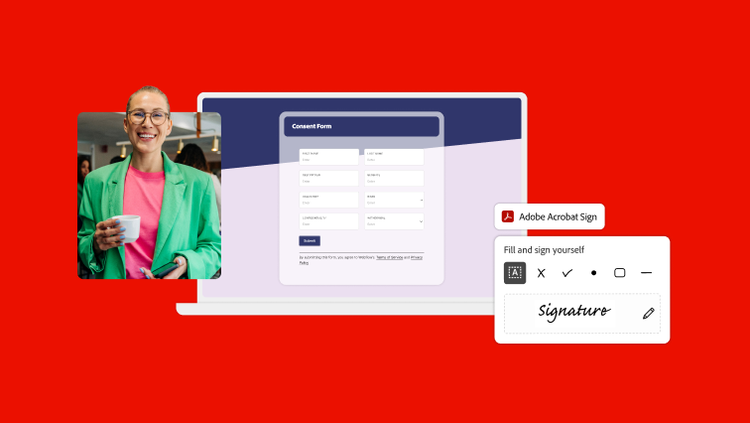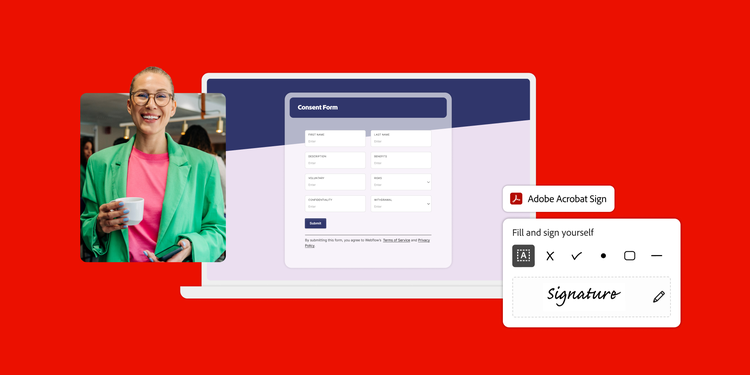
Educational institutions manage a significant volume of personal identity information. From K-12 schools to colleges and universities, all navigate a constant stream of activities that require consent. Field trips, sports participation, media coverage permissions, health emergency authorizations, and approvals for research studies or surveys are a few scenarios where consent forms are indispensable. Hence, ensuring data privacy while implementing digital consent forms is a crucial need for academic institutions today.
The traditional reliance on paper-based consent forms presents many challenges. Consider the sheer number of paper forms distributed each year and the often-frustratingly low percentage that are returned accurately, legibly signed, and submitted in time for the relevant activity or deadline. These paper-centric systems are inherently inefficient, with forms frequently being lost, damaged, or rendered useless due to illegible handwriting. They are also prone to errors and omissions, difficult to track systematically, and impose a substantial administrative burden on staff who are often already stretched thin. This inefficiency not only consumes valuable time and resources but can also directly impact student participation and access to educational opportunities.
The move towards digital consent forms is a direct response to evolving stakeholder expectations. Parents, students, and staff are accustomed to seamless digital interactions and expect educational institutions to offer digital solutions that are both convenient and protect data privacy. When critical processes, such as consent collection, remain tethered to outdated paper methods, it can lead to frustration and a perception that the institution is not attuned to the needs of students, parents, and teachers.
Adopting comprehensive digital consent forms and consent management systems is a significant differentiator, particularly in competitive environments like higher education recruitment or K-12 school choice programs. An institution that offers easy-to-use online consent forms demonstrates technological maturity, administrative competence, and a commitment to stakeholder convenience and data security.
This post will cover:
What is consent management?
Consent management is obtaining, recording, and managing user consent for the collection and use of their personal data. This includes informing users about what data is being collected, how it will be used, and their rights regarding that data. For educational institutions, schools, and universities, consent management includes data privacy and a wide range of permissions for various activities. This includes authorizations for student participation in extracurricular activities, such as sports or clubs, consent for emergency medical treatment, permissions for the use of student images or videos in media releases, and informed consent for participation in research studies or surveys conducted by the institution.
User consent is not a one-time event. It’s an ongoing process. Effective consent management involves clear and continuous communication with students and their families. It necessitates secure and auditable record-keeping to maintain an accurate history of all consents obtained. Additionally, comprehensive mechanisms must be in place to manage updates, changes, or withdrawals of consent over time, reflecting the dynamic nature of personal preferences and circumstances.
As educational institutions increasingly adopt a wide array of online platforms, learning management systems, and other educational technology tools, they collect a greater volume and variety of digital data. Consequently, consent management must comprehensively address permissions for these myriad digital data points and online interactions.
The importance of adhering to legal and policy requirements.
Educational institutions must ensure they have clear consent policies and procedures in place, which are regularly reviewed and updated. These policies should meticulously outline how consent is obtained, recorded, and managed for various activities and data sharing.
Schools, universities, and educational institutions must comply with legal and regulatory frameworks. For example, schools in the US must comply with the Family Educational Rights and Privacy Act (FERPA), which governs the privacy of student education records. Depending on the specific data and context, other regulations, such as the Health Insurance Portability and Accountability Act (HIPAA), may also apply to health-related information. Additionally, numerous state, provincial, and local laws and regulations impose specific requirements for handling consent.
How digital consent forms can benefit educational institutions.
Reduced administrative workload for educators and staff.
The adoption of digital consent forms yields substantial improvements in operational efficiency and significantly lessens the administrative workload.
- Streamlined distribution and collection: Digital consent forms can be distributed instantly to large, targeted groups via email, secure parent/student portals, or integrated communication platforms. This eliminates the costs and labor associated with printing, collating, and manual distribution, allowing staff to reach hundreds or thousands of recipients with a few clicks.
- Automated tracking and intelligent reminders: Advanced digital systems provide real-time dashboards that offer immediate status updates on each distributed form, showing who has received, viewed, opened, and completed it. Automated, customizable reminders can be scheduled for non-responders, drastically reducing the need for manual follow-ups by administrative staff and improving turnaround times.
- Drastically reduced errors and omissions: Online consent forms can incorporate features such as mandatory/required fields, drop-down menus with predefined options, checkboxes, radio buttons, and intelligent field validation. These features ensure that forms are submitted completely and accurately the first time, minimizing the need for corrections and resubmissions.
- Simplified, secured record keeping and digital document management: Completed digital consent forms are automatically stored in a centralized, secure digital repository. This eliminates the need for bulky physical filing cabinets and mitigates the risks associated with paper records, including loss, damage, and unauthorized access. This digital approach facilitates easy search and retrieval by authorized personnel, aligning with best practices for comprehensive digital document management. Such systems offer features like automated filing, AI-powered search, and centralized storage, along with instant retrieval, role-based access, and compliance tracking.
- Significant cost savings: The shift to digital processes results in tangible cost reductions. Institutions can minimize costs associated with paper, printing, toner, postage, and physical storage. Perhaps most importantly, they reclaim valuable staff time previously consumed by manual, paper-based administrative tasks, allowing personnel to focus on higher-value activities.
Increased consent form completion rates and participation.
Moving consent processes online directly contributes to higher and more timely completion rates.
- Confirmed digital receipt: Digital distribution methods provide reliable confirmation that forms have been received by the intended parents, guardians, or eligible students directly. This eliminates the inherent uncertainties of relying on students to deliver paper forms physically, ensuring a more direct and dependable communication channel.
- Unparalleled accessibility and convenience: A key driver for increased completion is the sheer convenience offered by online consent forms. Parents, guardians, or eligible students can review and complete these forms at their convenience from any internet-enabled device — whether a computer, tablet, or smartphone — at any time, from anywhere.
- Enhanced clarity and guidance: Digital consent forms can be designed to be more informative and user-friendly than their paper counterparts. They can include embedded help text for specific fields, clickable links to supplementary information or detailed policy documents, and expanded definitions for complex terms.
Improved data security, privacy, and compliance.
Digital consent solutions offer inherently stronger security and better support for privacy and compliance.
- Robust secure storage and granular access controls: Modern digital systems provide significantly more robust security measures than vulnerable paper files. These include features like data encryption, password protection for sensitive documents, and granular, role-based access controls. These controls ensure that only authorized personnel can view or manage specific consent information, safeguarding student privacy.
- Comprehensive and immutable audit trails: Digital platforms automatically generate comprehensive, time-stamped audit trails that meticulously log every action related to a consent form, ensuring complete transparency and immutability. This includes the date it was sent, opened, viewed, signed, saved, or when any changes were attempted. These immutable records provide a clear, irrefutable history for compliance verification, internal audits, and accountability.
- Inherent support for regulatory compliance: Digital consent systems can be specifically designed and configured to help educational institutions meet the stringent requirements of national privacy laws as well as other relevant data protection regulations globally. Features supporting these requirements are often built into the platform.
Adopting online consent forms: A step-by-step guide.
There are two key parts to enabling a paperless consent workflow: Building a digital form and enabling e-signing.
Build your form.
To build an online consent form, follow these steps:
- Identify required information.
- Create a digital form.
- Set field validation rules.
- Identify required fields.
Identify required information.
You will need to identify the required information for your consent form. Consent forms are tailored to the specific activity, your organization, and the laws and regulations of your state, province, or country. Start with basic information about the activity, such as the date and location. In many states, you may also be required to explain and list the risks involved clearly. Then you will need fields for the student’s name and ID, parent or guardian’s name, signature, and date. In some areas, you may also require the name and signature of a witness.
Create a digital form.
To build the content, you can start from scratch by using tools like Google Docs or Microsoft Word or scanning existing forms and converting them to PDFs.
Once you have your content, you can introduce fillable fields with applications like Adobe Acrobat or Adobe Sign.
Set field validation rules.
When creating or editing fields, you have a range of options, including text entry, check boxes, radio buttons, drop-down selections, initials, and signatures. Each offers features that make the form easier to complete and reduce errors, including default values, validation rules, and tips for the reader that can provide additional guidance.
Identify required fields.
To ensure that the forms are created correctly the first time, you can specify which fields are required and which are optional. The form cannot be signed or submitted unless the required fields have been completed.
Enable e-signing.
Enable e-signing by:
- Picking a tool.
- Distributing your form.
- Setting a completion date.
- Storing and referencing completed forms.
Pick your tool.
To enable electronic signatures on your new digital forms, select an e-signature tool. In addition to collecting and managing signatures, look for a tool that lets you build digital workflows easily to speed up and automate the process.
Distribute your form.
Some e-signature solutions integrate with a wide range of applications, such as Microsoft 365, so you can request signatures directly from your existing tools. You can also use a variety of different file formats and send files as email attachments, post them to your website, or use Adobe Document Cloud.
Choose completion date, enable reminders, and track status.
When you send a digital form, you can specify additional information, such as the desired completion date, and enable automatic reminders for participants who have yet to submit their signed consent form. You can also track the status of forms in real-time or receive notifications when they are viewed and signed.
Store and reference completed forms or collect information in a database.
Once the forms have been completed and signed, they can be stored in various ways. At its simplest, each form returns as a complete PDF that you can file in your preferred document management system. You can also collect the responses in a spreadsheet or database for easy review and retrieval of key information.
Creating your online consent form.
Other aspects to keep in mind when digitizing online consent forms include:
- Readability: Use clear, simple language to ensure forms are easy to read and understand. Define terms and acronyms and minimize their usage as much as possible.
- Language: Write in a language that recipients are comfortable with or provide a translation.
- Accessibility: You should aim to support a wide range of devices and signing options, including typing a signature, drawing on a touch screen, pasting a saved signature image, and/or using a digital certificate. However, accessibility also refers to support for all individuals with various abilities, including simplified formats, screen magnifiers, and text-to-speech capabilities.
- Privacy: There are many ways to protect the information in these forms and provide privacy. Document passwords offer the first line of security. The text on consent forms must be locked to prevent editing, and the full contents must be unalterable once they are signed. When necessary, additional identity verification techniques are available, including phone numbers, authenticator services, and government-issued IDs.
Visit Adobe to learn more about education-focused solutions that can help you digitize consent forms, as well as other forms like acceptable use policies and liability waivers.
Recommended for you
https://business.adobe.com/fragments/resources/cards/thank-you-collections/adobe-sign