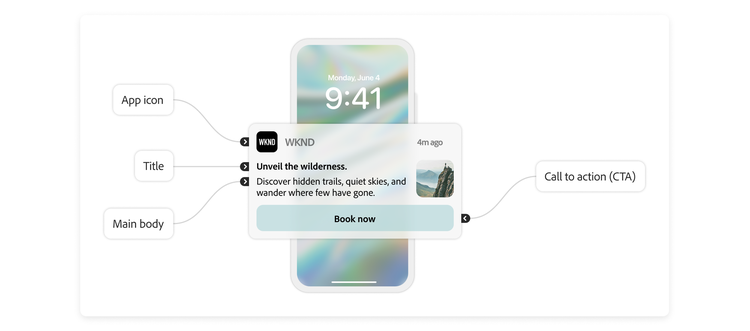
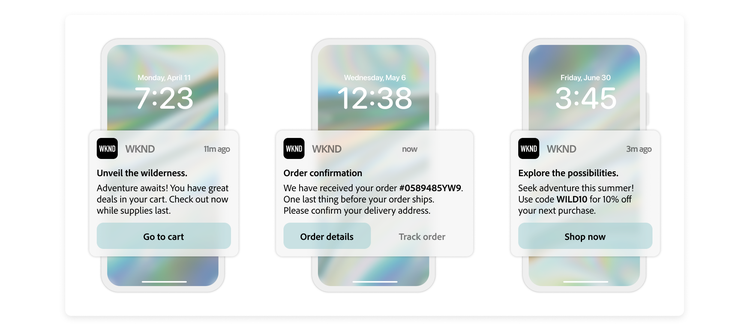
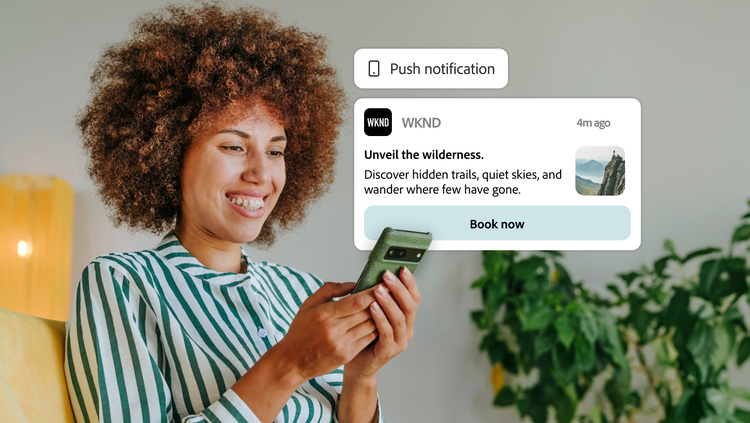
From a consumer engagement perspective, it’s nice to be notified immediately of certain milestones, offers, and other alerts, rather than having to consistently open a mobile app or log on to a website.
For example, a banking institution might use push notifications from their mobile app to alert customers of strange activity on their credit cards. The customer sees the alert when they pick up their mobile device and can react in a timely manner.
From a marketers' perspectives, interactions between customers and the brand help boost customer retention. Push notifications also encourage customer engagement that might not happen otherwise.
Those are just two examples, but the benefits are many:
- By providing personalized updates, users are more likely to engage with your brand. Done right, push notifications can be incredibly convenient for users.
- Push notifications can re-engage users that may be drifting away from your brand. With targeted encouragement to return, great offers, and relevant user content, you can increase retention rates.
- Push notifications are perfect to send quick messages or additional notifications. This could be a reminder of a flash sale, an appointment reminder, or a banking alert.
- Unlike SMS messages, push notifications tend to have a fixed cost rather than being charged per message. They also don’t come with strict character limits and have a good open rate.
- Push notifications, especially app-based notifications, are great at providing a personalized user experience. Marketing personalization can be a powerful tool to boost user engagement, so taking any opportunity to add personalization is good.
- Push notifications encourage app usage and engagement. Done right, you can promote retention and keep people in your app ecosystem.