For decades, marketers have been optimizing for human audiences. Whether engaging individual customers or targeting B2B buying groups, the goal has been to understand people’s needs and deliver personalized experiences that feel relevant, timely, and useful.
That work is not going away. But marketers now must account for another layer of influence: AI agents that help people discover, evaluate, and act on information before they ever reach a brand directly. At Adobe, we’ve repurposed a familiar acronym to capture this shift: ABM, or agent-based marketing.
As agentic AI advances, marketers need fresh ways to think about the roles AI can play. I find it helpful to frame AI in three ways — as a tool, a teammate, and a target audience. The brands best positioned to succeed will bring humans and AI together to better serve both.
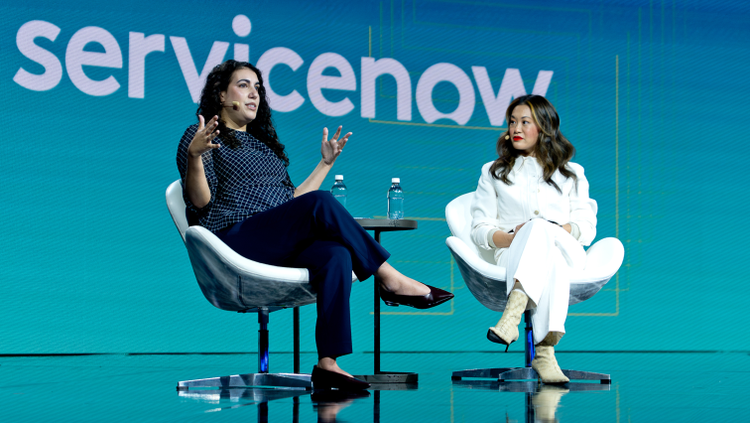
ServiceNow is one of the brands that put this approach into practice. With Adobe’s connected AI platform, including Adobe Experience Platform and Adobe GenStudio for Performance Marketing, the Fortune 500 company is transforming content operations, customer engagement, and marketing workflows to deliver more adaptive experiences at scale.
To understand what this shift looks like in practice, I sat down with Jenny Tobener, global vice president of digital at ServiceNow, who leads digital marketing and experience strategy, to discuss what success looks like in this new era of agent-based marketing.
The AI frenzy is very real. As the buzz continues to grow, how do you separate noise from what is actually impactful?
For us, efficiency is table stakes. Sure, AI can streamline workflows, but what else can it do?
We’ve been doing as many pilots as possible — dozens on my team, hundreds across ServiceNow — and we’ve developed a three-question litmus test that helps us decide what’s overblown and what’s worth investing in:
- Does the AI reliably improve the quality of our work?
- Does it unlock capabilities for us?
- Does it give us leverage by making us smarter?
If it checks these boxes, we believe that it has the potential to be transformational, not just useful. And we’ll invest in it.
With that clarity, how are you ensuring ServiceNow shows up in the right places as AI increasingly reshapes how audiences discover and engage with brands?
Historically, companies had control over their brand narrative. Now, AI is telling that story for them. And if brands don’t adapt their content strategies, they’ll struggle to remain visible.
While this may seem like a channel problem, I believe it’s actually a content problem. Fragmentation in your content becomes fragmentation in how AI represents your brand. So it’s vital to make content simple, accessible, and powerful. Ask yourself: “Are we telling a compelling story to our audience in a way that both humans and agents can respond to?”
Brands need thoughtful strategies for Reddit, YouTube, and other channels to build credibility with AI tools while winning over human decision-makers.
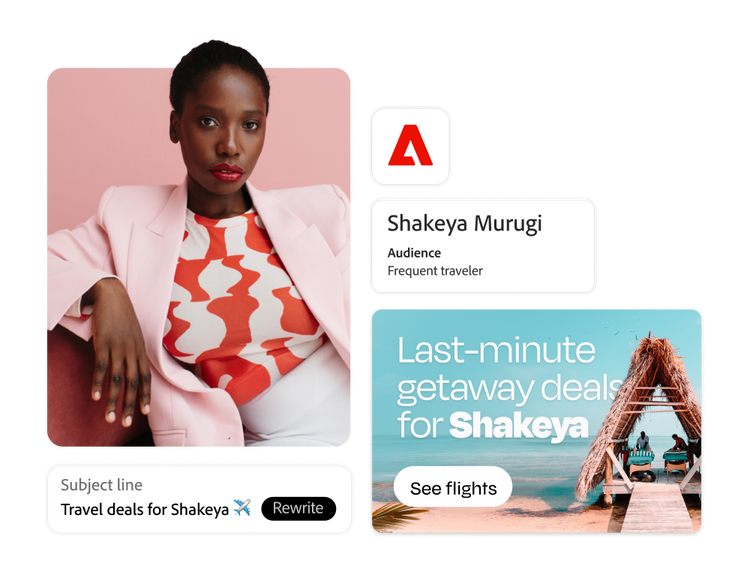
At Adobe, we think a lot about helping brands turn audience signals into personalized experiences that drive meaningful impact. How is your team tapping into AI as a curator of these experiences?
Understanding and acting on audience signals is one of those areas where I do consider AI to be a superpower, because AI is making a better kind of personalization possible.
Traditionally, we’d research static traits of audience members — firmographics, psychographics, and so on — and then churn out countless content permutations. As you’d imagine, it became impossible to account for every variable, to serve up the perfect experience for every audience member at every stage.
Now, we focus on signals. AI helps us interpret and prioritize the flood of incoming data, both human and agentic, and tailor experiences based on audience intent, context, and the problems they're trying to solve.
We no longer waste energy building every possible experience. Instead, we invest in the systems that help us bring together the right experience at the right moment and make it as meaningful as possible.