The life sciences industry sits at a pivotal crossroads. Scientific innovation, regulatory complexity, and rapidly evolving customer expectations are reshaping how organizations engage with healthcare professionals (HCPs), patients, and caregivers. Today’s competitive environment demands seamless, personalized experiences — yet many life sciences organizations struggle to deliver them at scale.
Adobe’s State of Customer Experience in Life Sciences in an AI-Driven World report highlights one clear theme: The future of life sciences customer experience (CX) will be defined by the intersection of AI-driven engagement, integrated data and content operations, and trusted interactions that resonate across all touchpoints.
Redefining engagement for a complex audience.
In life sciences, 'customers' encompass a diverse and nuanced ecosystem: physicians, nurses, pharmacists, caregivers, patients, and administrative staff. Each group arrives with distinct needs, expectations, and regulatory sensitivities. Traditional marketing and outreach models, built around generic messaging and episodic interactions, no longer suffice.
Customers now demand experiences that are personalized, timely, and contextually relevant — similar to what they receive in retail or consumer tech, but with the added requirement of clinical accuracy and regulatory compliance. This expectation mirrors broader trends in healthcare and life sciences where brands must deliver experiences that feel relevant yet trustworthy.
Yet, many life sciences organizations still operate with siloed data, disconnected workflows, and fragmented content libraries, which hinders their ability to deliver seamless experiences. Solving this challenge requires more than a tool — it demands a modern content supply chain that aligns strategy, creation, and measurement across the enterprise.
Looking at AI as a strategic enabler — not just a technology.
Artificial intelligence is transforming every corner of life sciences — from drug discovery and clinical trial optimization to patient engagement and sales enablement. But the State of CX in Life Sciences report underscores an important reality: AI’s true value lies not in automation alone but in its ability to connect insights with human needs.
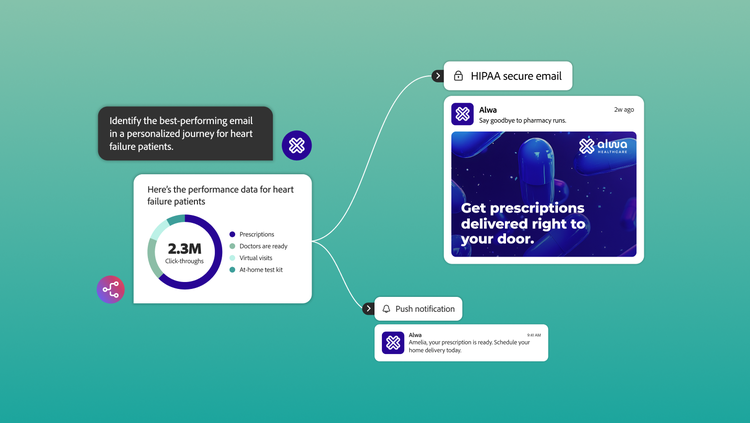
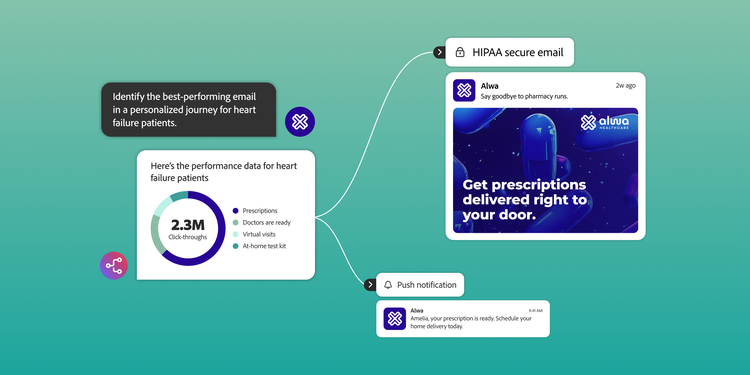
AI-driven discovery and engagement tools are rapidly becoming the new 'front door' for HCPs and patients. Intelligent search, natural language interfaces, and predictive analytics help audiences find the information they need quickly — while also enabling organizations to understand intent at an individual level. These capabilities improve conversion and satisfaction while respecting regulatory guardrails.
In practice, this means using AI to:
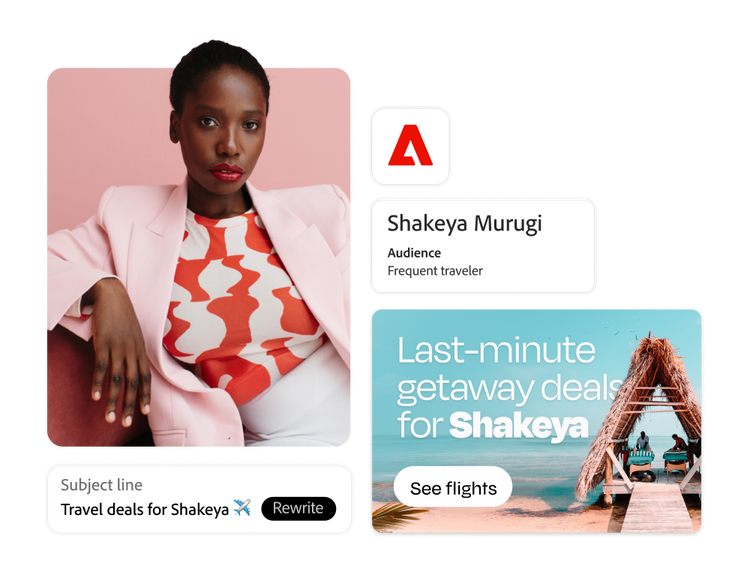
- Personalize interactions across channels based on real-time customer context.
- Recommend relevant educational materials tailored to a clinician’s specialty or a patient’s condition.
- Predict engagement patterns to proactively present support when it matters most.
However, responsible AI implementation requires strong governance, ethical frameworks, and continual validation. In a regulated industry like life sciences, transparency and compliance aren’t optional — they are essential to maintaining trust.
Unifying data, content, and experience.
AI cannot perform in a vacuum. Its effectiveness depends on a unified foundation of data, content, and workflows. Without integrated customer profiles and a connected content ecosystem, personalization efforts falter and experiences become fragmented.
Life sciences organizations often struggle with disparate systems — CRM platforms, medical information repositories, regulatory document stores, and campaign tools that don’t talk to each other.
Breaking down these barriers unlocks powerful capabilities:
- Unified customer profiles that allow organizations to personalize experiences for HCPs and patients based on behavioral data across channels.
- Dynamic content orchestration that automates regulatory reviews and ensures medical, legal, and compliance (MLC) oversight without slowing delivery.
- Cross-functional analytics that measures engagement, optimizes journeys, and informs strategic decisions in near-real time.
Modern CX leaders are investing in platforms that unify these elements into a single orchestration layer — supporting personalized, compliant engagement at scale while reducing operational friction.
Moving from compliance burden to competitive advantage.
In regulated sectors like life sciences, compliance has often been viewed as a constraint on creativity and speed. But when integrated thoughtfully into the content supply chain, compliance can be a competitive advantage.
Digital tools that embed compliance checks into workflows — such as automated regulatory review or AI-assisted risk alerts — enable teams to move faster without sacrificing safety. These capabilities also free up medical and legal reviewers to focus on high-value decisions instead of repetitive checks. Integrations with specialized compliance platforms (for example, compliance-focused content assistants) further streamline the process, reducing bottlenecks and accelerating go-to-market execution.
Establishing empathy at scale.
Technology alone won’t deliver exceptional customer experiences. The organizations that succeed will be those that apply digital tools with empathy and human context at the core. Patients and providers alike have made it clear that experiences must be not just personalized, but relevant, respectful, and supportive of their goals — whether that means clearer educational resources, easier access to support, or streamlined clinical workflows.
AI can augment human expertise, enabling faster responses, richer personalization, and deeper understanding of customer needs. But it must augment — not replace — the human touch.
Looking ahead: A strategic imperative.
The life sciences industry is at a moment of transformation. As AI, data, and digital experience converge, organizations that reimagine customer engagement will not only deepen relationships with HCPs and patients — they will drive better health outcomes and sustainable growth.
The future of life sciences CX lies in connected experiences powered by integrated data, governed AI, and human-centered design. Those who lead with clarity, empathy, and purpose will define the next era of engagement in healthcare and life sciences.
Explore the full report to see how leading life sciences brands are closing the personalization gap and scaling AI responsibly.
Dr. Salinas is a trailblazer at the intersection of medicine, technology, and strategy — driving the future of healthcare through bold innovation and visionary leadership. With over two decades of experience spanning global markets, Dr. Salinas has redefined how healthcare and life sciences organizations engage with patients, providers, and regulators in an increasingly digital world.
Known for his strategic vision and deep industry expertise, Dr. Salinas has held leadership roles at top organizations including Salesforce, Stryker, Pfizer, and Best Buy Health where he pioneered strategies that empowered companies to reimagine their commercial models, enhance patient outcomes, and scale innovation across the globe.
As Head of Global Industry Strategy for Healthcare and Life Sciences at Adobe, he partners with leading organizations to architect transformative solutions that elevate care delivery, accelerate innovation, and unlock new value across the health ecosystem. His work is rooted in a deep understanding of clinical practice, market dynamics, and emerging technologies — from AI and wearables to connected devices and digital therapeutics.
A frequent speaker and thought leader, Dr. Salinas is shaping the dialogue around the future of health — where data, empathy, and innovation converge to create a more intelligent and inclusive system of care.