Adobe Experience Manager Sites Features
Headless CMS
Create and manage content as reusable fragments that can be delivered to any front-end with out-of-the-box authoring options for headless and headful delivery.
Decoupled content management
Let marketers author content while developers simultaneously build and ship code by separating front-end applications from the back-end content management system (CMS).
- Content models. Organize and structure content for your site or app using existing content model templates or by creating your own.
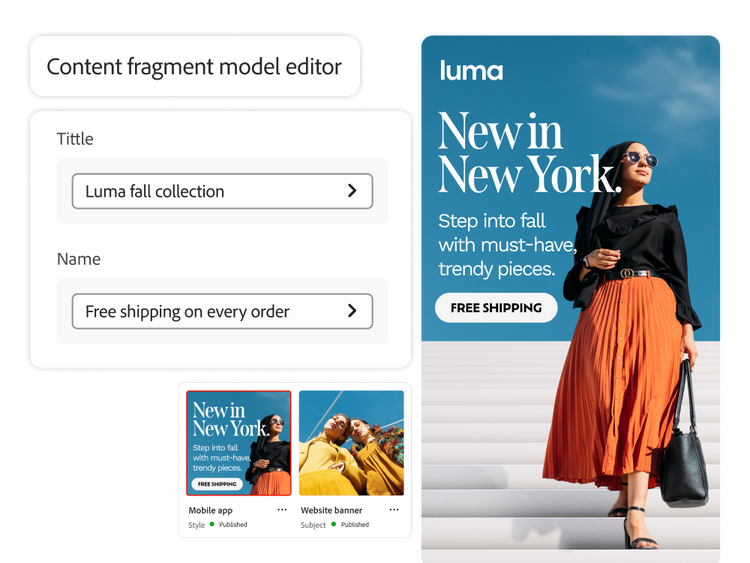
- Content Fragments. Design, create, publish, and reuse content across delivery implementations, whether headless, headful, or hybrid.
- Content Fragments editor. Quickly create and edit content fragments across digital properties using a familiar form-based editor with bulk editing capabilities.
- Experience Fragments. Group content and layouts to create channel-agnostic, reusable fragments that can be published to any screen, ensuring consistent messaging and design without building multiple creative assets.
- Multisite management. Fluidly create and manage content variations across multiple sites by propagating source content structure to connected live copies with one click. This allows for inheritance across organizations and global content structures.
Visual editing
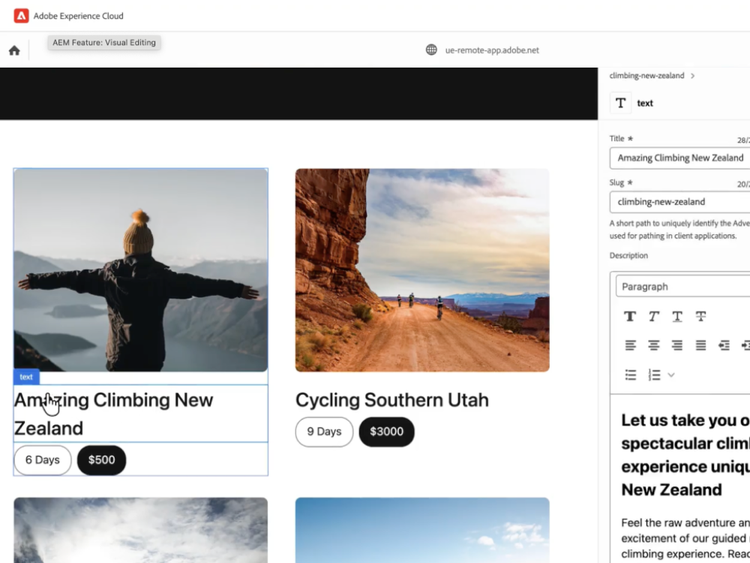
Edit and preview content in real time — regardless of the front-end framework or where the content is rendered — with what-you-see-is-what-you-get (WYSIWIG) editing in Universal Editor.
- Visual editor. Visually edit images, copy, videos, and more as they contextually appear on the page or within the page structure using nested components.
- Agnostic framework. Use any front-end framework (React, Vue, Angular, etc.) while easily authoring pages with intuitive drag-and-drop tools. Experience Manager Sites supports any rendering architecture — server, client, or edge across local or remote domains.
- Flexible editing. Edit any aspect of the experience, even those that require additional metadata or the application of different styles, such as columns, carousels, tabs, accordions, and more.
- UI customization. Customize the Universal Editor by adding extensions, including features such as experimentation, task management, and AI-generated content variations.
Content delivery
Power faster, more efficient digital experience delivery with intuitive APIs.
- GraphQL. Quickly deliver reusable, structured content to other applications in JSON format.
- Content Services. Build pages with reusable templates and components and expose them via Content Services APIs as Representational State Transfer (REST) endpoints, providing each page with its URL.
- Persisted queries. Reduce query execution using HTTP caches or the Experience Manager Sites content delivery network. Client applications can request persisted queries with GET requests for fast edge-enabled execution.
- Web-optimized image delivery. Deliver images from your digital asset manager in WebP format via GraphQL for faster page load times and a 25% reduction in download size on average.
Experience optimization
Go beyond content management to deliver high-performing experiences.
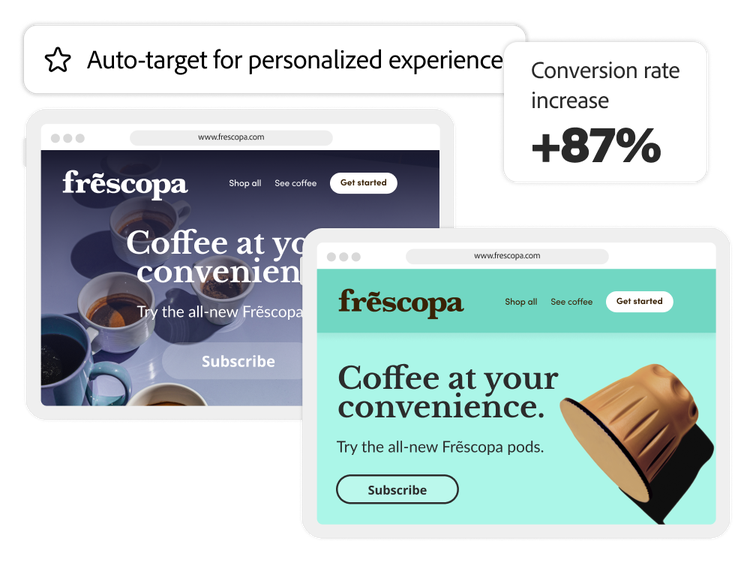
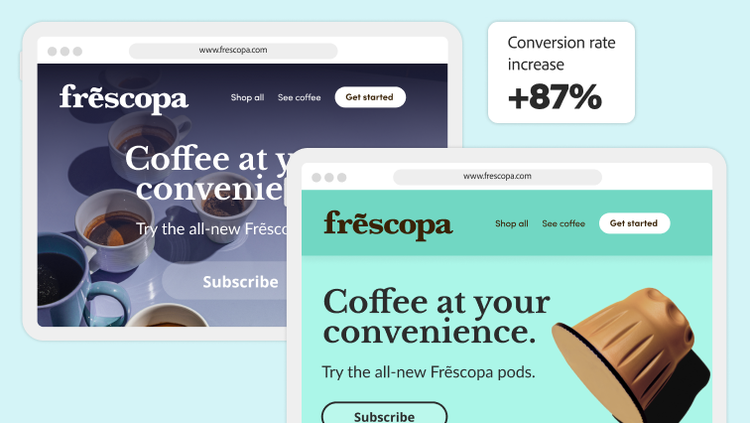
- Personalization. Optimize customer experiences by publishing structured content to personalization tools like Adobe Target, Adobe Journey Optimizer, or third-party tools for advanced A/B testing and omnichannel personalization.
- Build once, reuse everywhere. Create structured, reusable content once using Content Fragments, and deliver it via GraphQL and APIs to any app or front end. This allows teams to create fast, consistent experiences without channel-specific rebuilds as they grow and scale content.
Learn more about headless CMS.
Content as a Service v3 - headless-collection - Friday, February 20, 2026 at 14:57
Learn how to use headless CMS features.
Find what you need in our vast collection of how-to content — including documentation, tutorials, and user guides.