Content as a Service v3 - healthcare - Tuesday, July 15, 2025 at 13:21
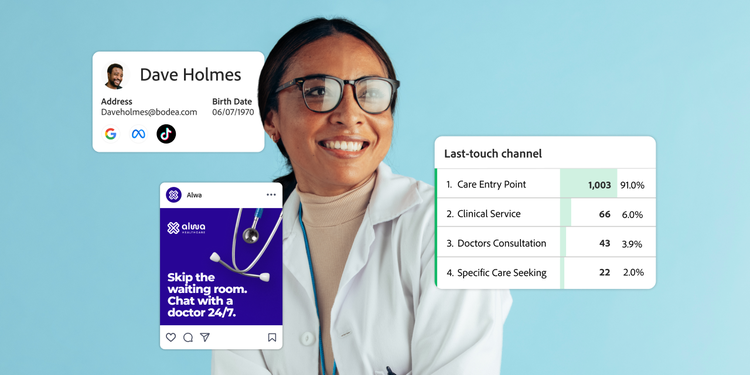
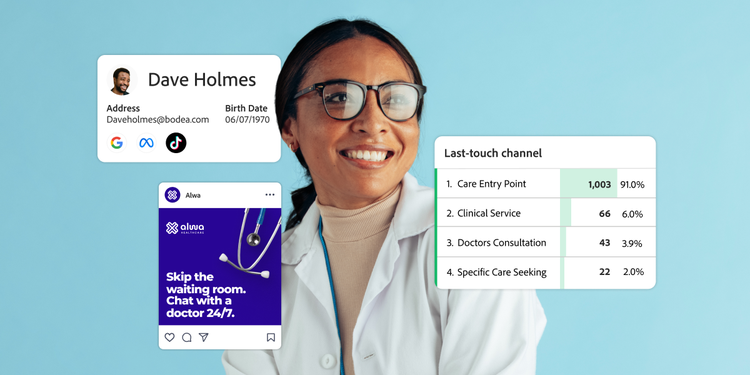
Three ways healthcare organizations can elevate patient care.
Data-driven healthcare is redefining how providers connect with patients — transforming fragmented interactions into secure, personalized, and consistent experiences across every touchpoint.
This guide explores three ways healthcare organizations can elevate patient care in the modern age: using real-time insights for personalized engagement, mapping journeys to reach patients at the right moment, and streamlining workflows through connected data and automation.
From personalized communications and coordinated care journeys to simplified operations, Adobe helps healthcare leaders modernize patient engagement, improve outcomes, and drive sustainable growth — all while maintaining security, privacy, and trust.
Three ways to elevate patient care with a first-party data strategy.
Healthcare organizations strive to understand their patients’ needs and deliver the best care possible. But a competitive landscape, digital-first disruptors, and evolving consumer expectations within a highly regulated industry pose significant challenges.
Modern, data-driven healthcare helps improve experiences and outcomes by enabling greater self-education and preventive care. With more data, providers can build stronger relationships with patients by understanding their needs and tailoring care to everyone. But how can healthcare organizations safely leverage consumer expectations with healthcare data to engage patients with relevant, personalized experiences — while maintaining the highest standards of data security, privacy, and regulatory compliance?
In this guide, we explore three ways healthcare organizations can strengthen patient connections, deliver better care experiences, and drive improved outcomes:
1. Personalized experiences: Harness patient data to deliver the right content.
2. Journey mapping: Reach patients at the right moment.
3. Optimize workflows: Streamline operations for consistent health experiences.
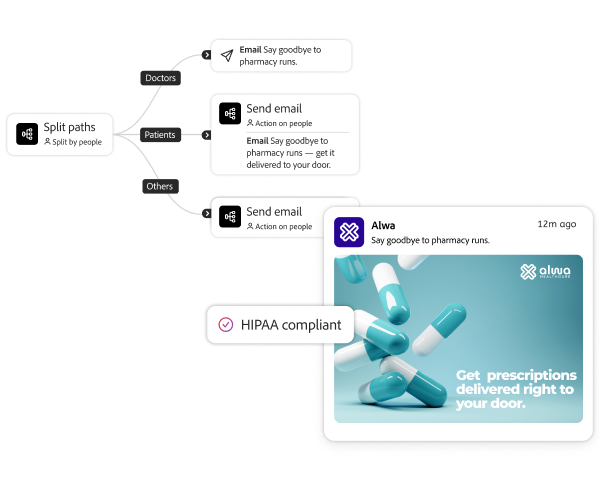
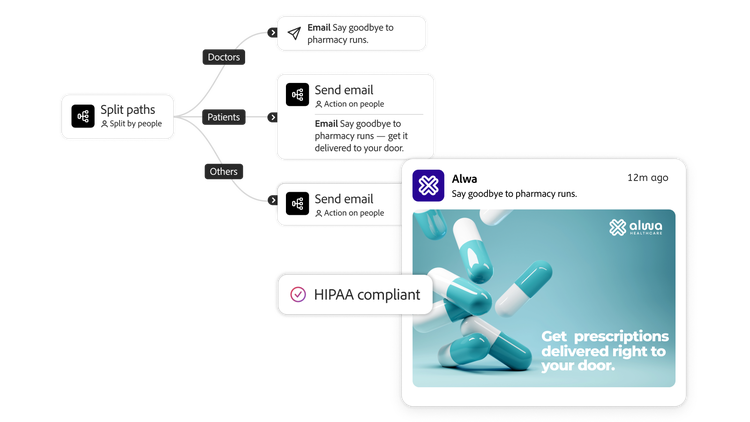
Personalized experience: Patient data can help provide treatment solutions.
When you have real-time insights into what your patients need, you can show them you care by proactively addressing their needs and providing relevant information. With 74% of adults aged 40 or older seeking health-related information online, healthcare marketers must be ready with content tailored to each individual’s health concerns – whether it’s education on postpartum depression for a new mom or a list of in-network physical therapists for an injured athlete.
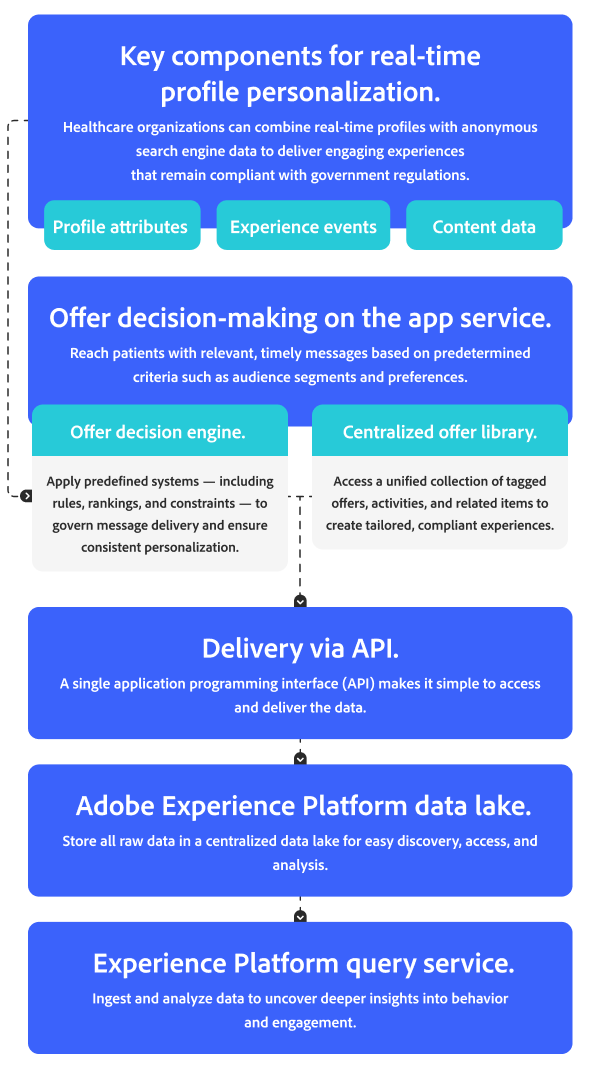
The good news is that you already have the data that gives you real-time insights. By combining data sources such as electronic health records, web activity, and even wearable medical device data, you can create unified customer profiles with HIPAA-ready solutions. Forward-thinking organizations can then enhance their data collection strategy by pairing these unified profiles with anonymous search engine data to better understand what consumers care about most in the moment. For example, if search trends indicate someone is researching diabetes care, you can use that insight to deliver personalized, relevant content about diabetes when the consumer visits your website.
Data protection is paramount. HIPAA-ready technology in Adobe Real-Time CDP, Adobe Journey Optimizer, Adobe Customer Journey Analytics, and other Adobe applications makes HIPAA-compliant personalization even easier, enabling you to automatically ensure compliance — from the moment you collect a consumer’s data to the moment you deliver a personalized message.
The good news is that patients expect a data-driven personalized experience. According to a McKinsey survey, 74% of healthcare consumers are willing to share personal health information to improve their health journey and receive personalized health recommendations. Most recognize that sharing data can improve their experience in a variety of ways, such as receiving appointment reminders and follow-ups based on their patient journey.
Journey mapping: Reach patients at the right moment.
Navigating the healthcare system can be intimidating and stressful at times. But by engaging patients at the right time, you can reduce anxiety, improve care quality, and build lasting trust that contributes to better long-term health outcomes. Healthcare organizations that fail to respond across all channels or lack these services risk losing potential new patients to competitors who do.
Some healthcare journeys, like someone picking up over-the-counter medication for a seasonal cold, may seem predictable. Others, such as a cancer diagnosis can follow a far more complex path that is more difficult to predict due to the nature of that disease. Even when managing the most common and benign medical condition, patients can change their priorities as they move through different stages of their journey.
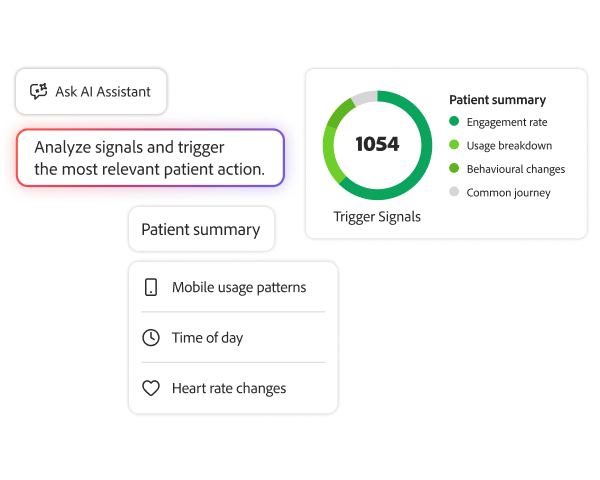
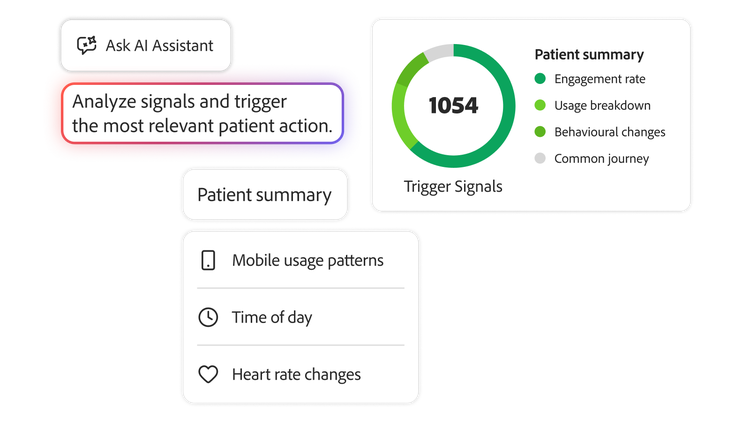
With artificial intelligence and machine learning, healthcare organizations can listen and respond to real-time signals that indicate patients’ needs — providing trusted expertise that meets them where they are and helping them take the next step in their health journey. This orchestration is simplified with Adobe Journey Optimizer, which uses predictive intelligence to deliver relevant information exactly when and where the patient needs it.
Suppose you’re serving patients who use real-time data sources, such as medical or activity-tracking devices. In that case, you can monitor any changes that may require engagement or a relevant resource. Providers can also help patients stay on track through automated follow-ups that include sending reminders and preparation instructions, post-op guidance, and follow-up plans for patients and caretakers.
Optimize workflows: Streamline operations for consistent health experiences.
Inconsistent and inefficient workflows can cause frustrations and impose a high financial toll on organizations. Administrative complexity remains a massive challenge. According to McKinsey, the healthcare industry has a $1 trillion improvement opportunity through administrative simplification — one of its key performance drivers.
Healthcare consumers experience this complexity — and the high cost of healthcare — in the form of duplicated marketing efforts, administrative or billing errors, or the general “red tape” of policy and regulation. To improve outcomes, organizations need clear communication, efficient workflows, and systems for continuous improvement. Otherwise, they risk wasting time and resources and driving teams toward burnout.
Rethink how your organization collaborates.
The solution to this frustration is to improve how your teams and departments communicate and share data. It’s discouraging when a patient shares their information during a phone call, only to repeat it later by email or through a mobile app.
For teams to work in lockstep with one another — and with partner organizations — you’ll likely need to upgrade channel-specific legacy systems. By switching to a cross-channel solution, you’ll gain continuous insight into how your healthcare consumers interact with your organization. You can then use data from all these interactions to connect the journey across channels and address any gaps that make it difficult for patients to get what they need.
With technology that connects data and content across multiple channels, you can tell the same story everywhere your patients go. This capability is powered by Adobe Real-Time CDP, a secure and compliant single source of information that all your teams can access. It creates a unified data source that can significantly improve patient experiences. When you have systems in place to track patient interactions across all touchpoints, you empower teams to collaborate effectively. This proactive approach reduces the frustration patients feel when communicating with siloed teams reliant on outdated or inaccurate patient data.
What personalized patient experiences look like.
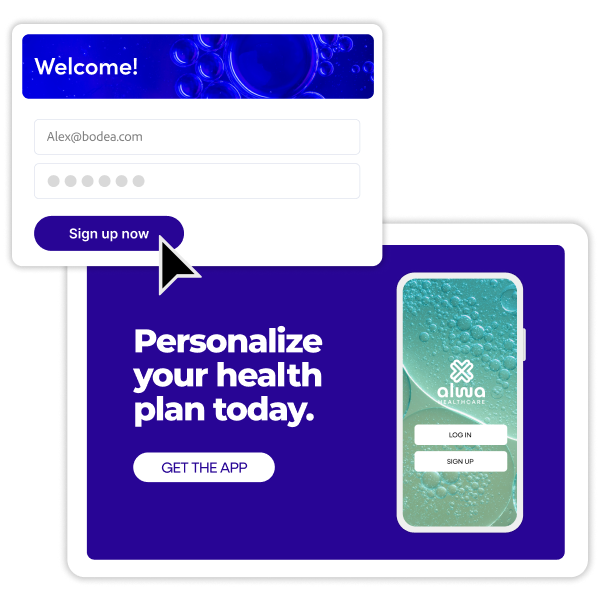
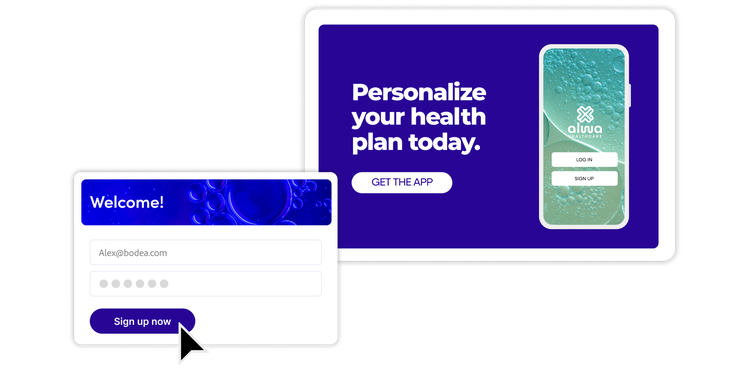
When a new patient with type 2 diabetes subscribes to their endocrinologist's newsletter, they also receive healthy recipes from the clinic’s nutritionist and a text offer for a trial membership to a local fitness facility. Upon logging into the practice’s website, they receive a tailored message prompting them to download an app that tracks their diet, exercise, and vital statistics. The app then shares this data with their endocrinologist, cardiologist, and general practitioner — ensuring comprehensive and collaborative care.
This type of cross-team integration is powered by predictive insights that help you determine which content to deliver to which patient on which channel. When combined with a centralized location for managing assets, you can create customer-first experiences across every channel and for every person you serve.
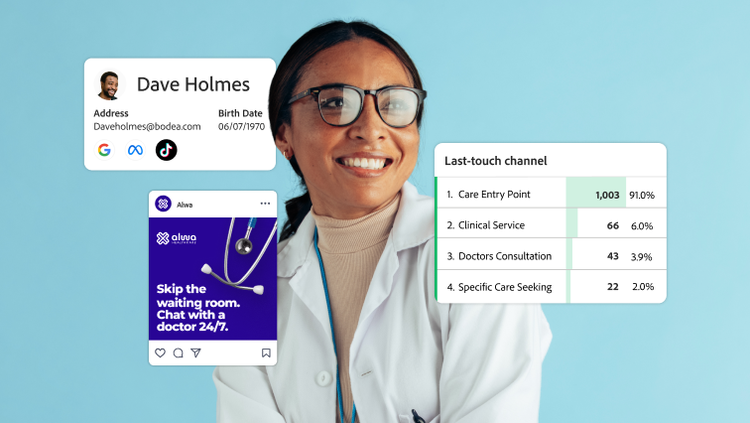
Creating targeted, personalized outreach to win over prospective healthcare consumers is no small task. Adobe Journey Optimizer and Adobe Customer Journey Analytics can help you deliver tailored experiences based on past interactions — driving enrollment, purchases, and appointment conversions.
How Adobe helps healthcare organizations.
Adobe offers HIPAA-ready solutions that respect patient preferences to deliver exceptional experiences. Powered by Healthcare Shield, Adobe Experience Cloud for Healthcare sets the standard for responsible consumer data management — by ensuring patient health information is created, received, transmitted, and maintained in accordance with industry-required safeguards, while also honoring consent and preferences.
The healthcare tech Rx to create industry-leading patient experiences.
Adobe Real-Time CDP.
Adobe Real-Time CDP and Healthcare Shield work together to create unified profiles in a fully HIPA-ready data platform, enabling you to capture engagements in real time and deliver the most relevant content to everyone. With the intelligent decision engine of Real-Time CDP, you can use real-time customer behavior data to inform future engagements and give patients the information they need.
Adobe Journey Optimizer.
Adobe Journey Optimizer manages complex journeys across channels in a single application, improving patient engagement from one interaction to the next. Using generative AI for personalized offer decisioning, Journey Optimizer makes sure you’re consistently delivering the best offer to every patient based on all their past engagements.
Adobe Customer Journey Analytics.
Adobe Customer Journey Analytics unifies data from online and offline channels to provide a clear and complete picture of your customer journeys. Use AI Assistant to speed up analysis, discover hard-to-find insights, and predict future behavior with confidence.
Sources
“Where the 40-Plus Go for Health Info,” AARP, 2024.
“Engaging the evolving US healthcare consumer and improving business performance,” McKinsey & Company, 2024.
“How Pfizer is transforming its content supply chain to bring scientific breakthroughs to market at lightspeed,” Adobe, 2024.
“How the healthcare industry can weather ongoing challenges,” McKinsey & Company, 2024.
“Adobe Experience Cloud for Healthcare and Life Sciences,” Adobe, 2025.
Title
Elevate patient care with Adobe.
cardDate
2026-02-04
cardImage
CardDescription
Discover how Adobe helps healthcare organizations deliver secure, compliant, and personalized experiences that improve patient care.
primaryTag
caas:content-type/guide
Tags
caas:content-type/guide, caas:products/adobe-real-time-cdp, caas:products/adobe-journey-optimizer, caas:products/customer-journey-analytics, caas:industry/healthcare