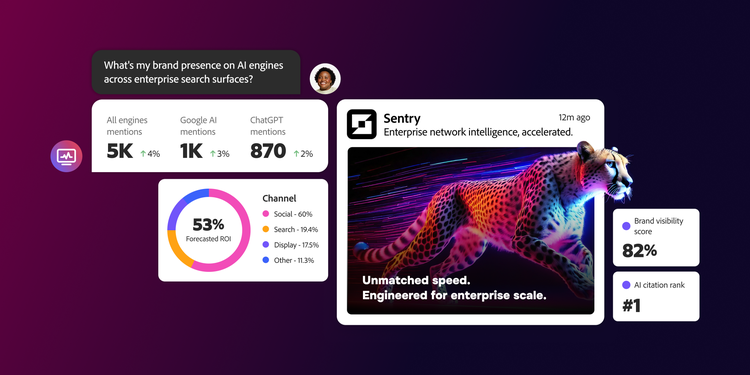
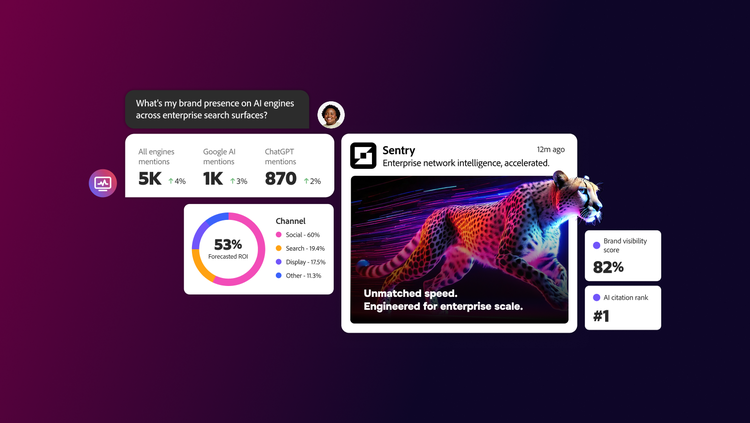
From a measurement standpoint, Search Everywhere Optimisation requires expanding analytics beyond clicks and rankings to include AI citations, share of voice in generated answers and accuracy of brand representation.
AI search marketing tactics in a search everywhere strategy.
AI search marketing tactics are the operational practices brands use to ensure their content is accurately interpreted, trusted and cited by AI-driven search and answer systems. This is generative engine optimisation (GEO), also called answer engine optimisation (AEO). It’s a discipline focused on visibility, accuracy and influence in AI-driven search environments, including zero-click journeys where the answer is delivered without a website visit.
In a search everywhere strategy, these tactics should be built into your operating model:
- Design content for AI interpretation. Agents synthesise information and prioritise quality, context and veracity. If content is unclear, unstructured or not machine-readable, it risks being overlooked or misrepresented.
- Establish shared sources of truth. Consistent messaging across touchpoints is core to omnichannel operations. In AI-led discovery, it becomes critical because systems draw on off-domain sources, like publicly indexed forums, that shape how your brand is described, even if you don’t control them directly.
- Align teams around discovery outcomes. LLM optimisation is cross-functional and requires shared dashboards, owners and aligned goals across marketing, SEO and communications.
- Embed governance and feedback loops. Monitor your AI footprint and take corrective action when representation falls short, especially in opaque ecosystems where agent logic is rarely transparent.
- Build adaptability into workflows. There’s a rapid change underway, with algorithms shifting and AI agent logic evolving. A sustainable model assumes continuous updates to content, technical delivery and measurement.
Search Everywhere Optimisation: The four components of a holistic search strategy.
A search everywhere approach works best when it’s treated as a system rather than a set of disconnected campaigns. Here’s a practical framework that connects classic SEO with social search and AI-led discovery and adds app store optimisation as a fourth pillar.
Search engine optimisation is the source of truth.
Within a search everywhere framework, SEO evolves into holistic SEO, where technical performance, content quality, structured data and machine-readability work together to support both human users and AI systems.
SEO is still the foundation because it is where much of your authoritative content lives. In a search everywhere strategy, that home base also needs to be readable and usable by machines that summarise and cite content.
AI systems may capture only a partial version of a page, missing critical details such as product descriptions and pricing. A practical way to start improving AI search visibility is to evaluate machine-readability and compare what a person sees to what an agent can retrieve. Browser extensions can provide a fast diagnostic to measure machine-readability, highlight content hidden from agents and help teams identify high-impact pages to fix first.
Social platforms are not only channels for awareness. They function as intent-driven search surfaces where buyers look for authenticity and proof. Social media marketing is about connecting with your audience in a two-way dialogue, supported by practices such as community management, engagement, consistent profiles and analytics. It also notes that customers search for brands on social media during the purchase process.
Search Everywhere Optimisation treats those behaviours as discovery signals, not nice-to-have engagement. Reddit, for instance, is a forum-style platform where users start threads around specific topics and businesses can engage with communities aligned with their target audiences. For enterprise teams, this means investing in community-relevant content, answering high-intent questions and maintaining consistency, so decision-makers can validate what they hear elsewhere.
If your organisation needs a broader playbook for planning, governance and team structure, you can check the Definitive Guide to Social Media Marketing. It is a resource covering platform selection, omnichannel integration, team structure and measurement.
Generative engine optimisation (GEO) as the new discovery layer.
This is where generative engine optimisation (GEO) becomes critical. GEO focuses on improving how often and how accurately a brand appears in AI-generated responses. Agents synthesise information, weigh credibility and deliver distilled answers in systems that are less transparent than traditional SEO. Brands should track AI referral traffic and discovery behaviour because appearing in generative AI responses is now often tied to being in a consideration set.
Measurement becomes a key differentiator in AI-driven discovery environments. Unlike traditional search, where rankings and traffic provide clear signals, AI-driven answers require new ways to track visibility, influence and brand representation. Key capabilities include:
- A visibility score for tracking brand presence in AI-generated answers
- Competitor benchmarking
- Opportunities for content and technical improvements, including schema and crawlability
- Collaboration across marketing, SEO and communications
To compete in an AI-driven discovery environment, modern marketing and technology leaders need capabilities that go beyond traditional SEO and analytics.
This is where solutions like Adobe Brand Visibility become critical. They serve as the operational layer for monitoring AI visibility, connecting discovery signals to business outcomes, and enabling teams to move from insight to action.
Brand Visibility is a generative AI-first application for generative engine optimisation designed to help brands enhance their visibility, accuracy and influence in AI-driven search environments. It provides insights into brand presence in AI-generated answers, prescriptive content recommendations and automated optimisation fixes.
App store optimisation as search real estate.
For many brands, app shops are not solely consumer channels. They are discovery surfaces for customer portals, partner tools and employee experiences. At the same time, the ecosystem continues to grow.
App store optimisation (ASO) is the discipline of improving an app’s visibility and conversion rate inside app shops to drive more organic downloads. If you understand SEO, the mental model is familiar: align metadata to intent, make the listing convert and iterate.
Make discovery consistent, measurable and actionable.
Search is now a distributed system, spanning traditional engines, social and community validation, generative AI answers and app store discovery. Winning in this environment requires one shared source of truth, machine-readable content that agents can accurately interpret and an operating model that keeps your brand represented consistently across every surface. The teams that lead will measure beyond clicks and rankings to include visibility and citations in AI answers, then use those insights to prioritise fixes and improvements.
To get started, evaluate your current AI visibility and content readiness and see how Adobe Brand Visibility can help you monitor representation, benchmark competitors and turn discovery insights into action.
Building the enterprise search everywhere operating model.
If Search Everywhere Optimisation is the strategy, the operating model is how you make it real. Enterprises often split SEO, social and AI into separate teams with distinct goals. But the discovery layer is converging. AI systems may access on-domain content and draw on off-domain sources, including publicly indexed forums, to shape the narrative they present. If those inputs are inconsistent, the brand's voice becomes inconsistent, which affects trust.
A holistic search strategy only works at enterprise scale when it is supported by a clear operating model that includes shared governance, unified content sources and consistent measurement across web, social and AI discovery.
Two moves that can help.
First, align on a shared discovery mission. LLM optimisation is cross-functional and emphasises collaboration through shared dashboards, owners and aligned goals across marketing, SEO and communications. Beware of a Frankenstack of siloed tools. Instead, focus on governance and clear structures that help teams co-ordinate around a single source of truth. In practice, many teams solve this by creating a discovery council or search everywhere workflow that unifies priorities like truth, consistency and influence across web, social and AI discovery programmes.
Second, build a unified content supply chain based on core assets. Omnichannel strategies emphasise consistent messaging and processes that evolve with customer needs. Search everywhere applies the same principle to discovery: one high-authority asset can be adapted for multiple surfaces like web content, AI-readable summaries, community conversation starters and social explainers without creating separate truths.
This is where infrastructure matters. Adobe Brand Visibility helps teams identify and benchmark AI visibility. It understands what content AI systems access and moves from insight to action with prescriptive recommendations and rapid implementation, reducing handoffs and helping organisations govern brand presence across generative platforms. To operationalise this approach, tools like Adobe Brand Visibility help ensure your brand is AI-ready.
Read more about the shifting search landscape.