From chatbot to full AI travel concierge.
Visit Qatar boosts engagement and redefines travel planning with an AI-powered digital concierge.


Visit Qatar boosts engagement and redefines travel planning with an AI-powered digital concierge.
higher engagement with digital content across web and app
increase in mobile app page views
concierge interactions with global travellers since launch

“GenAI gave us the flexibility to respond to travellers’ context in real time, and Adobe gave us the platform to deliver at scale, with precision and consistency.”
Barbara Zimmer
Director, Digital Experiences and Products, Visit Qatar
The moment Barbara Zimmer knew they were onto something came not during a grand product launch, but in the quiet success of a modest experiment. Shortly after she joined Visit Qatar — the country’s official tourism body tasked with positioning Qatar as a global travel destination — the Director of Digital Experiences and Products and her team introduced a basic, text-based chatbot on the organisation’s website.
Initially launched as an MVP — minimum viable product — there were no fancy visuals, integration, or avatars. Instead, there was just a simple field where users could ask questions. Yet almost immediately, it became the most engaging feature on the site, with queries ranging from must-see cultural sites to activity recommendations for a short stopover. Visitors lingered, clicked deeper, and returned with more curiosity than ever before.
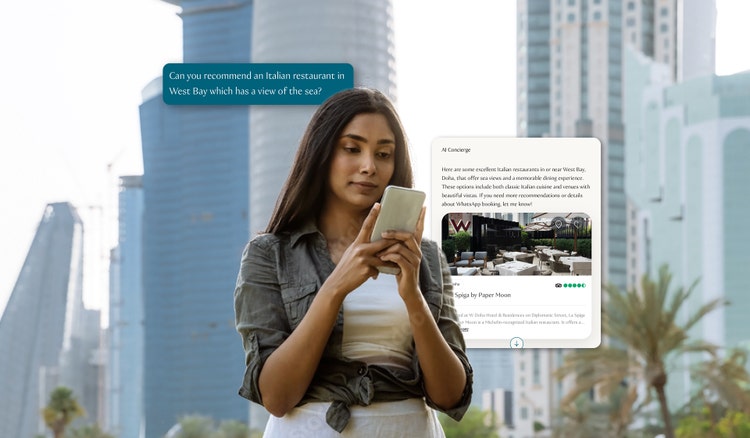
That humble prototype would become the foundation for Visit Qatar’s most ambitious digital experience yet: a GenAI-powered concierge. More than a chatbot, it’s a multilingual, voice-enabled, map-integrated, emotionally intelligent travel companion designed to reflect Qatar’s warmth, depth, and personality. And underpinning it all was an Adobe martech foundation established long before a single line of AI code was written.
Zimmer inherited a tech stack that many would envy. Visit Qatar had already made a bold move in 2021 by becoming one of the first in the region to adopt Adobe Experience Manager Sites and Adobe Experience Manager Assets as a Cloud Service. It was a forward-thinking decision aligned with the government’s National Vision 2030: a long-term strategy to diversify Qatar’s economy and become a leading destination for international tourism, culture, and innovation complemented by driving digital transformation and digital leadership
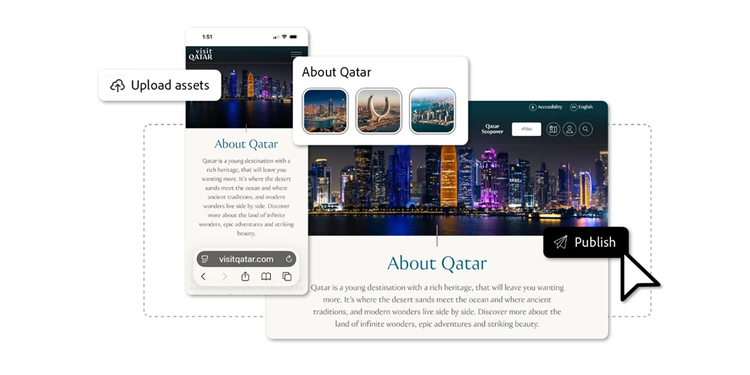
The digital experience team uses Experience Manager Assets to centralise and manage a vast library of digital content, ensuring brand consistency and accelerating delivery across the organisation website and apps, including mobile. This streamlined approach empowers the team to create immersive, visually rich experiences that showcase Qatar’s cultural heritage and modern attractions.
These digital platforms play a crucial role at the top of the traveller funnel, inspiring discovery and guiding users to partner channels for bookings, excursions, and experiences. But as Zimmer quickly discovered, the experience often stalled before travellers took the next step. Visitors came to the website, and while an abundance of content was there, visitors were not deeply engaging with the content. The tools weren’t contextually responsive enough to help them find what they were looking for and to guide them through to the next stages of their journey — whether that was finding information about visa, discovering an event or saving an itinerary
“We had the Adobe stack, but it wasn’t connected in a way that delivered the personalisation and agility we needed,” she says. “We weren’t yet translating potential into performance.”
To change that, Zimmer first restructured the way teams worked, moving from siloed functions to cross-functional squads. Product teams took ownership of core experiences like the website, mobile app, campaigns, and the emerging concierge, while platform teams focused on content, data, and personalisation.
With this specialist yet collaborative foundation in place, Adobe helped Zimmer’s team connect the stack, activate personalisation at scale, and unlock the agility required to support rapid experimentation and growth. In doing so, Visit Qatar had set the stage for what would become one of the most compelling uses of GenAI in tourism.
With the chatbot MVP showing promise, Zimmer guided her team to think bigger. They began scaling and refining experiences, using the headless architecture and content fragments within Experience Manager Sites to feed structured, reusable content into a large language model. This delivered consistent, accurate responses across both the website and app, even in complex languages like Arabic.
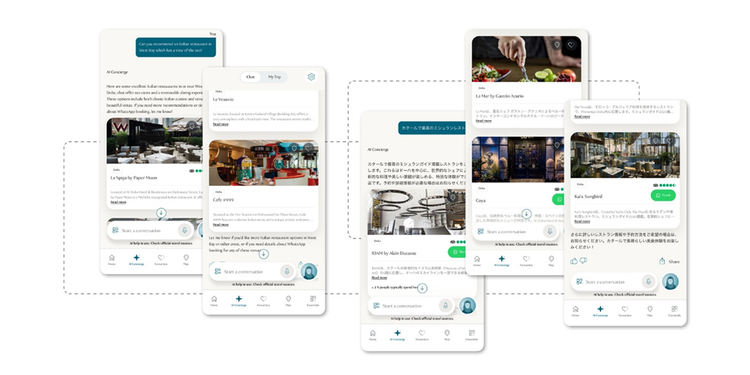
To optimise usability, they leaned on Adobe Target to test prompts and UI elements in real time, iterating quickly based on behaviour and feedback. For personalised follow-ups across email, mobile, and web, Visit Qatar used Adobe Campaign, extending the customer journey beyond a single session. A live, data-rich window into user behaviour, courtesy of Adobe Analytics, offered insight into what users interacted with and what content drove deeper engagement.
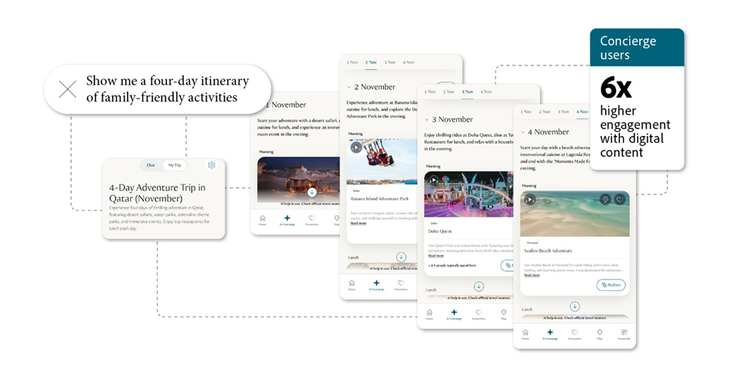
Next came voice functionality, followed by the ability to respond in more than 50 languages. The team added dynamic itinerary planning, map integration, and a virtual human interface. What started as a simple question box evolved into a fully interactive travel companion.
“Adobe gave us the flexibility to move quickly while maintaining full control over content and personalisation,” says Zimmer. “It allowed us to focus less on infrastructure and more on designing an experience that truly serves the traveller.”
For example, a visitor planning a long weekend in Doha might start by asking the concierge for “things to do with kids.” Within seconds, they receive a curated itinerary starting with a family-friendly museum in the morning, a desert safari in the afternoon, and ending with a magical entertainment event for the kids by the early evening— all tailored to their travel dates, location, and interests. If plans shift, the itinerary can be reshuffled instantly, with real-time updates to maps, events, and opening hours.
As the AI-driven concierge matured, so did the team’s understanding of traveller behaviour. Extensive user research revealed that most people don’t neatly fit into rigid personas. Someone who meticulously plans a business trip might be spontaneous on a weekend getaway. Preferences shift depending on purpose, companions, timing, and mood.
“GenAI gave us the flexibility to respond to travellers’ context with relevance and in real time, and Adobe gave us the platform to deliver at scale, with precision and consistency,” says Zimmer. “It’s a standout example of how AI, paired with the right tools, can deliver customer value.”
The team also discovered that, while the research phase was functional, it was also emotional. Visit Qatar wanted to amplify this anticipation and excitement.
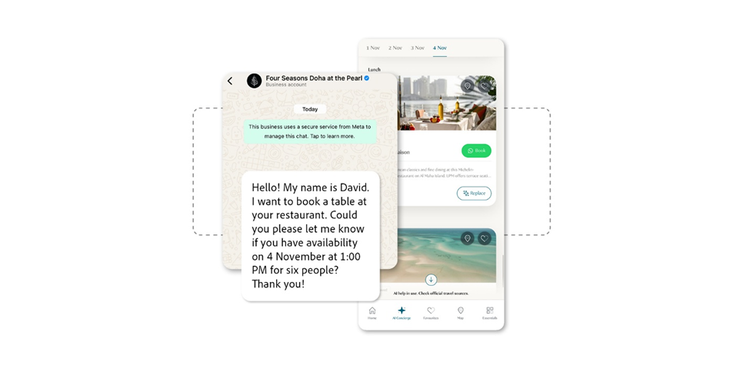
What started as a digital foundation — a strong stack of Adobe Experience Cloud products — has grown into something far more powerful: a reimagined visitor experience. With more than a million interactions and measurable leaps in engagement since launch, the concierge is setting a new standard for how destinations engage travellers, and transforming what travellers expect from destination platforms.
“We set out to change how people imagine their trip, to make trip planning as inspiring as the destination itself,” says Zimmer. “AI gave us a way to turn inspiration into interaction, while guiding travellers in a way that feels human.”