DRM: Safeguarding your digital assets.
Discover how DRM secures digital assets, prevents misuse, ensures compliance and supports scalable content strategies.
How Pfizer is transforming its content supply chain with Adobe
Learn more about how Pfizer is teaming up with Adobe to improve its content supply chain by streamlining its content generation, asset management and approval processes.
Transforming your content supply chain performance with a DAM.
Discover how a DAM and generative AI power agile marketing by optimising content delivery, ensuring governance and enhancing accessibility.

Take the guesswork out of digital rights management.
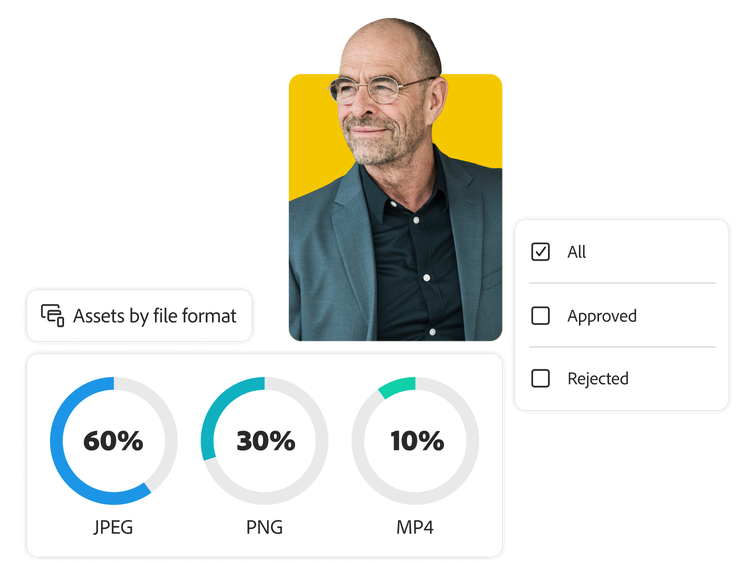
Give teams easy access to approved assets while ensuring brand integrity and simplified content activation. By centralising and controlling usage rights with agentic AI, Experience Manager Assets helps reduce risk while making it faster and easier for teams to confidently create, share and reuse assets across channels.
Scale content production with confidence.
Built-in AI tools and integrations help teams scale new content variations while maintaining brand standards. Before new assets are published, agentic governance automatically ensures new assets align with brand guidelines. Experience Manager Assets also provides built-in guardrails and brand standards that can be applied to assets automatically throughout the DAM, eliminating time spent on manual co-ordination and approvals. With centralised organisation, asset managers can update, maintain and distribute assets like logos and branded marketing materials, reinforcing brand clarity and consistency wherever these assets are activated. Together, these tools help organisations manage media to build brand awareness, strengthen brand equity and nurture brand loyalty.
Reduce risk and promote compliance.
Licensing tools and digital rights management features ensure that available assets are approved and ready to use. By centralising and classifying assets across categories — like awareness, equity and loyalty — Experience Manager Assets provides greater control, versioning and secure distribution, helping protect brand equity, streamline collaboration and improve visibility into asset usage. Agentic oversight detects expiring or off-brand content and alerts teams before asset activation. The result is stronger compliance and a reduced risk of unapproved or expired assets and smarter, data-driven distribution decisions.

Used low-code content, self-service features and reusable, compliant assets to accelerate digital offer delivery.

Maintains regulatory compliance and simplified asset creation workflows, resulting in a 50% reduction in time to market.
Learn more about ensuring brand integrity.
Brand asset management FAQs.
Brand asset management (BAM) is the process of organising, storing and distributing brand assets like logos, images and guidelines. It ensures brand consistency, improves efficiency and supports collaboration across teams. BAM helps maintain a strong brand identity by making approved assets easily accessible to marketers, designers and external partners.
The three types of brand assets are visual, verbal and experiential. Visual assets include logos and colours, verbal assets cover taglines and brand voice and experiential assets relate to customer interactions. Together, they shape brand identity, ensure consistency and influence how audiences recognise and connect with a brand.
Title
Ensure assets are on-brand and compliant with robust governance tools.
CardDescription
Adobe Experience Manager Assets has built-in AI functionality that helps maintain brand consistency, simplify content activation and protect against risks.
cardDate
2025-12-20
cardImage

primaryTag
caas:content-type/product-page
Tags
caas:content-type/product-page,caas:products/adobe-experience-manager-assets