How do you identify high-impact prompts to test?
Identifying the right prompts begins by understanding how people naturally search within AI environments and what they are likely to type and building a prompt library based on real-world user intent.
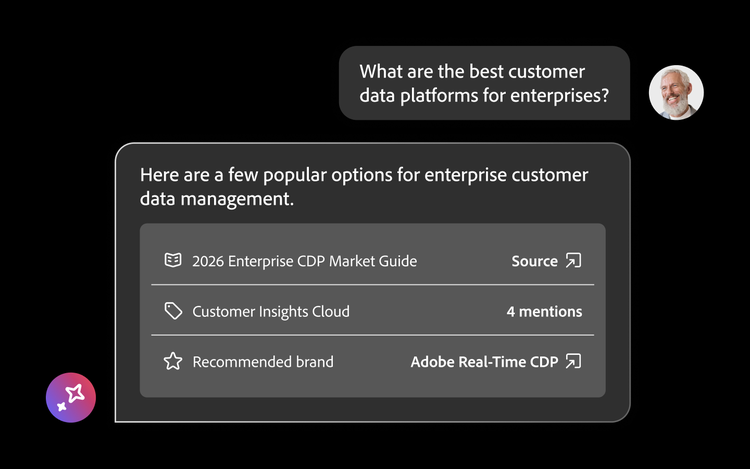
Use conversational queries that are typically longer, more contextual and tied to a specific outcome or recommendation. Include discovery-stage questions, comparison requests and decision-orientated prompts. For example, “What is the best marketing automation platform for mid-sized businesses?” provides a more realistic visibility signal than a short keyword phrase such as “marketing automation.”
Brand visibility varies considerably across AI systems, making cross-platform testing important. Each platform draws from different models, sources and response structures, creating the need for a holistic approach.
Testing should typically include:
- ChatGPT: Widely used for exploratory queries and recommendations.
- Perplexity: Prioritises citations and source transparency.
- Claude: Known for handling complex business documents and workflows.
- Copilot: Embedded within productivity and workplace environments.
- Gemini: Google’s chatbot, closely connected to search experiences.
- Google AI Overviews: Appears directly inside Google search results.
These environments will give you a representative view of how your brand surfaces across AI-driven discovery experiences and how visibility, citations and sentiment vary between platforms.
Because every AI system retrieves and prioritises information differently, brands that appear consistently across multiple answer engines are more likely to establish sustainable AI search visibility over time.
How do you measure brand inclusion and positioning?
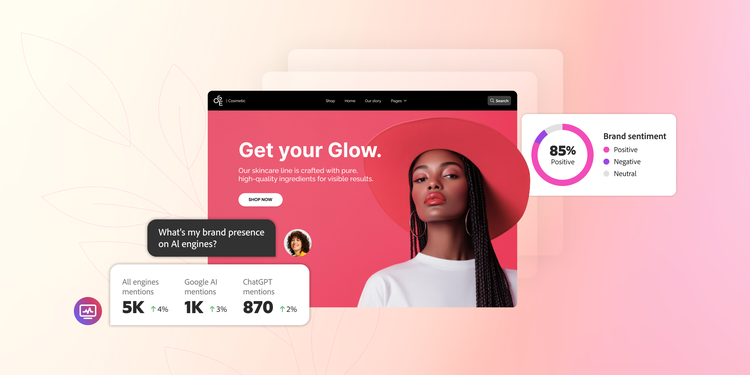
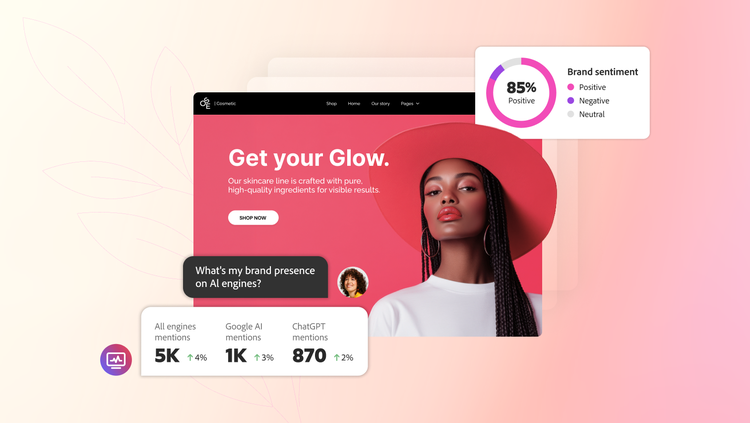
Tracking AI brand visibility goes beyond identifying whether your brand appears across AI search engines. You also need to understand how it appears and how consistently it is positioned across AI-generated answers.
Is your brand mentioned first or listed lower in the response? Is it positioned accurately? Is it framed positively, neutrally or critically? Is it the primary recommendation or simply buried among competitors?
These nuances influence user perception long before a click or conversion takes place, which is exactly why traditional ranking metrics no longer tell the full story.
This is where emerging AI visibility metrics become increasingly useful:
- Multi-platform coverage: Whether your brand appears across multiple AI search engines.
- Mention or inclusion rate: The percentage of relevant, high-intent queries in which your brand is recommended out of the total test prompts.
- Share of voice (SoV): Your brand's proportional presence in AI-generated responses compared to direct competitors, expressed as a percentage of total brand mentions.
- Citation share: The percentage of cited references associated with your brand or owned content within the answers.
- Average positioning: Where your brand typically appears within generated responses when multiple brands are included.