Making more is becoming easier. Knowing what’s worth making asks more of us.
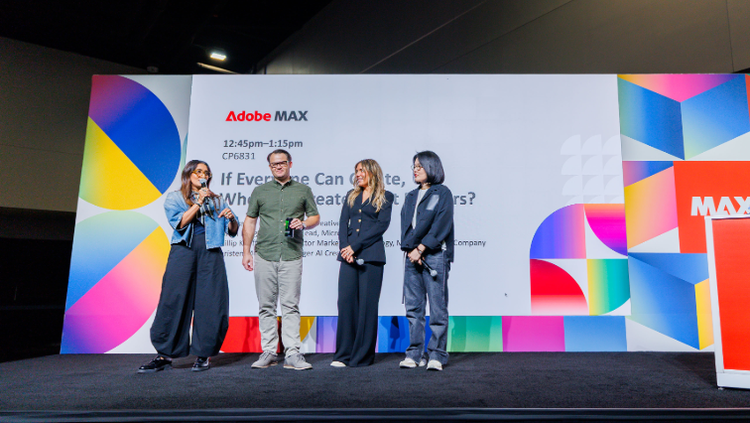
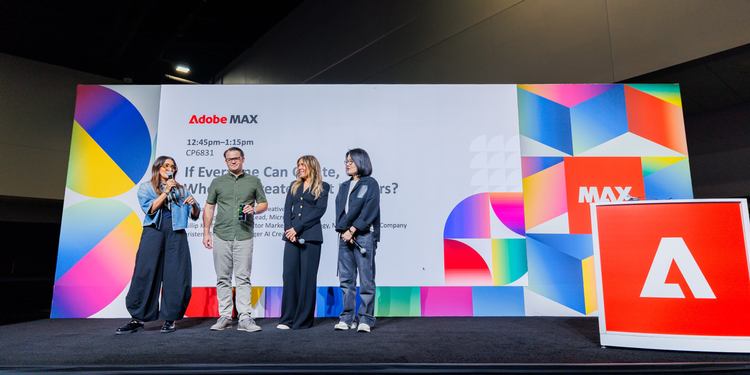
At Adobe MAX, I hosted a Creative Park conversation with Phillip Kauffman, Christen McIntosh, and Minjin Kang about what makes creative work matter as AI expands what we can make. Their perspectives brought us back to human experience, intention and judgment, and the conditions that help people do their best work.
Phillip Kauffman, Sr. Director of Marketing Technology, Monster Energy
Phillip opened with a refreshing take on the power of emotional memory. “Close your eyes and listen,” he told us, before popping open a can of Monster Energy into the mic. For some, the sound reminded them of the beach on a hot day. For others, an afternoon spent working in their garage. We all heard the same thing, but we drew different meanings from it. Our interpretations were shaped by our individual experience, which is the very thing that makes our creative perspectives unique.
For many creatives, the pace of change is unsettling. Phillip named that tension directly: “The craft and training barrier between having an idea and showing someone that idea is collapsing, but the person on either side is still human,” he said. “We still respond to emotion, truth, connection, surprise, memory, and identity.”
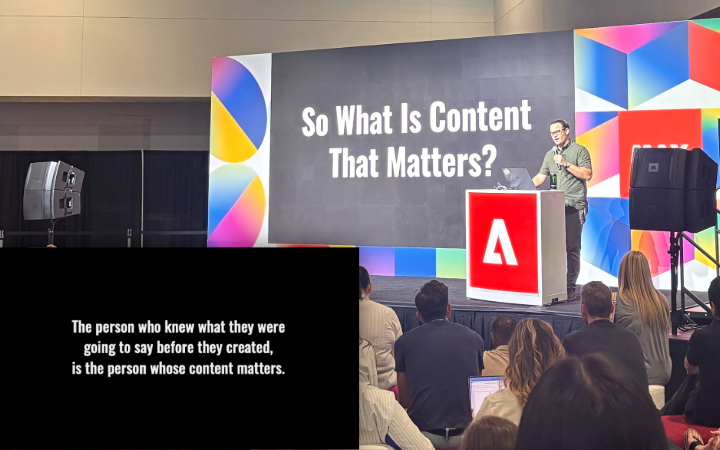
Image source: Phillip Kauffman
Phillip also reflected on the years creative professionals spend honing their craft and developing their own perspectives. With AI making it easier to execute ideas, he argued, the experiences that shape our creative vision become even more valuable because they influence how we interpret the world and, ultimately, what we create. AI can then amplify that vision, giving us new ways to bring our ideas to life.
Phillip closed with a powerful observation: “You can’t prompt your way into parenthood. You can’t prompt your way into empathy, struggle, curiosity, culture, or a life well-lived. Those experiences shape how you see the world. And how you see the world ultimately shapes what you produce.”
Christen McIntosh, Manager AI Creative, Lumen Technologies
Build the system and go slow where it counts. This belief has been the key to keeping Lumen’s storytelling real, on-brand, and consistent as its teams adopt more AI technologies into their creative workflows. As Christen told the audience, “Speed is AI’s advantage. Ours is creativity and judgment.”
So, what kind of system should a marketing team build? Christen invited us to consider a restaurant kitchen, whose system includes the people, processes, and rules that make every station run smoothly. Within that, its recipes define which food the kitchen cooks. A creative marketing team also has a system of people, processes and rules, but its recipes are its AI tools, prompts, and quality checks.
As Christen pointed out, building these systems takes time, and you need to gather the ingredients first. At Lumen, that meant setting up AI labs where its creatives could learn together, build their workflows, and add governance to the mix. Led by Lumen’s senior designers and editors, the labs gave teams an opportunity to test new AI capabilities and ask for help from fellow creators.
AI tools are evolving fast. Christen’s example shows why the conditions around the tools matter. Giving people space to learn together, test ideas, and establish shared standards helps teams scale their judgment alongside their output.
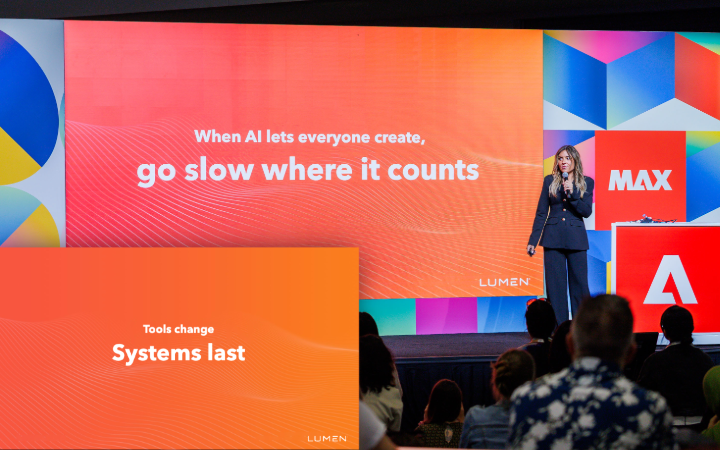
Image source: Christen McIntosh
Minjin Kang, Creative AI Lead, Microsoft
Many people say that AI democratized creativity, but if you ask Minjin, we need to be more precise. “AI democratized production. Being able to make something, and making something that matters are two different things,” she told the MAX crowd. “For me, the question is how do we connect them?”
That question grew out of Minjin’s own experience. She and her team learned a lot from their early experiments with AI. They could produce more and make things that had been out of reach before. Looking back, Minjin wondered where all that work had gone and what it had meant to the people it was made for. That led her to a question she encouraged the audience to ask before making something new: “What are we hoping this does for someone?”
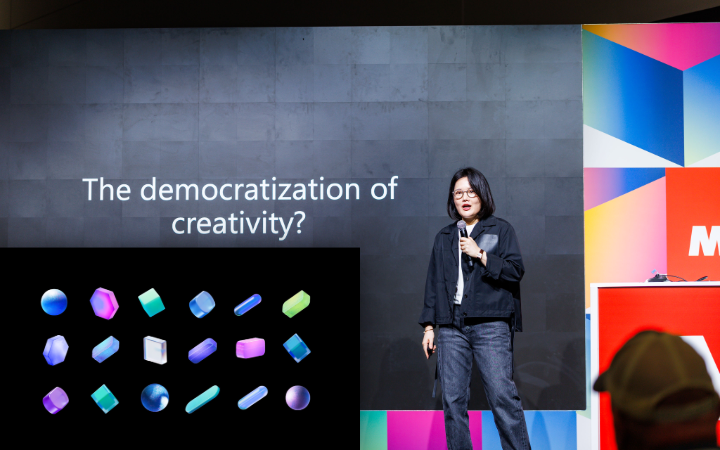
Image source: Minjin Kang
To illustrate this shift in mindset, Minjin invited us to consider the family of 3D campaign assets above, created for a recent Microsoft campaign. Where a traditional review session might involve creatives discussing which one they liked most, the more pertinent line of questioning for Minjin is, “What do we want this work to do?”
When we answer that, we use our judgment. And in doing that, we unlock what truly matters to our audience.
“If AI makes and we just pick, that’s not taste. That sounds a lot like shopping,” Minjin declared. Instead of using AI to validate our own creative preferences, we should use it to become better listeners and remember who we are creating for, and why.
Watching our speakers throughout the session, a unifying theme emerged: AI can draw on what’s already been created to help us make things that were never possible, but our human experiences and perspectives are what give creative work its originality and meaning. As I often say, speed is a capability, not a creative strategy. When you can make a thousand different things, the most important thing is knowing what’s worth making.
What stayed with me was how much this asks of us as creative leaders. Clearer direction. Space to experiment and learn together. More trust in the people closest to the work. Those are the conditions that turn new possibilities into better work.
Thank you to Phillip, Christen, and Minjin for sharing both their thinking and their practice so openly. The question I’m taking back to my own team: what can we attempt now that we couldn’t before?
Keep the ideas coming. Explore more perspectives on creativity and AI from our Day 1 talks and Day 3 talks at Adobe MAX.
Recommended for you
https://business.adobe.com/fragments/resources/cards/thank-you-collections/generic-cc