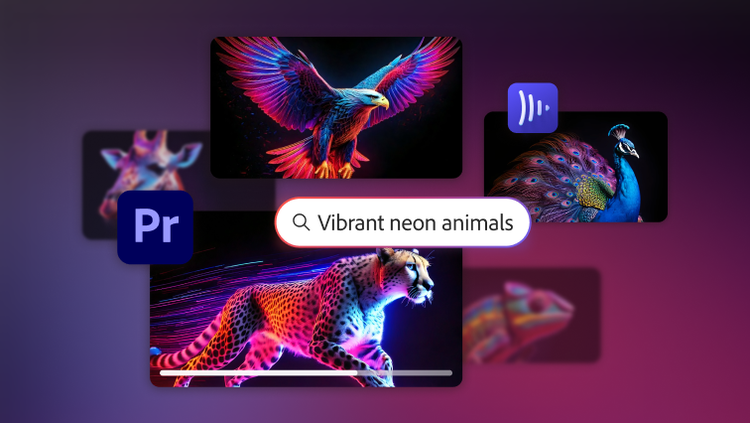
In the fast-evolving world of post-production, editors are seeking tools that streamline workflows, enhance creative control, and reduce time spent on repetitive tasks. One of the most transformative innovations making its way into post-production suites is semantic search for Frame.io, which came out in beta in 2025. It’s a technology that allows editors to find specific moments, scenes, or assets based on the way we speak rather than metadata or file names.
Semantic search is a leap forward in how we interact with vast libraries of video content. For editors, it means more intuitive access to relevant footage. What is semantic search, and how is it reshaping the editing process?
Locate clips by meaning, not keywords.
Editors often work with hundreds or thousands of clips across multiple projects. Searching for a specific shot can be like finding a needle in a haystack. Semantic search dramatically reduces this friction. By understanding the meaning behind a query, it surfaces relevant clips instantly — even if they weren’t tagged or labeled correctly.
Semantic search uses natural language processing (NLP) and machine learning to understand the context and meaning behind a query. Instead of relying on exact keywords or tags, it interprets the intent of the search. For example, rather than typing “scene 12, take 3”, an editor could search for “the moment when the actor looks surprised” or “sunset drone shot over the ocean.”
Use natural language search for video.
This is a major shift in video production by using AI to reinvent traditional search methods, which depend heavily on manual tagging, file names, and metadata structures. Semantic search enables editors to locate clips based on visual content, spoken dialogue, emotions, or even camera movements.
In collaborative environments, the system consistently interprets natural language search requests. This reduces miscommunication and speeds up review cycles.
When editors spend less time hunting for assets, they have more time to focus on storytelling. Semantic search empowers them to experiment, iterate, and refine their edits.
If someone needs a specific video when pulling together a marketing campaign, they can prompt, “find the 4K video uploaded yesterday with the man talking in the blue hat.” Semantic search can transcribe and index spoken content. Need a “close-up of a smiling child” or “a slow pan across a city skyline”? Semantic search can also analyze visual elements and camera movements to deliver the relevant footage.
Platforms like Adobe Frame.io, Adobe Premiere, Runway, and Blackbird are beginning to integrate semantic search directly into the tools that teams love. These tools are not just about search — they’re about understanding the creative intent behind every frame.
While semantic search is powerful, it’s not perfect. Editors should always check for accuracy. Machine learning models may misinterpret context, especially in nuanced scenes.
Semantic search is part of a broader movement toward intelligent editing environments called connected creativity. As AI becomes more integrated into creative tools, editors will gain access to features like automated rough cuts, emotion-based timelines, and context-aware suggestions. On a grand scale, Adobe’s creative system accelerates each stage of content development — from initial concept exploration to production, post-production, all the way to last-mile editing. Ideation, creation, iteration, and scaling are brought together in one cohesive workflow that enhances creative control.
Amplify the editor’s role with AI.
In this next post-production era, the role of the editor doesn’t diminish — it evolves. Editors become curators of meaning, orchestrators of emotion, and architects of story. Semantic search is just one tool helping them get there faster.
It’s redefining how editors interact with video content. By enabling intuitive, meaning-based queries, it transforms asset discovery from a tedious task into a creative advantage. As platforms continue to innovate, editors who embrace semantic search will find themselves at the forefront of a smarter, more agile production process.
Whether your teams are cutting product demos, producing branded content, or editing a social series, semantic search is poised to become an essential part of their toolkit.
At Adobe, we’re not just building more tools to catch the AI frenzy. We’re creating every day on behalf of customers, so you can use AI to amplify creativity for your team. From off-the-shelf software programs to enterprise-ready solutions — it starts with Adobe.
Looking for more info about Adobe’s connected video platform? Let’s talk about what Adobe can do for your business.