In today’s content-driven world, the demand for faster, smarter, and more collaborative media production has never been higher. Whether it’s a global brand launching a campaign or a studio producing a streaming series, creative teams are under pressure to deliver high-quality content at scale and speed. Enter connected creativity — a new paradigm that’s transforming how media workflows operate across teams, tools, and timelines.
Connected creativity is a strategic shift toward integrated, cloud-based, and AI-enhanced workflows that empower creators to collaborate in real time, automate repetitive tasks, and maintain creative consistency across every touchpoint. Let’s explore how this movement is reshaping the media landscape and what it means for the future of content creation.
Connected creativity refers to the seamless integration of creative tools, platforms, and people through cloud infrastructure and intelligent automation. It enables teams to work together across locations, departments, and disciplines without the friction of disconnected systems or siloed workflows.
How AI removes barriers in media production.
At its core, connected creativity is about removing barriers between ideation, production, and delivery. It allows creative professionals to focus on what they do best — telling stories, designing visuals, and crafting experiences — while technology handles the logistics.
Cloud platforms like Adobe Creative Cloud, Frame.io, and Adobe Workfront are enabling real-time collaboration on everything from content creation to campaign planning. Assets are accessible from anywhere, version control is automatic, and feedback loops are faster than ever.
AI tools like Adobe Firefly Enterprise Solutions are streamlining tasks such as background removal, content tagging, and asset variation generation. This reduces manual effort and accelerates production timelines — especially for high-volume content needs.
Connected creativity thrives on integration. Tools that once operated in silos — like those for design, video creation, project management, and asset storage — are now part of a unified ecosystem. This ensures consistency, reduces duplication, and improves visibility across the entire content lifecycle.
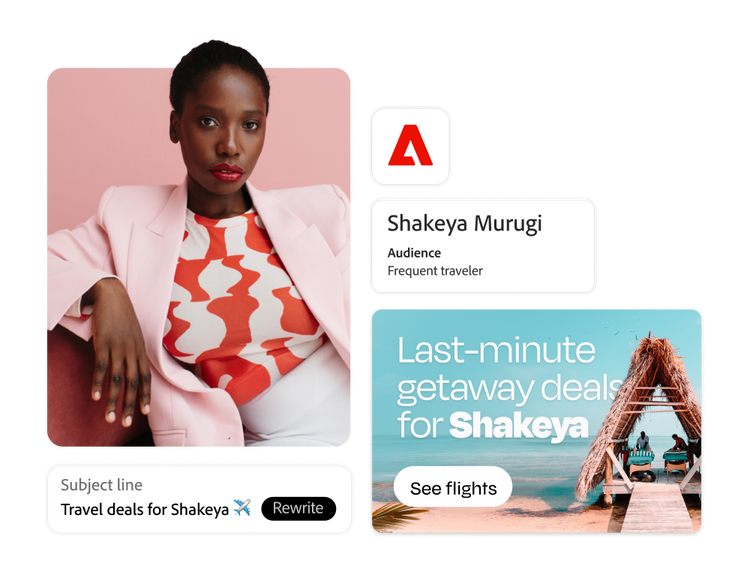
With streamlined tools and automated processes, teams can move from concept to delivery in record time. Campaigns that once took weeks can now be launched in days without sacrificing quality. Brands and studios can now produce content at scale without overwhelming their teams. Dynamic templates, bulk asset variations, and AI-assisted editing make it possible to localize, personalize, and repurpose content efficiently.
The power of connected creativity in transforming media workflows.
In practice, this means the transition between production and post-production can flow seamlessly for teams that use Frame.io’s Camera to Cloud to access footage instantly, while producers review and approve cuts remotely.
Additionally, designers can create dynamic templates in Adobe Express, while marketers generate localized versions using Adobe Firefly Services with the help of AI-powered asset variations.
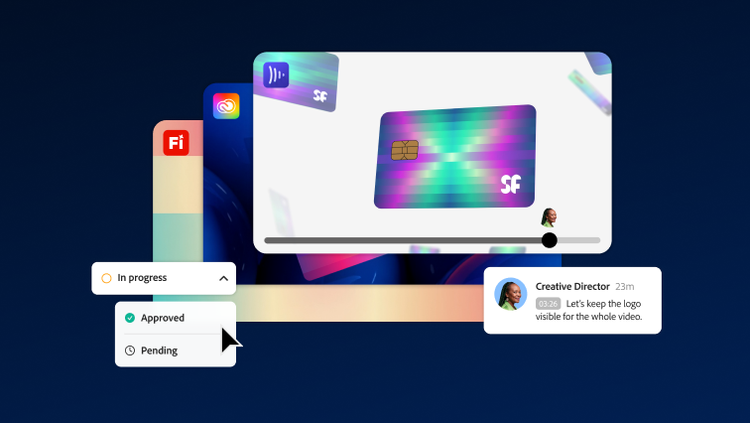
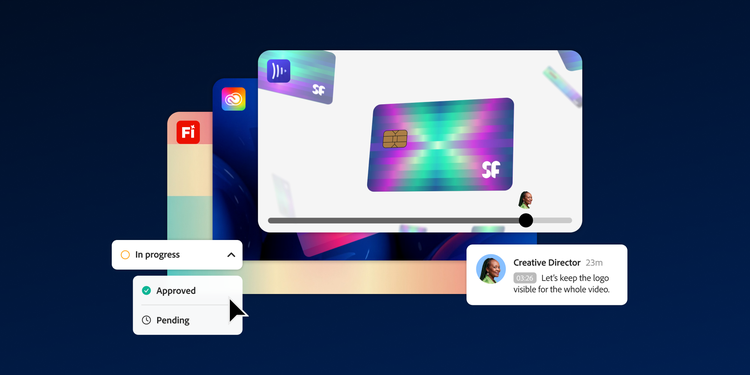
Other parts of the workflow will benefit too. Project managers can use Workfront to align creative tasks with business goals, ensuring deadlines and budgets are met. Creative teams, stakeholders, and clients can review, comment, and approve content in real time, no matter where they are. This reduces bottlenecks and keeps projects moving forward.
Above all, connected platforms ensure that brand guidelines, visual styles, and messaging are maintained across all assets. This is especially critical for global campaigns and multi-channel storytelling.
Better collaboration with connected creativity.
While the benefits are clear, connected creativity also introduces new challenges:
- Teams must adapt to new tools and workflows, which may require training and cultural shifts.
- Cloud-based collaboration demands robust security protocols to protect sensitive assets.
- Too many disconnected tools can create complexity instead of clarity.
The good news? Leading platforms are addressing these challenges with enterprise-grade security, intuitive interfaces, and seamless integrations.
AI tools in the future of media production.
Connected creativity is just the beginning. As AI becomes more sophisticated and platforms become more interoperable, we’ll see even more intelligent workflows. Marketers can receive predictive content suggestions based on campaign goals, use emotion-aware editing tools that adapt to tone and audience, and tap voice-activated creative assistants that generate assets on command.
As this next era unfolds, creativity isn’t limited by tools or timelines — it’s amplified by them.
Connected creativity is reshaping media workflows by breaking down silos, accelerating production, and empowering teams to collaborate like never before.
For creative professionals, embracing connected creativity means more time for innovation, less time on logistics, and a future where ideas flow freely from concept to screen.
The tools are here. The infrastructure is ready. The future of media is connected, and it’s already in motion.
Looking for more info about Adobe’s connected video platform? Let’s talk about what Adobe can do for your business.