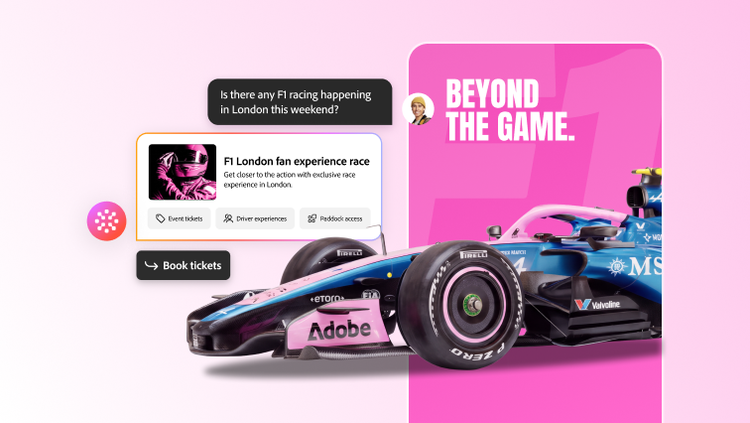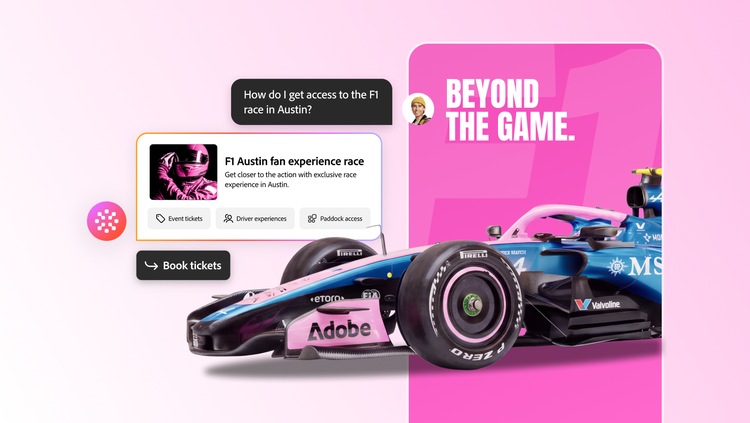
I've spent most of my career thinking about fans. How do you find them? How do you understand them? And what turns someone who casually watches a game into someone who plans their weekends around a team, or even travels across the world for an event?
A few years ago, I published the Most Valuable Fan paper highlighting the role data could play in helping sports organizations build more personal relationships with the fans they serve. I still support that strategy, but a lot has changed. Today, that relationship often begins before fans ever reach you.
Your next fan might meet an AI assistant before they meet you.
Think about how we discover things now. Instead of opening ten browser tabs and piecing together an answer, we're increasingly just asking:
- I'm taking my daughter to her first tennis tournament. Which one should we go to?
- I'm getting into Formula 1. What do I need to know?
- I'm in London this weekend. What's the best football experience for which I can get tickets?
- My kid suddenly loves basketball. Which young players should we start following?
The front door to fandom is changing. Bain found that about 80% of consumers rely on AI-powered or "zero-click" results for at least 40% of their searches. The firm estimates this shift has already reduced organic web traffic by 15-25%.
AI may be reducing the number of direct visits and clicks, but the fans who do land on your owned digital properties may arrive with higher intent. Adobe Digital Insights found that in July 2026, AI-referred visitors to U.S. retail sites spent 59% more time on site, were 33% less likely to bounce, and converted 60% better than visitors from non-AI sources.
For sports organizations, this matters. We've spent decades thinking about how fans find us through search, social media, and partners. None of those channels are going away, and not every fan relationship will (or should) begin on an owned channel. Fandom happens everywhere. But increasingly, there's another place where fans form opinions, weigh their options, and decide what to do next: the answer an AI assistant gives.
So, sports organizations have a new set of questions to ask. When someone asks about your sport, team, athletes, or events, do you show up? Are you represented accurately? What sources are informing the answer? And is there a clear path to continue the relationship if they want to learn more? That last question may be the most important.
Take one of the most common questions in sports today: “How do I watch?” With media rights spread across broadcasters, streaming services, and league-owned platforms, the answer changes by game, market, and week. A fan asking an AI assistant where to catch Saturday's match expects a simple, correct answer. That makes accuracy foundational to discoverability. Sports organizations need clear, current, and well-structured information that AI systems can find, interpret, and surface accurately. But accuracy is the starting point, not the finish line.
The answer is also an opening. AI assistants increasingly cite sources and link out, and a fan who wants to confirm kickoff time, see the options in their market, or find out what else is happening around the match will often click through. That click is where the relationship can start. A generic schedule page sends them back to searching. A more interactive experience picks up where their question left off: here's how to watch in your market, here's what you'll need to get set up, and would you like a reminder before kickoff? From there, it's a short step to following a favorite player, exploring tickets, or signing up for a subscription to watch with friends. The AI assistant may deliver the first answer, but the owned experience is what turns that answer into a next step. Being found matters, but so does being worth the click.
What if your website or app could actually talk to your fans?
We've spent years making digital experiences more personalized. And yet, let's be honest, we still make fans do a lot of work. Find the right navigation. Search the site. Filter the ticket options. Hunt down the bag policy. Figure out where to eat. Search for the content they actually care about.
Now imagine something different. A mom arrives and says: "I'm bringing my nine-year-old daughter to her first match. She loves Coco Gauff. We'd like to arrive early, see some tennis up close, and find somewhere healthy to eat."
Think about what just happened. She didn't fill out a form or work through a preference center. She simply described what she needed, and the conversation revealed useful context along the way: it's their first match, they follow Coco Gauff, they want to be close to the action, and healthy food matters.
That is a better fan experience, and potentially the beginning of a direct relationship. Conversational experiences can help when assistance is genuinely useful, whether a fan is exploring tickets, planning a visit, shopping for merchandise, or figuring out where to watch. Conversational AI should complement navigation and search, not replace them. Some fans will always prefer to browse, and that's fine.
A good conversation also goes both ways. If a follow-up question improves the recommendation, ask it. Not because you want another data point, but because the answer helps you do something more useful for the fan.
The next great source of fan data might simply be fans.
Sports organizations have gotten incredibly sophisticated at interpreting signals. First-party data helps us understand how fans behave across owned interactions, including what they watch, purchase, attend, and explore.
Zero-party data adds another valuable layer: the interests, preferences, intentions, and personal context fans choose to share directly. Forrester, which coined the term, defines it as information a customer intentionally and proactively shares with a brand, including preferences, purchase intentions, personal context, and how the individual wants the brand to recognize them.
Historically, organizations gathered this through registration forms, surveys, quizzes, and preference centers. Those methods still matter, but they tend to give us a snapshot in time. Conversation can fill the space between snapshots, uncovering what matters to a fan at the moment.
Sometimes we overlook the most obvious way to learn about fans: asking them directly. The key is that fans need a reason to share. Nobody wakes up excited to help a sports organization enrich its customer profile. But we'll happily tell someone what we want if it helps us get somewhere faster, solves a problem, or leads to a better recommendation.
That's a simple value exchange: you tell me what matters to you, and I make the experience better for you. And suddenly, collecting zero-party data doesn't have to feel much like data collection at all.
Of course, not every fan interaction will happen on your website or app. Fans discover highlights on social, buy tickets through marketplaces, watch on broadcasters and streaming platforms, and follow athletes and creators. The answer isn't to force all of that onto owned channels. It's to make the most of the moments when a fan chooses a direct relationship: a ticket purchase, a membership, a subscription, an authenticated experience, or a conversation where they choose to identify themselves. Those moments create durable identifiers that help connect the relationship over time.
Trust is also about what you do with the data.
We talk a lot about trust in the context of privacy, consent, and responsible data management. We should. But in conversations with sports leaders, I've come to think there's another side of trust that doesn't get nearly as much attention: what happens after a fan shares something with you?
If I tell you I'm an Eagles fan and the next experience treats me like we've never met, that doesn't reinforce the value of sharing. If I tell you I follow women's tennis, and you keep recommending content that has nothing to do with it, the same is true. Trust means honoring what fans choose to share, respecting their preferences, and showing that there was a reason to share in the first place. Good personalization enhances trust.
Maybe the next homepage is more relevant. Maybe the app knows which players I follow. Maybe the next conversation doesn't start from scratch. Done well, personalization creates a simple but important feeling: they know me, and they're using what they know to make this better.
From a helpful answer to a better relationship.
Let's go back to our mother and daughter headed to their first tennis match. We know her daughter loves Coco Gauff. So, what can we do with that? Help them find great seats. Surface Coco content her daughter might love before the event. Recommend when and where to arrive for practice sessions. Help them plan lunch. Follow up with an email featuring merchandise they may have missed.
And if they've chosen to share those preferences, don't forget them when the conversation ends. The next time they visit, the website reflects what you've learned. The app is more relevant. The next email builds on their interests. A future conversation picks up where the last one left off. The test is simple: does the next experience reflect what the fan just told you?
Now multiply that across millions of fans and interactions. That's what makes conversational AI compelling. It's not just another way to serve fans. It gives organizations a new way to listen at scale, learn directly from what fans choose to share, and when appropriate, put that understanding to work. Be easier to discover. Give fans a reason to engage directly. Learn from what they choose to share. Then prove there was value in sharing it. It is less a funnel than an ongoing exchange, where each good experience earns the next one.
So who is the most valuable fan?
This is where my thinking has evolved the most. It's tempting to define our most valuable fans economically: season-ticket holders, subscribers, frequent attendees, and big-ticket merchandise buyers. Those fans matter enormously.
But value doesn't always begin with a transaction. The teenager asking an AI assistant about a team today could become a supporter for the next 50 years. An international fan who may never walk through your stadium gates could become one of your most engaged supporters. A parent researching a child's first tennis match could be starting a tradition that lasts generations.
So maybe the opportunity isn't simply identifying the fans who are most valuable to us today. Maybe it's becoming more valuable to them. Make their lives easier. Understand what they care about. Remember them. Give them a reason to come back. Earn the right to know them a little better each time.
How Adobe can help.
Are you showing up when fans ask? Adobe Brand Visibility helps you understand and shape how your brand appears across AI-powered discovery, with AI presence tracking, SEO-powered intelligence, competitive benchmarking, and revenue attribution.
What if your website could talk to your fans? Adobe Brand Concierge turns a visit into a direct conversation. It delivers real-time conversational experiences using approved brand content and tone, supports commerce, and informs personalization through integration with fan profiles.
Learn how sports organizations, from the NFL and MLB to the Premier League and PGA TOUR, partner with Adobe across AI-powered fan engagement and creative content.
Recommended for you
https://business.adobe.com/fragments/resources/cards/thank-you-collections/mediaentertainment