

con-block-row-bgcolor
#000

Priorities for CIOs: 2026 AI and Digital Trends

What CIOs Must Get Right Before AI Can Scale

Technology leaders, including CIOs, are facing heightened expectations to translate momentum into measurable value. Key takeaways from Adobe’s 2026 AI and Digital Trends report define that path forward. Discover how to prepare your data, teams, and systems for what comes next.

#FFFFFF

How Technology Leaders Are Empowering Data, Talent, and Governance

AI is reshaping operations faster than organizations can keep up. Technology leaders — from chief data officers to CIOs and CTOs — are under pressure to get the fundamentals right. That means building the data infrastructure AI requires, preparing workforces for roles that are changing in real time, and scaling AI in ways that are secure and trusted. This overview distills the Adobe 2026 AI and Digital Trends findings into three critical areas for the CIO to prioritize: data readiness, change management, and enterprise-level security.

Technology leaders are investing in AI for strategic differentiation, not just operational efficiency.
#FFFFFF
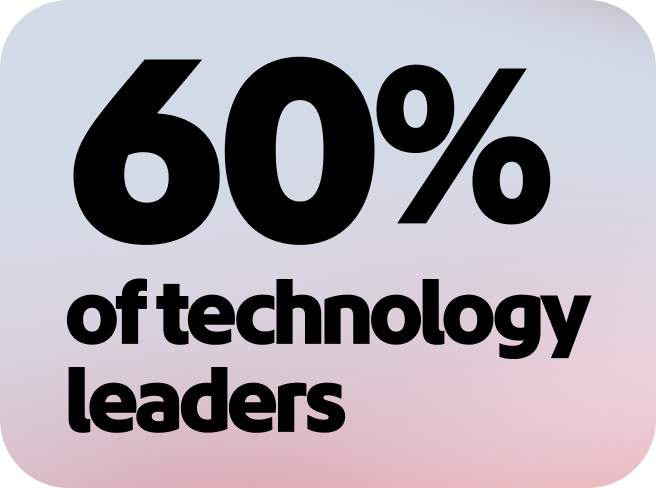
60% of technology leaders believe agentic AI will help their org focus more on strategy and creative opportunities.
believe agentic AI will enable their organization to focus more on strategy and creative opportunities.
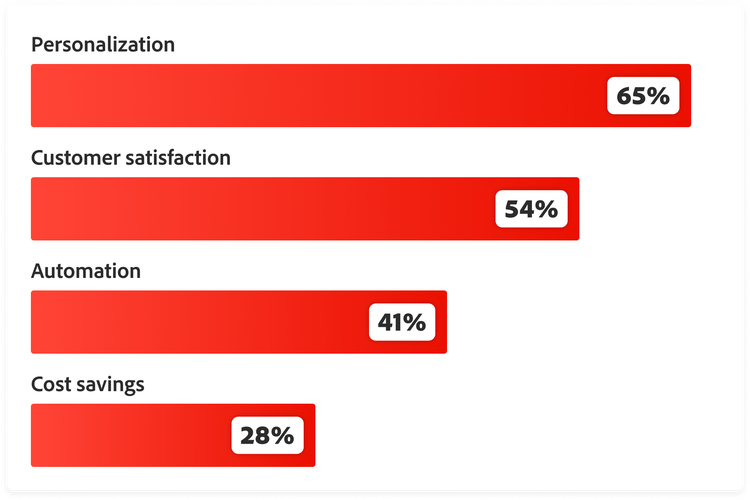
Technology leaders rank their organization's top goals for AI investment over the next 18 months.
Top AI investment goals — Personalization 65%, Customer satisfaction 54%, Automation 41%, Cost savings 28%
The gap between AI ambition and AI readiness is widening, and data is the main bottleneck.
37% say their organization's data quality and accessibility are adequate for AI say their organization’s data quality and accessibility are adequate for AI.
78% cite data integration and quality as a top challenge to implementing agentic AI cite data integration and quality as a top challenge to implementing agentic AI.
52% say limited data unification and structure are holding back their AI initiatives say limited data unification and structure are holding back their AI initiative.
Shared data platforms and interoperability are critical for AI readiness but are still out of reach for most organizations.

33% have a shared customer data platform capable of supporting agentic AI

33% have a shared customer data platform capable of supporting agentic AI.

42% cite technology infrastructure limitations as a top barrier to agentic AI implementation

42% cite technology infrastructure limitations as a top barrier to agentic AI implementation.

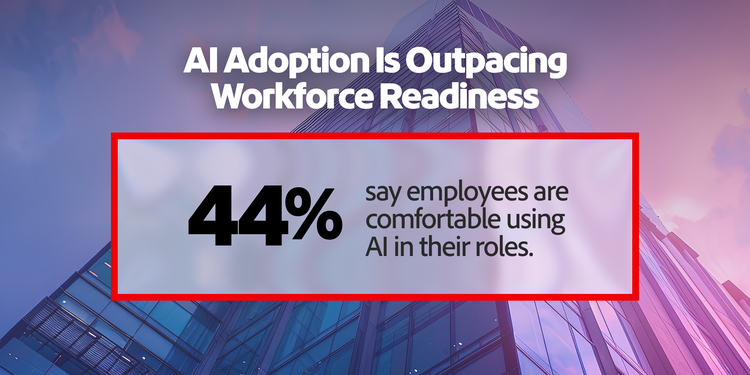
For technology leaders, workforce readiness is one of the biggest barriers standing between AI investment and AI returns.
44% say employees are comfortable using AI in their roles
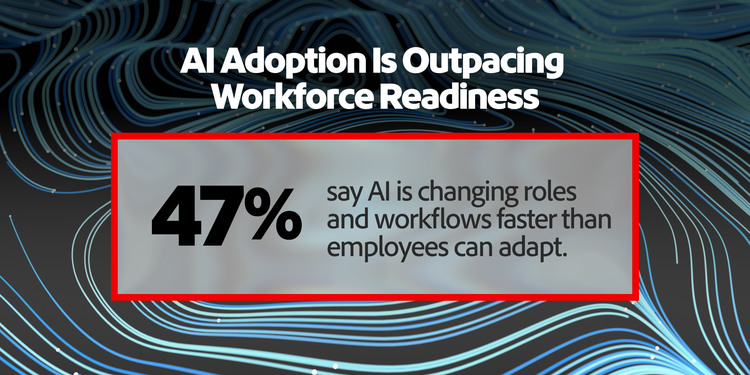
47% say AI is changing roles and workflows faster than employees can adapt
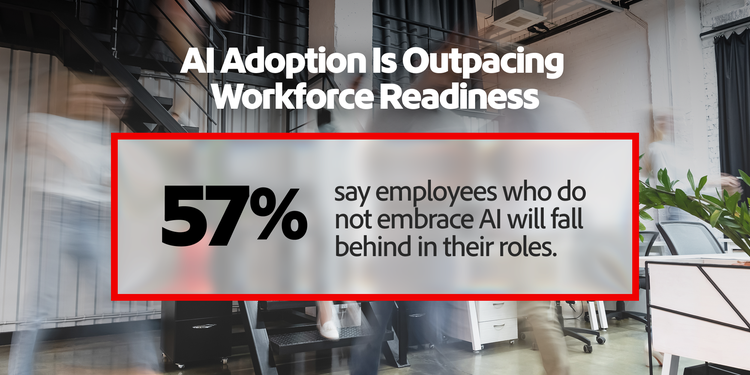
57% say employees who do not embrace AI will fall behind in their roles
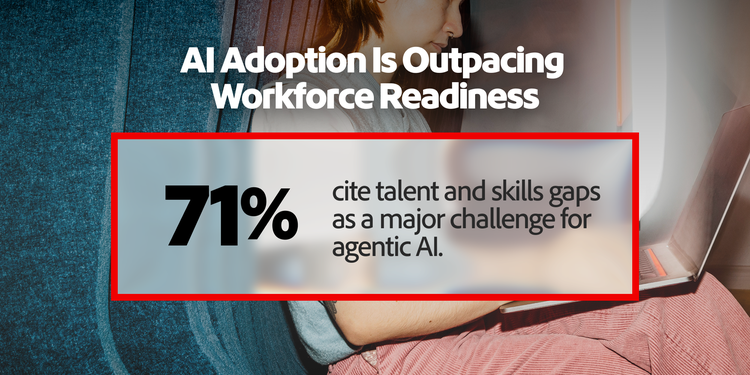
71% cite talent and skills gaps as a major challenge for agentic AI
Yet few are investing in the training and upskilling programs needed to successfully scale AI.
44% have sufficient AI training and upskilling programs have sufficient AI training and upskilling programs.

50% have employee training programs to build generative AI skills

have employee training programs to build generative AI skills.

30% have training in place for agentic AI

have training in place for agentic AI.
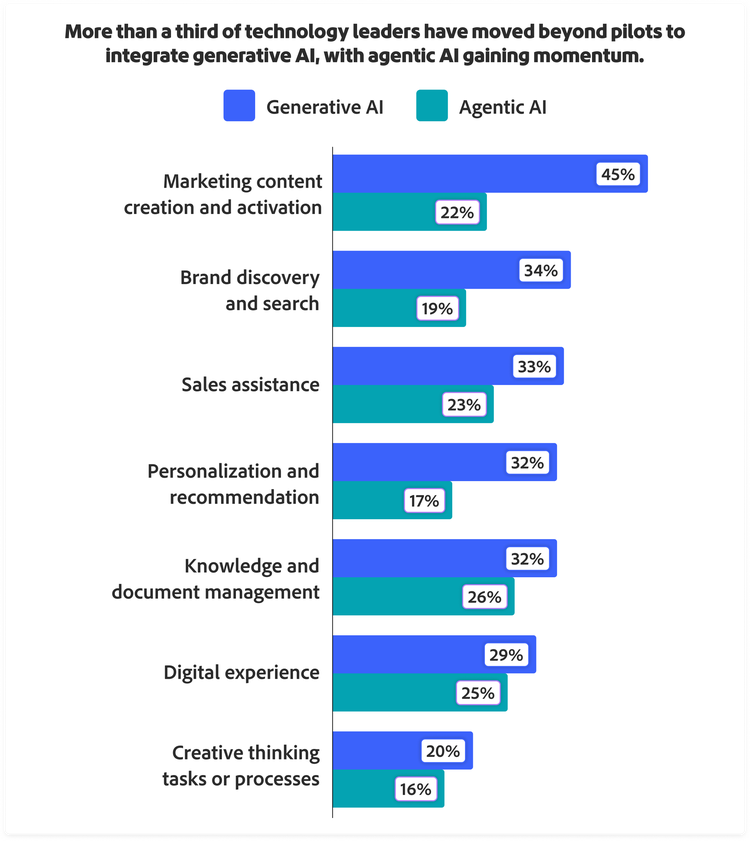
Even as workforce readiness lags, organizations are pressing forward with AI deployment across key marketing and creative workflows.
Bar chart comparing Generative AI vs. Agentic AI adoption by use case. Marketing content creation leads (45% / 22%), followed by Brand discovery (34% / 19%), Sales assistance (33% / 23%), Personalization (32% / 17%), Knowledge management (32% / 26%), Digital experience (29% / 25%), and Creative thinking (20% / 16%)
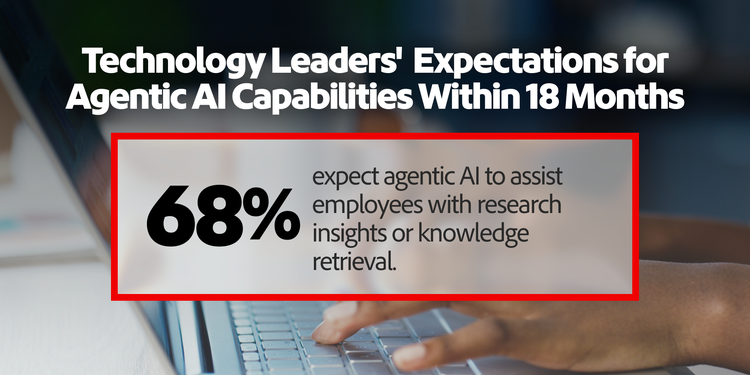
Despite adoption progress by technology leaders, there is still significant room for AI to streamline end-to-end operations.
68% expect agentic AI to assist employees with research insights or knowledge retrieval
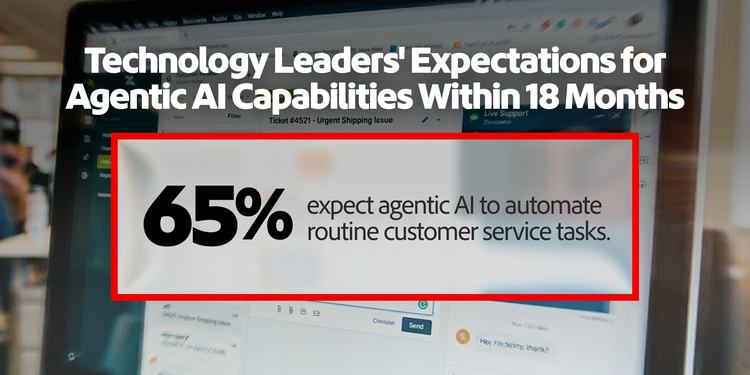
65% expect agentic AI to automate routine customer service tasks
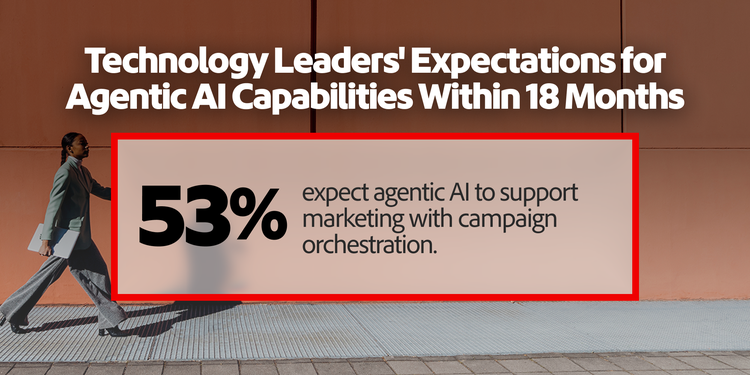
53% expect agentic AI to support marketing with campaign orchestration
Agentic AI is set to become the front line of customer engagement.
Technology leaders expect agentic AI to play an increasingly large role in customer interactions.
76% anticipate at least half of customer support interactions will be handled directly by agentic AI within the next 18 months anticipate that at least half of customer support interactions will be handled directly by agentic AI within the next 18 months.
63% say the same for conversational customer engagement say the same for conversational customer engagement.
Brands are rethinking discovery, relevance, and interactions for an AI-powered customer experience environment.
#FFFFFF
70% of technology leaders say AI-powered conversational platforms are important for their brand’s relevance
of technology leaders say AI-powered conversational platforms are important for their brand’s relevance.
#FFFFFF
51% are preparing to optimize content for AI-powered discovery tools
are preparing to optimize content for AI-powered discovery tools.
#FFFFFF
40% plan to design distinctive AI agent personalities for different audiences
plan to design distinctive AI agent personalities for different audiences.
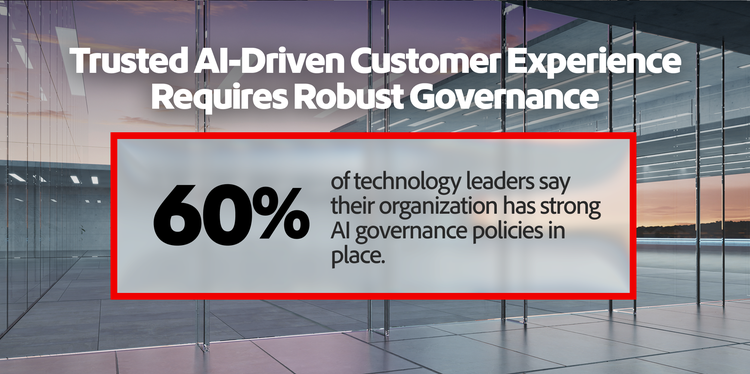
60% of technology leaders say their organization has strong AI governance policies in place
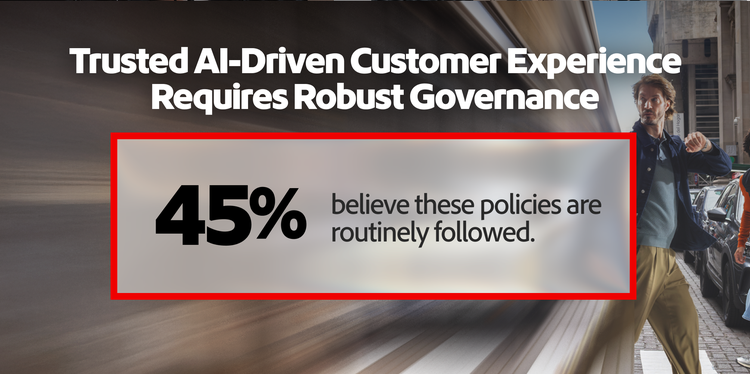
45% believe these AI governance policies are routinely followed
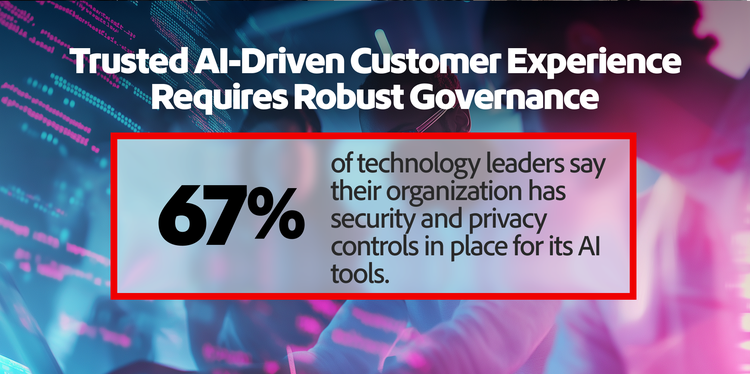
67% of technology leaders say their organization has security and privacy controls in place for its AI tools
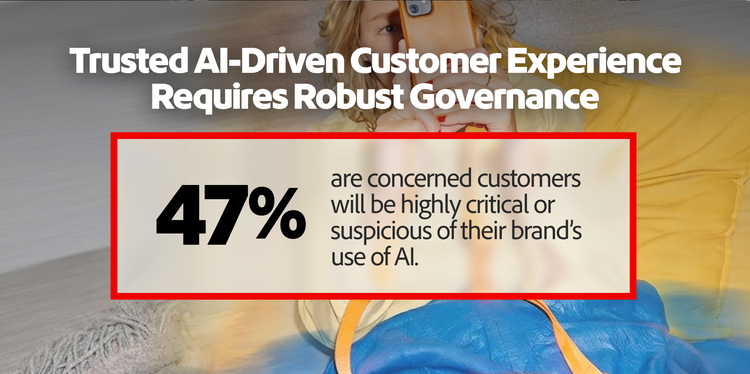
47% are concerned customers will be highly critical or suspicious of their brand's use of AI
The path forward requires a strategic move from AI experimentation to customer experience orchestration.
CIOs who connect data, invest in talent, and scale responsibly will turn AI investments into real value. For CIOs to move from ambition to execution, three priorities need to be met:

Build the data foundation first.

Prioritize platform consolidation and data unification before expanding agentic AI deployments.

Prepare your workforce.

Accelerate AI training and upskilling programs to ensure employees operate comfortably and effectively alongside AI agents.

Govern AI as a business-critical function.

Establish clear accountability structures to turn strong governance policies into consistent action.

View more insights from the 2026 AI and Digital Trends research.

Learn more

Appendix

Research Methodology

For Adobe’s 16th annual AI and Digital Trends research, Oxford Economics, in partnership with Adobe, conducted global surveys of 3,000 executives and practitioners and 4,000 customers to better understand how organizations are leveraging AI to capture customer interest, build brand loyalty, and augment customer experience (CX) workflows — and how customers are responding to these changes. The surveys were fielded online and via computer-assisted telephonic interviewing (CATI) from October through November 2025. “Technology leaders” refers to a global set of chief information officers, chief technology officers, chief digital officers, chief data officers, and chief innovation officers. This group makes up 8% of our business survey respondents and represents a wide range of industries and business sizes.

View the Adobe 2026 AI and Digital Trends report for more on the full research methodology.

https://main--da-bacom--adobecom.aem.page/fragments/resources/cards/thank-you-collections/digital-trends