Competing choices.
The increased number of streaming services means more choices for consumers. More high-quality content across platforms makes it harder for any single platform to stand out and keep subscribers engaged and loyal.


In the early days of streaming services, organizations were focused on simply attracting new customers. As the level of competition grew, the business model for streaming services quickly evolved and forced providers to focus more on retaining their customers.
However, user preferences also evolved to where users are constantly changing their streaming choices. They often switch between premium and ad-supported tiers — subscribing, canceling, and resubscribing. They churn and churn again due to several factors, such as increased choices, new trending shows or films, and a lack of relevant or interesting recommendations.
Resubscription is key. The industry has matured and is moving beyond tracking simple cancellation rates (gross churn). A more accurate measure, net churn (which factors in resubscriptions), shows that users frequently return to services. For premium subscription video on demand services, the gross churn rate was 5.3% in late 2024, but the net churn rate (the actual subscriber loss) was significantly lower at 3.1%.
In order to grow, streaming services must develop strategies that are focused on retaining existing customers, winning back lost customers, and reducing their net churn. This requires accurate and comprehensive customer data about subscription and viewing behavior to meet customers’ needs by delivering targeted offers and personalized content and pricing to prevent churn. Customer data platforms that are built with real-time data can provide this foundation.
Competing choices.
The increased number of streaming services means more choices for consumers. More high-quality content across platforms makes it harder for any single platform to stand out and keep subscribers engaged and loyal.

Missing personalization.
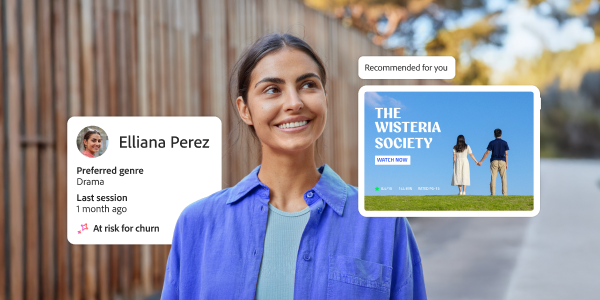
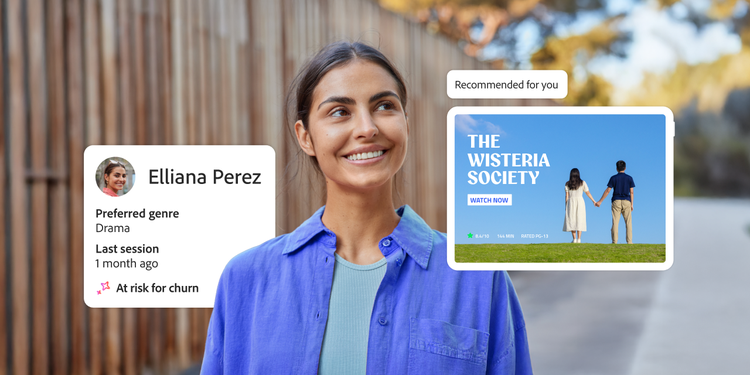
Without personalized content recommendations, it’s difficult for subscribers to easily discover desired content, making it less likely to earn and retain their attention.

Content fatigue.
Without built-in personalization, curation, or guidance, too much content is often overwhelming for customers. Sometimes, canceling a service is easier than trying hard to navigate too much content.

Financial constraints.
Customers tend to cancel their streaming subscriptions during periods of economic uncertainty. According to Deloitte, nearly 70% of surveyed consumers are frustrated that the entertainment services they subscribe to continue to raise their prices, and one-third say they have cut back on subscriptions due to financial concerns.

Social influence.
A popular show can incentivize subscribers to prioritize one platform over others, thereby increasing its audience. Likewise, controversy around a platform may inspire subscribers to drop a service and replace it with one or more competing alternatives.

Advertising preferences.
Some consumers prefer to watch without ads and will cancel ad-supported streaming services in favor of ad-free services. Other price-sensitive consumers will cancel more expensive stream services in favor of cheaper ad-supported options.
Despite the prevalence of churn, the streaming industry is growing and still presents a significant opportunity. According to PwC, over-the-top video revenue is projected to grow rapidly, from US$169 billion in 2024 to US$230 billion in 2029, demonstrating a significant opportunity.
The major players in streaming understand their customers and can keep them engaged. Nielsen highlights the competitive landscape:
Based on growth projections and industry trends, services can continue to grow by exploring international markets, localizing content to unlock new revenue streams, and reducing their dependence on single markets.
Streaming services have enormous opportunities in high-growth, mobile-first markets within the Asia-Pacific (APAC) region. According to PwC, countries such as India and Indonesia are leading this growth with CAGRs above 7.5%, outpacing other major markets. This expansion is driven by rising disposable income, affordable payment options, and the need to provide localized content that resonates with diverse cultural preferences.
Moreover, even global populations that don’t have access to laptops or smart TVs still consume streaming content. Smartphones are popular worldwide, and anyone with a screen and access to a cellular network is a potential viewer. Providing content that caters to diverse cultural preferences can strengthen a platform's global reach and make streaming videos on demand, more worthwhile to a broader audience.
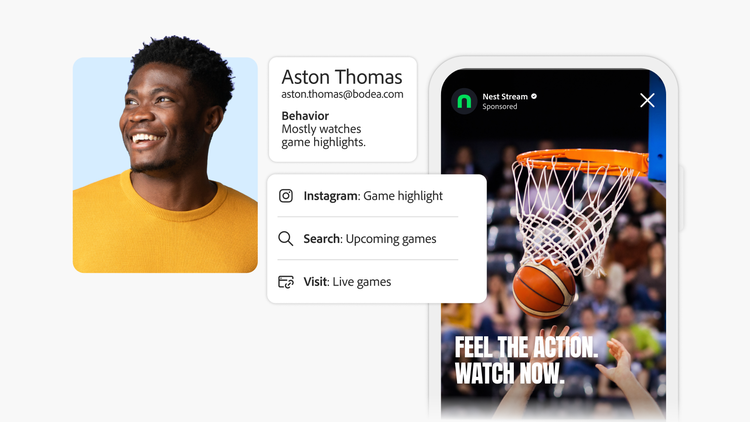
By collecting data from customer surveys, marketing analytics tools, and market research, streaming services can develop detailed personas and customer models that represent different audience segments. This process, known as market segmentation, relies on building unified customer profiles based on real-time data.
These personas can include demographics, content preferences, watch behavior, and pain points. By continuously updating subscriber models based on real-time data and analytics, streaming services can proactively adjust their offerings to meet evolving subscriber needs and maintain customer loyalty.
Changes to streaming offerings can range from serving up a personalized watch list to the in-app user interface (UI) and user experience (UX) enhancements informed by thousands of data points from customers worldwide.
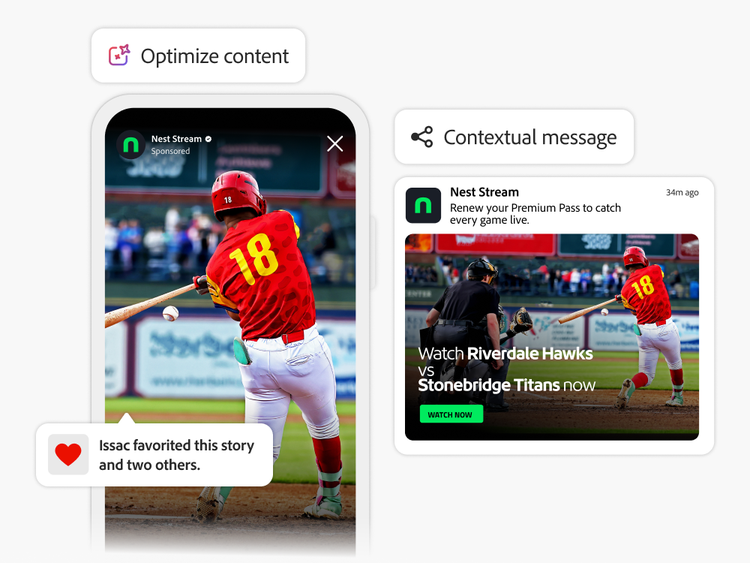
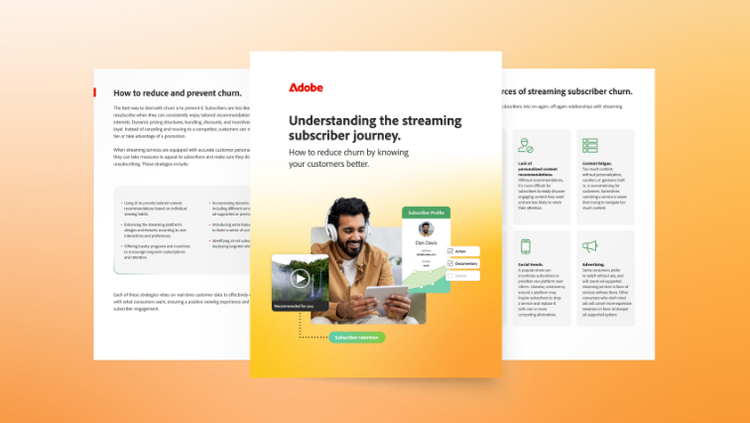
When streaming services are equipped with accurate customer personas, models, and data, they can take measures to appeal to subscribers and ensure they don’t become at risk of unsubscribing. These strategies include:
Each of these strategies relies on real-time customer data to effectively connect services with what consumers want, ensuring a positive viewing experience and sustained subscriber engagement.
By gaining deeper insight into subscriber behavior and preferences, streaming services can proactively tackle churn triggers, such as the lack of personalized recommendations, viewer fatigue, and pricing concerns. Adobe offers an integrated suite of solutions that works with existing tech stacks to transform serial churners into loyal customers who keep watching month after month.
Adobe Real-Time Customer Data Platform, Customer Journey Analytics, and Journey Optimizer empower streaming services to segment audiences, track, analyze, and model customer interactions, and activate tailored offers across the customer journey. With this information, services are better positioned to deploy strategies that delight their subscribers, keep them loyal, and reduce churn. These strategies are much easier to implement with Adobe’s embedded AI technology that can help in automating offer recommendations and creating personalized content for individual users, based on their preferences.
Learn more about how Adobe solutions can help turn customer insights into personalized customer experiences in this Sling TV article.
Explore Adobe’s integrated suite of solutions for personalized entertainment experiences.
“Antenna’s 2024 Top Subscription Insights: Net Churn,” Antenna, December 20, 2024.
Brendan Brady and Sam Garfield, “Understanding the Streaming Subscriber Journey,” Adobe, April 17, 2024.
“Digital Media Monitor,” Deloitte, October 28, 2025.
“The Gauge™: Traditional TV Gets a Boost from Football and News in January 2025,” Nielsen, February 18, 2025.
“Unleashing Agility in a Rapidly Changing World,” PwC, July 24, 2025.