Generative AI vs agentic AI: How to lead in the next era of AI-driven marketing.
Combine the strengths of generative and agentic AI with the right teams, data and guardrails to drive enterprise-scale growth.
The marketing guide to generative and agentic AI.
Generative and agentic AI are redefining how modern marketers operate — one accelerating creation and insight, the other driving orchestration and action. Together, they form a new growth engine that unites creativity, automation and intelligence to deliver more timely, personalised and adaptive experiences.
This guide explores the distinct roles of both technologies, how they work together across the marketing lifecycle and the actions leaders can take to integrate them responsibly across people, processes and platforms. Whether you’re just starting or advancing your AI strategy, discover how to move from experimentation to enterprise-wide transformation.
The AI tipping point: How generative AI and agentic AI are rewriting marketing.
The rapid rise of generative and agentic AI is transforming how businesses operate. AI has shifted from an emerging advantage to a true business imperative, marking a turning point in how organisations create and capture value. The challenge for leaders is no longer adoption itself but unlocking its full potential to deliver measurable growth, efficiency and customer impact.
In just one year, enterprise adoption of generative AI has more than doubled, jumping from 33 to 71 per centi. What started as isolated pilots is now embedded across business functions and nowhere more visibly than in marketing and sales. Here, AI is already reshaping how campaigns are created, personalised and measured, setting the pace for the rest of the enterprise.
Global spending on generative AI is expected to reach $202 billion by 2028, nearly a third of all AI investment.ii
At the same time, new AI capabilities are emerging and spreading fast. Within the next few years, half of Fortune 500 companies are expected to deploy AI “experience agents” — early forms of agentic AI that can deliver personalised customer interactions at scaleiii.
This rapid evolution creates both extraordinary opportunity and intense pressure for leaders. Success now depends on moving beyond surface familiarity to a clear understanding of what different types of AI can deliver. Not all AI is created equal and the strategic implications of each approach vary dramatically.
At Adobe, we work with thousands of brands navigating this transformation and we see two distinct forces driving the biggest gains: generative AI, which accelerates creative and analytical work and agentic AI, which extends that power into autonomous execution.
Understanding how these technologies differ — and how they work together — will be essential for any leader navigating this new landscape.
Understand the roles of generative and agentic AI and how they drive business value.
Generative AI and agentic AI power different parts of the marketing engine. Knowing where each drives value helps you to deploy them effectively.
What is generative AI and why it’s a game-changer for enterprise marketing.
Generative AI has quickly moved from hype to hard results in the last several years. Once seen with both excitement and scepticism, it has proven why so many regard it as transformative.
At its core, generative AI refers to deep-learning models that produce new content in response to a prompt. Instead of retrieving existing material, they generate original text, images, videos, designs or even code based on patterns learnt from large datasets. Unlike traditional AI, which follows predefined rules or executes specific tasks, generative AI creates entirely new outputs.
For marketers, that might mean feeding the system brand guidelines, past campaign assets and customer segment data, then prompting it to generate on-brand ad copy, social visuals or a draught video script — work that would otherwise take days.
This shift from rules-based automation to true content generation is what makes generative AI so powerful for marketing and why it is proving to be transformative, delivering measurable impact in how teams create, collaborate and compete.
of senior executives using generative AI report significant team efficiency gainsiv.
Organisations can realise an average 7.1X net ROI over three years, with nearly $200 million in annual value from generative AI-enabled content creation and productionv.
Much of its value in the near term lies in how it helps people do their jobs better. Research shows generative AI improvements to productivity could add the equivalent of $2.6 trillion to $4.4 trillion annually to the global economyvi. Marketing and sales are poised to capture the largest share of that impact, as teams use generative AI to accelerate campaign cycles, deepen personalisation and make content operations more agile.
It’s already reshaping how marketing teams get work done by:
- Accelerating creative production. Moving from concept to finished assets in days instead of weeks. What once took multiple specialists and lengthy revision cycles now happens with creatives and marketers working directly with generative AI.
- Personalising without the overload. Generating copy, images and creative variations in real time for different audience segments. Teams can now maintain relevance across dozens of markets and channels without multiplying effort.
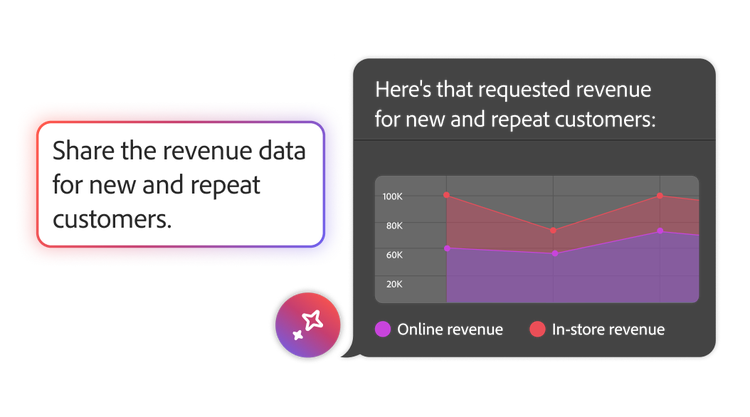
- Converting data into decisions. Transforming complex research, competitor analysis and performance data into clear, plain-language insights that guide faster, smarter choices.
Adobe in action.
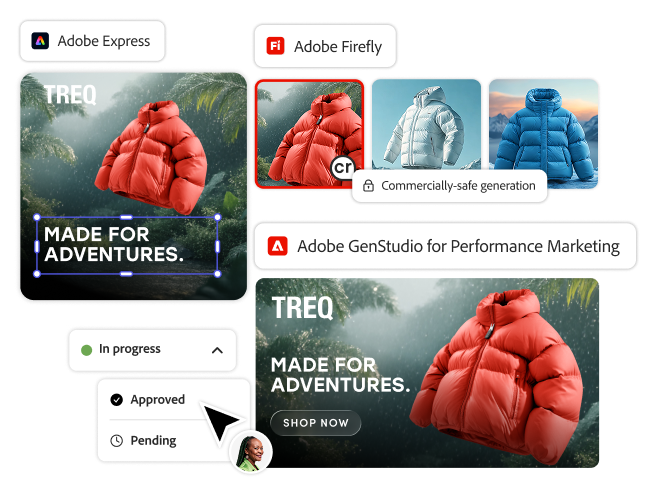
Adobe offers marketers a connected ecosystem that helps marketing teams turn generative AI potential into scalable practice — from Adobe Firefly for brand-safe image, video and audio generation, to Adobe Express for quick-turn content creation, to Adobe GenStudio for Performance Marketing for managing content production workflows — all designed to help teams scale creativity without sacrificing quality or governance.
What is agentic AI and why it’s the next leap for customer experience.
While generative AI fuels creation and insight, agentic AI translates that into action. Agentic AI refers to systems that can pursue specific business goals with minimal human supervision. Unlike traditional AI that waits for human approval at every step, agentic AI exhibits a higher degree of agency: it can plan tasks, make decisions and execute multi-step workflows, based on human inputs and validation, to achieve defined outcomes autonomously.
Think of it as the difference between having an assistant who drafts emails for you to send versus having an assistant who can draught, optimise, schedule and send those emails while monitoring performance and adjusting the approach based on results. Agentic AI builds on the content-generation abilities of generative AI by adding decision-making, tool integration and continuous learning.
The global AI agent market is projected to grow at 45% annually, rising from $5.7 billion in 2024 to $52.1 billion by 2030vii
What’s the difference between generative AI and agentic AI?
Generative AI focuses on creation, producing original text, images, code or insights in response to prompts. Agentic AI focuses on execution, using those outputs to plan and perform multi-step tasks to achieve defined goals. In marketing, the two work best when paired together: generative AI fuels content and insight, while agentic AI drives orchestration and action.
Generative AI
- Creates new content such as text, images, video, code etc.
- Responds to single prompts or questions with immediate outputs
- Best at accelerating creative production and analytical work
- Estimated to add between $2.6 trillion and $4.4 trillion in annual revenue.
- Typical uses: drafting marketing copy, creating images, translation, summarisation
Agentic AI
- Acts on that content by planning, deciding and executing tasks
- Engages in multi-turn or continuous actions based on evolving inputs
- Best at automating execution and reducing hand-offs
- Estimated to add between $450 billion and $650 billion in annual revenue by 2030.
- Typical uses: journey orchestration, real-time decision-making, process automation
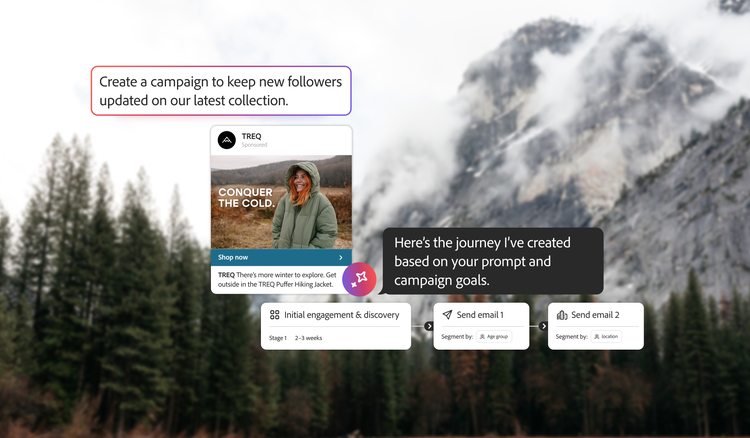
- Accelerating campaign development and activation: AI agents can perform the operational groundwork, analysing audience data, identifying high-potential segments, mapping journeys and assembling draught campaign plans, while marketers can review, refine and add strategic direction before launch.
- Optimising digital experiences in real time: Agentic systems continuously monitor website performance, engagement patterns and conversion signals, automatically adjusting content placement, personalisation rules or targeting parameters. If early campaign emails show low open rates, the system can test new subject lines, adjust send times and modify audience segments while tracking results and refining its approach.
- Delivering personalised customer interactions at scale: AI agents act as digital brand representatives, proactively surfacing relevant recommendations, offers or content based on real-time customer context and behaviour. Marketing teams set the brand voice and strategic guardrails while the agents handle personalised delivery, creating one-to-one engagement without one-to-one effort.
Adobe in action.
Adobe Experience Platform Agent Orchestrator provides the foundation for connecting multiple AI agents to deliver end-to-end marketing use cases. It helps enterprises co-ordinate execution while keeping marketers firmly in control of customer experience strategy, creative direction and brand standards.
Unify generative and agentic AI to unlock full marketing impact.
Generative and agentic AI are reshaping how marketing gets done but using them in isolation limits their impact. To unlock their full potential, marketers need to combine their strengths and embed them into everyday workflows.
USE CASE
Pair AI technologies for greater efficiency across the marketing lifecycle.
The difference between incremental gains and true transformation lies in integrating generative and agentic AI into a single marketing engine. Generative AI accelerates the creative and analytical work needed to get ideas off the ground, while agentic AI orchestrates and automates the tasks needed to bring those ideas to life, at scale.
When it comes to customer experience delivery, this combination means marketers can truly respond to customer needs in the moment. We’re already seeing many teams start by using generative AI for specific use cases like drafting copy or creating visuals and then gradually handing off more execution tasks to agentic AI. This gradual shift builds trust while proving the value of combined workflows.
Let’s explore the workflow synergies of agentic and generative AI across six stages of marketing.
Planning and support
Problem: Campaign planning can take weeks of data pulls, competitor analysis and internal debates. By the time plans are finalised, they risk being outdated and creative teams are already stretched thin.
Solution: Pairing generative and agentic AI cuts that cycle to hours. Agentic AI analyses past performance, market trends and budget impact to surface the strongest strategies, while generative AI turns those insights into briefs, concepts and messaging frameworks.
Example: A SaaS company planning a spring-upgrade promo uses agentic AI to identify high-risk renewal accounts and optimal discount tiers, while generative AI drafts tailored email templates and campaign concepts for each customer group.
Audience management
Problem: Audience targeting often gets stuck in endless testing loops. Teams spend weeks building segments and running A/B tests, only to see results flatten as behaviours shift mid-campaign.
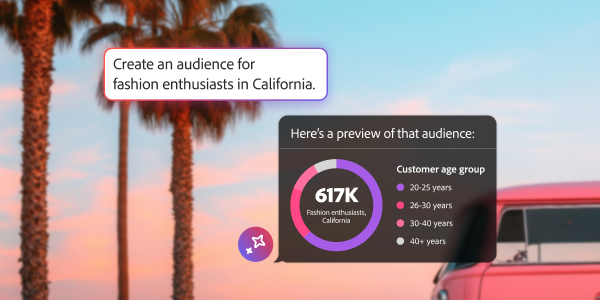
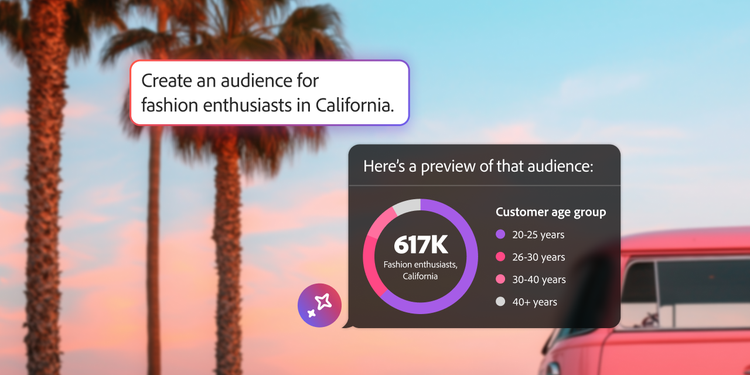
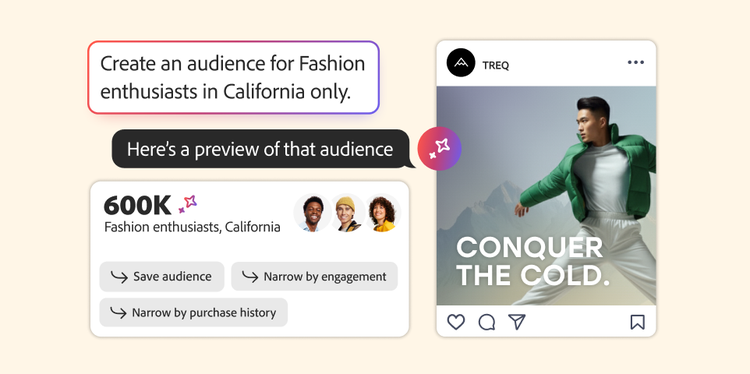
Solution: Pairing generative and agentic AI keeps targeting precise and adaptive. Generative AI creates personas, research summaries and look-alike profiles to jump-start targeting, while agentic AI automates segmentation, runs experiments and adjusts parameters in real time as performance data comes in.
Example: A bank promoting a new credit-card rewards programme uses generative AI to profile “frequent travellers,” “online shoppers” and “everyday spenders,” while agentic AI reallocates budget in real time to whichever segment converts at the highest rate.
Content production
Problem: Demand for content keeps outpacing team capacity. Manual production cycles can’t keep up and rushed creatives risk hurting brand credibility.
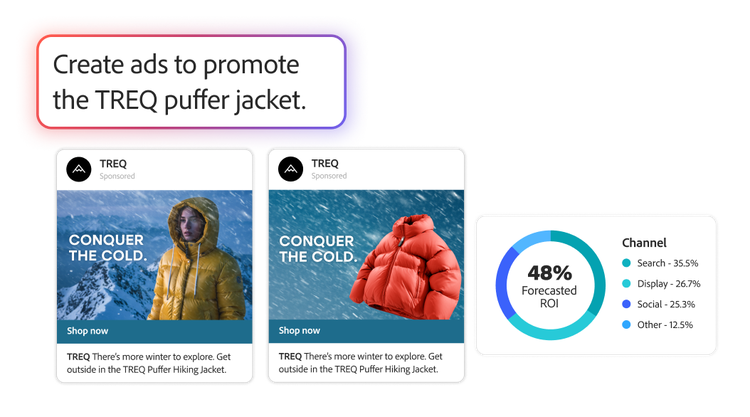
Solution: Pairing generative and agentic AI scales content without sacrificing quality. Generative AI generates campaign copy, images, video scripts and ad variations at speed, while agentic AI monitors live performance and automatically swaps in top-performing assets to keep campaigns relevant and effective.
Example: A fashion retailer running a mid-season sale uses generative AI to create localised banners, push-notification copy and social videos in minutes, while agentic AI rotates in the visuals that drive the highest click-through rates.
Journey orchestration
Problem: Customer journeys are too complex to manage manually. Co-ordinating offers, content and channels across touchpoints often results in disconnected campaigns that stall conversion.
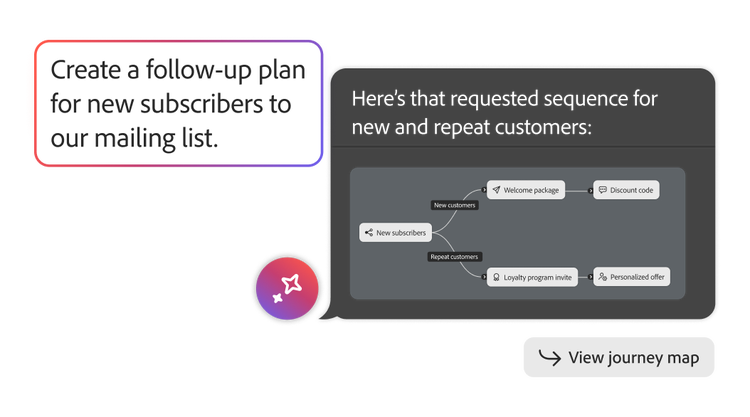
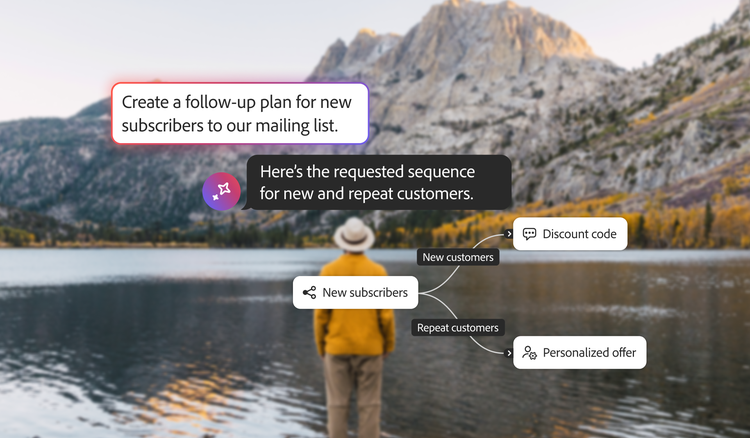
Solution: Pairing generative and agentic AI brings cohesion and agility. Generative AI drafts journey maps, nurture sequences and tailored messaging, while agentic AI deploys them dynamically — adjusting content, timing and channels based on real-time signals.
Example: A streaming platform offering a sports add-on package uses generative AI to draught upgrade emails, in-app banners and retention nudges, while agentic AI triggers reminders only to users who watch sports but haven’t upgraded.
Experience management
Problem: Personalisation often lags customer behaviour. Generic content and delayed adjustments drive lower engagement and missed opportunities.
Solution: Pairing generative and agentic AI keeps experiences fresh in the moment. Generative AI produces personalised copy, product descriptions and chatbot responses, while agentic AI responds in real time — adjusting recommendations, navigation or offers to match changing intent.
Example: An airline offering flash weekend fares uses generative AI to refresh promo headlines and chatbot FAQs instantly, while agentic AI updates homepage hero spots and suggested routes as certain flights sell out or new demand surges.
Performance analysis
Problem: Insights often arrive too late to guide decisions. By the time reports are compiled, customer behaviour has already shifted.
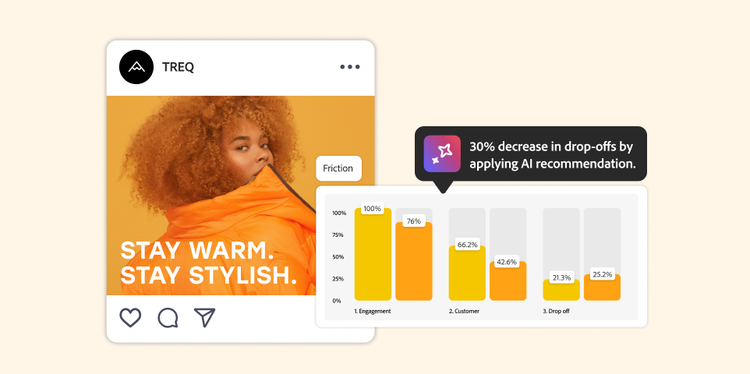
Solution: Pairing generative and agentic AI turns data into real-time action. Agentic AI surfaces anomalies, trends and optimisation opportunities as they emerge, while generative AI translates data into plain-language summaries, visual stories and recommendations teams can act on immediately.
Example: A food-delivery app running a “free-delivery Friday” deal uses agentic AI to detect a mid-day drop in orders in two cities, while generative AI generates a quick insight brief recommending localised push-notification offers.
Integrate AI tools into your marketing stack for stronger outcomes.
Even the smartest AI tools can only go so far in isolation. To deliver reliable, high-quality outputs, both generative and agentic AI need to be plugged into your existing marketing systems — your customer relationship management and digital asset management systems, CMS, analytics platforms and campaign tools.
When connected, they can tap into real customer data, brand guidelines and performance signals to create content that’s not just fast, but accurate, relevant and on-brand. This integration also makes their decisions auditable, letting teams build in compliance guardrails, approvals and usage rights before anything reaches the customer.
Below are five business capabilities where this integration drives the most impact.
Personalisation with real customer context
Seamless end-to-end marketing workflows
Built-in brand and compliance guardrails
Continuous optimisation in real time
How Adobe puts integrated generative and agentic AI into action.
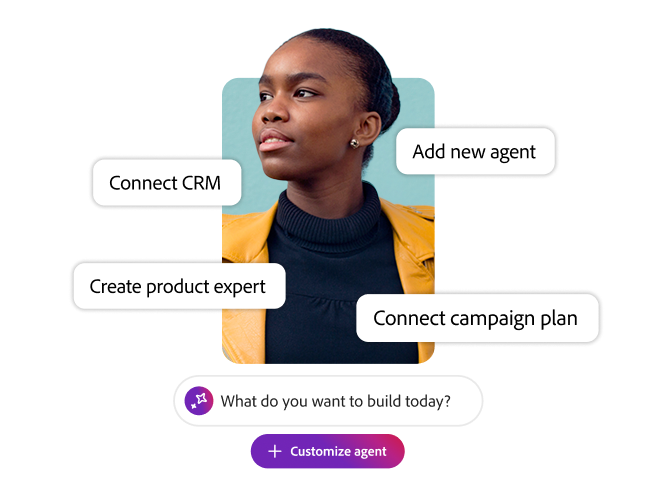
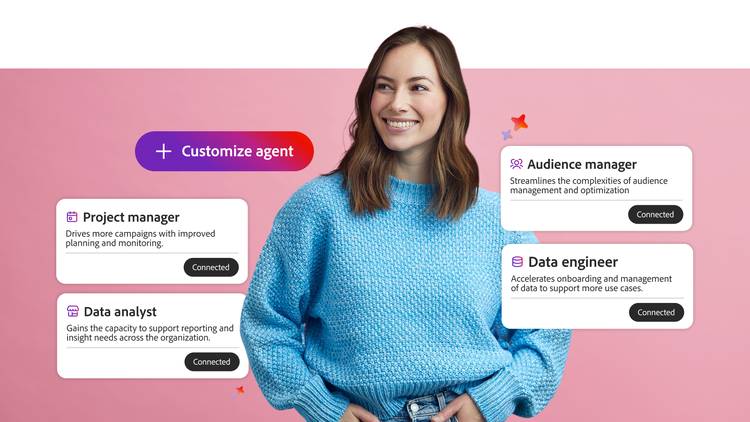
Adobe offers expert agents that work inside the tools marketers use every day, connecting directly to their data, content and journey activation systems. Building on generative AI technology and powered by Adobe Experience Platform Agent Orchestrator, these agents bring agentic AI into everyday workflows across the entire marketing lifecycle, supporting everything from planning and audience strategy to content delivery, experience optimisation and performance insight, in unified environments.
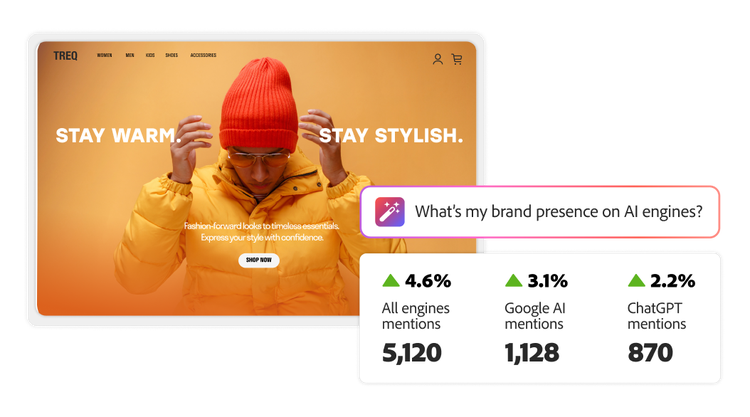
With creative and marketing tools like Adobe Firefly, Adobe Express and Adobe GenStudio for Performance Marketing, as well as agentic AI solutions such as Adobe LLM Optimizer and Adobe Brand Concierge, Adobe gives marketers both sides of the AI equation: the power of generative AI to accelerate creation and the orchestration of agentic AI to drive execution — all while keeping teams in control of marketing strategy, brand standards and guardrails.
Which AI model should enterprises adopt first?
Most organisations start with generative AI to enhance creativity and productivity, then expand into agentic AI as they mature. Generative AI builds foundational capabilities like content creation and insight generation, while agentic AI scales those gains through automation and connected execution. Successful enterprise adoption layers the two, starting with creation and then moving to orchestration.
Future-proof your AI adoption with robust risk controls.
As generative and agentic AI move from pilots to production, the risks scale just as fast as the opportunities. Nearly 47% of organisations using generative AI have reported at least one negative consequenceviii — most often inaccuracy, cybersecurity gaps or explainability issues — and 77% of cybersecurity leaders worry these risks could undermine their security strategiesix.
Beyond technical flaws, accountability is becoming a pressing concern. As companies deploy generative AI tools and AI agents that can act across systems and datasets, it’s getting harder to trace decisions or assign responsibility when something goes wrong. This accountability gap is surfacing as a growing priority in many enterprises.
Leaders can’t afford to treat risk as an afterthought. It must be factored into AI strategies from the start to safeguard brand trust, customer safety and business continuity.
Key generative AI risks and how to prevent them.
Generative AI risks stem from the way these models generate new content. Issues like hallucinated outputs, hidden bias or opaque decision-making can quietly erode quality and trust if teams lack the right controls. Compounding this, governance can break down fast when culture lags behind adoption. For instance, only a quarter of employees say they always verify AI outputsx. Without guardrails and oversight, small errors can quickly scale across campaigns and channels.
The table below highlights the most common generative AI risk areas and the capabilities needed to mitigate them.
Key agentic AI risks and how to prevent them.
Agentic AI risks are different. They stem from the autonomy of these systems. Because agentic AI can plan and execute tasks across multiple tools, mistakes can propagate quickly — from operational errors such as sending the wrong email trigger or oversaturating a segment with promotions, to unintended data-access violations when agents act across connected platforms.
As adoption scales, permissions and access controls become harder to manage. Organisations often discover that rules set for one tool don’t automatically carry over to the entire chain of agentic AI workflows, creating blind spots that increase exposure.
Without strong human-in-the-loop oversight, traceability and well-defined permissions, even well-intentioned systems can behave in unexpected ways.
The table below highlights the most common agentic AI risk areas and the capabilities needed to mitigate them.
Choose AI partners that build safety in by design.
Managing the risks isn’t just about internal processes. It also depends on who you are partnering with. Most organisations won’t build all safety mechanisms in-house, so you need vendors that embed accountability, responsibility and integrity into their platforms by design. As you assess potential vendors for generative and agentic AI solutions, look for evidence of these core practices.
Purpose-built training
Enterprise AI is only as accurate and reliable as the data behind it. Look for vendors that build domain-specific, rights-cleared datasets tailored to your use cases. This ensures the output is relevant, brand-safe and compliant from the start.
Rigorous and continuous testing
Vendors should stress-test their models and features both before and after launch. This includes automated bias detection, adversarial testing and ongoing human evaluation, especially for marketing and creative use cases where quality directly affects brand reputation.
Transparency and traceability
Ensure the vendor’s platform provides clear audit trails for how outputs are generated, capturing prompts, model versions and data sources. This makes it possible to review, explain and reproduce AI decisions when needed.
Feedback and remediation loops
The platform should allow users to flag potentially biased or harmful outputs, with a clear process to review and remediate issues. This not only reduces risk but also helps continuously improve model quality over time.
Build lasting AI value by strengthening your processes, people and platforms.
Implementing generative AI and agentic AI responsibly is about more than managing risk — it’s about creating the conditions for innovation to thrive. It starts with leaders investing early in the people, processes and platforms that let AI scale safely and become a trusted part of daily workflows. Done well, it accelerates value realisation and builds lasting confidence across the organisation.
For marketing leaders, this means approaching implementation as a staged journey — first strengthening core processes, then enabling people and finally readying the underlying tech to support them at scale.
PROCESS
Four steps to strengthen AI deployment before you scale.
Before scaling generative AI or agentic AI tools across your organisation, validate their fit within your environment and establish clear metrics for success.
1. Find the right entry points in your stack.
What to do: Map your core marketing and content processes, then identify where generative AI and agentic AI tools can enhance existing platforms — for example, using generative AI to accelerate content creation in your CMS or agentic AI to automate campaign delivery in your marketing automation stack.
Why it matters: AI creates impact when embedded in daily workflows, not just layered on top, yet only 28% of large enterprises say they’ve effectively embedded AI into their business processesxi.
2. Focus on high-impact use cases.
What to do: Choose specific, measurable workflows where AI can drive clear value, such as generating campaign briefs, personalising emails or automating reporting, to validate integration value before scaling.
Why it matters: Concentrating on a few high-value applications builds early momentum. But companies often dilute impact by spreading resources across too many AI pilots. Research shows leaders who prioritise an average of 3.5 high-value use cases (vs 6.1 for others) can expect double the ROI on their AI initiativesxii.
3. Define clear success metrics from the start.
What to do: Set measurable goals for each AI use case, such as reducing content production time, lowering cost per asset, improving campaign engagement or increasing customer satisfaction.
Why it matters: Clear KPIs are essential to prove value and guide scale-up — yet fewer than one in five enterprise leaders say their organisations currently track KPIs for generative AI solutions. Establishing ROI metrics early ensures AI drives real business impactxiii.

4. Establish guardrails to scale safely.
What to do: Embed AI initiatives within your existing governance framework — covering access controls, data privacy, legal review, approval workflows and audit logging — before scaling deployment.
Why it matters: While 74% of enterprise leaders say governance will have a high impact as generative AI adoption increases, only 21% say their organisation’s governance maturity is systemic or innovativexiv. Closing this gap is critical to scaling AI safely.
of employees use generative AI at work but only 20% of companies offer access.
of companies are ready to use AI and AI-powered technologies to full potential.
What should leaders prioritise when scaling AI across the business?
Leaders should balance experimentation with operational discipline, empowering teams to innovate while upholding governance, data integrity and brand standards. Fostering cross-functional collaboration across marketing, IT, operations and data teams ensures AI-driven ideas can be executed safely, efficiently and at scale.
PEOPLE
Empower your team to use AI with confidence.
Your team is already using generative AI tools, whether you’ve rolled them out or not. Around 80% of employees use generative AI at work and 85% say it helps them work faster, yet only 20% of organisations offer company-wide accessxv.
That uneven access often leads to uneven adoption: some teams experiment freely while others stay on legacy workflows or are blocked by lack of approvals. When marketing moves ahead without IT to integrate data or without legal and compliance to define usage policies, those gaps show up later in disconnected workflows, delayed launches and extra manual reviews.
True scale requires all these functions to modernise together. If only one department changes the way it works, the benefits of AI plateau before they reach enterprise-wide impact. If you want AI to scale safely and gain from the increased productivity, you need to meet employees where they are: give them structure, confidence and room to experiment.
Train by role.
Deliver role-specific training on responsible use, data sensitivity and transparency. Focus on practical, hands-on ways to use generative and agentic AI in daily work.
Guide everyday use.
Define where AI should and shouldn’t be used, how to label AI-assisted work and how it fits into existing workflows, so it feels like part of the process, not extra work.
Build accountability.
Add ethical checks to reviews and feedback loops. Encourage employees to flag issues early and consider customer and brand impact in their outputs.
Celebrate quick wins.
Share real examples of AI saving time or improving quality. Visible wins build trust and encourage wider adoption.
Create shared oversight.
Form a cross-functional group from legal, HR, IT, marketing and operations to co-ordinate roll-out, manage risk and align policies with real usage.
Monitor and improve.
Track how employees use AI tools and the outcomes they drive. Use that data to close gaps that emerge, refine training and update policies as adoption grows.
PLATFORMS
Prepare your data and infrastructure for enterprise-scale AI.
Even the best-trained teams can’t succeed if your systems can’t support generative AI and agentic AI at scale. Most enterprise bottlenecks come not from weak models but from scattered data, fragile APIs and governance systems that weren’t built for automation.
In fact, only 13% of companies are ready to leverage AI and AI-powered technologies to their full potential, even though 50% of companies say they’ve already dedicated up to 30% of their IT budget to AIxvi. Without solid foundations, AI stays stuck in isolated experiments — unable to integrate with core systems or deliver reliable results.
Interestingly, we’ve seen highly-regulated industries such as financial services often move faster once they decide to adopt AI because they already have robust data-governance policies in place. Clear data lineage and tight access controls give compliance teams confidence in the foundation, which helps speed up approvals for new AI use cases
To scale AI safely and sustainably, your data and infrastructure pipelines must be as ready as your people.
Key integration and deployment considerations to help you scale AI usage.
Check infrastructure readiness.
Audit your data pipelines, APIs, storage systems and governance processes to uncover bottlenecks. Look for siloed data, fragile integrations, slow response times or missing versioning and backups that could block scale.
Set clear system selection criteria.
Define what “enterprise-ready” means before adding new tools, setting standards for transparency, bias mitigation, encryption and compliance with General Data Protection Regulation and the NIST AI Risk Management Framework.
Establish cross-functional oversight.
Create a governance team spanning data science, IT, security, legal and compliance. Empower them to manage risk, oversee deployments and adapt policies as regulations evolve.
Monitor performance in real time.
Implement AI-specific monitoring tools to track output quality, model drift, latency and security. Pair automated dashboards with regular human reviews to catch bias, harmful content or compliance issues before they escalate.
Run regular risk reviews.
Review deployed systems regularly with data scientists, compliance officers and legal teams. Use structured feedback loops to detect reliability issues and continuously improve.
Embed AI into delivery pipelines.
Treat AI tools like any other enterprise software: deploy them in controlled stages with versioning, testing and rollback options to ensure new models don’t disrupt your existing systems.
Bring structure, speed and scale to your AI journey.
Generative and agentic AI are no longer experiments. They’re fast becoming the engines of content velocity, personalisation and customer engagement. The question for marketing leaders is how to scale them responsibly, so they don’t just deliver quick wins but create lasting value. That requires a balance: giving teams powerful tools, embedding guardrails and connecting AI into the systems that already run your business.
Adobe is helping enterprises take that step with AI that is enterprise-ready by design. From out-of-the-box AI agents that plug into daily marketing workflows, to generative AI tools that accelerate creation without sacrificing brand standards, Adobe brings together creativity, governance and automation in one connected ecosystem.
The organisations that thrive will be those that move forward by combining vision with execution and experimentation with efficiency. Adobe can help you to bring scale, structure and confidence to that journey.
Sources
- McKinsey’s the state of AI global survey, 2025.
- Worldwide AI and generative AI spending guide.
- IDC Futurescape: Worldwide future of customer experience 2025 predictions.
- Adobe 2025 AI and Digital trends report.
- The Growth Unlock report, Adobe.
- McKinsey’s economic potential of generative AI report.
- BCG analysis in partnership with Grand View Research.
- McKinsey’s the state of AI global survey, 2025.
- Four emerging categories of GenAI risks, Deloitte Insights.
- CCS Insight employee workplace technology survey.
- McKinsey’s the state of AI global survey, 2025.
- BCG AI Radar global survey, 2025.
- McKinsey’s the state of AI global survey, 2025.
- IBM’s enterprise guide to AI governance, 2024.
- CCS Insight employee workplace technology survey.
- CISCO AI readiness index, 2024.