Most Australian organisations already send marketing emails, yet many still treat every send as a one-off broadcast rather than a coordinated strategy. The result is inconsistent engagement, compliance risk under the Spam Act 2003, and wasted budget on campaigns that never reach the right inbox at the right time. This guide covers the email types worth investing in, how to build a strategy that scales across states and timezones, and where AI-driven personalisation gives enterprise teams a measurable edge.
Your complete guide to email marketing in Australia
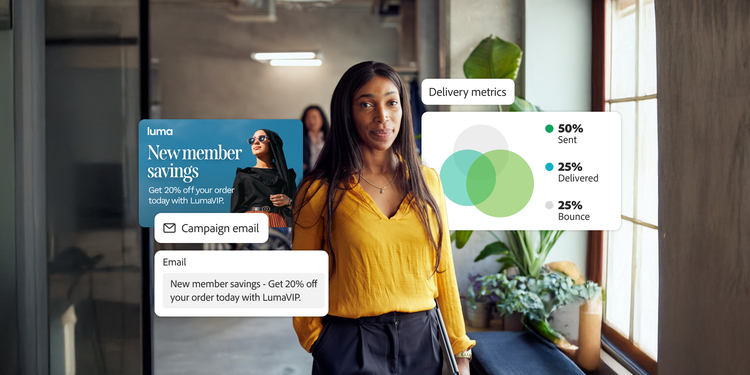
What types of marketing emails should your organisation send?
Without a clear taxonomy, marketing teams default to sending the same promotional blast to every subscriber, and this pattern erodes engagement and inflates unsubscribe rates. Four core email types serve distinct purposes, and choosing the right mix depends on your business model and customer lifecycle stage.
Promotional emails suit product launches, seasonal sales, and event invitations. A national retailer running an EOFY campaign, for instance, benefits from promotional sends timed to state-specific public holidays and shopping behaviours.
Transactional emails (order confirmations, shipping notifications, abandoned-cart reminders) carry some of the highest open rates because recipients expect them. A retailer sending an abandoned-cart reminder within two hours of drop-off capitalises on residual purchase intent.
Lifecycle and nurture sequences reduce churn by re-engaging dormant subscribers. A SaaS company running a seven-email onboarding drip over 14 days can surface features progressively, reducing support tickets and improving activation. Re-engagement sequences targeting subscribers inactive for 30 to 60 days give you a final opportunity before list hygiene removes them.
Newsletters build long-term brand authority and keep your organisation top-of-mind between purchase cycles.
One practical consideration competitors overlook: Australian audiences spread across AEST, ACST, and AWST mean a single "best send time" doesn't exist. Timezone-aware scheduling (sending the same campaign at 9:00 am local time in each zone) can lift open rates by several percentage points compared with a single national blast.
What are the benefits of a well-executed email marketing strategy?
Many teams struggle to justify email investment when paid social and search appear to offer faster attribution. The counter-argument is straightforward: email targets opted-in audiences with demonstrated interest, which is why it consistently delivers stronger return on spend than most paid channels.
Beyond ROI, email provides an ownership advantage. Unlike social platforms where algorithm changes can halve organic reach overnight, your subscriber list is a first-party asset you control, and it serves as a critical hedge for organisations preparing for third-party cookie deprecation.
Scalability matters for distributed teams. A national retailer with stores across six states can segment by region and personalise offers (winter coats for Melbourne, swimwear for Cairns) without duplicating campaign infrastructure. The same template, dynamically populated, serves every market from a single workflow.
How do you build an effective email marketing strategy?
The most common failure mode is launching campaigns before defining who receives what and why. Strategy starts with audience segmentation, and behavioural segments outperform demographic ones. Segmenting by "browsed pricing page twice in seven days" yields higher conversion than segmenting by job title alone. Developing clear audience targeting strategies early prevents wasted sends and list fatigue.
Next, map the customer journey and align email content to each stage. Awareness-stage subscribers receive educational content; consideration-stage contacts receive comparison guides and social proof; decision-stage leads receive personalised offers with urgency triggers.
Set measurable KPIs before launch. Open rates vary by industry, but tracking click-to-open rate (CTOR) isolates content relevance from subject-line performance, giving a clearer optimisation signal.
Finally, A/B test one variable at a time (subject line, send time, or CTA placement) and run tests for a minimum of 48 hours to account for timezone spread across Australian states. Cutting a test short at 24 hours risks over-indexing on east-coast behaviour alone.
How can AI improve email personalisation and performance?
Manual personalisation hits a ceiling quickly. Once you manage more than a handful of segments, building individual variants for each audience slice becomes unsustainable, and the lag between insight and execution means opportunities expire before campaigns deploy.
AI-powered send-time optimisation analyses individual subscriber engagement patterns to deliver emails when each recipient is most likely to open. For organisations with audiences across AEST, ACST, and AWST, this eliminates the guesswork of manual scheduling entirely.
Predictive content selection uses engagement history to surface the most relevant product recommendations or content blocks within a single template, removing the need to build dozens of manual variants. Teams focused on automating repetitive design tasks can redirect effort toward creative strategy rather than template duplication.
Adobe Marketo Engage and Adobe Campaign use AI models to score leads and trigger automated nurture paths. For example, a subscriber who opens three emails in a week but hasn't clicked can be routed to a re-engagement sequence with a different content angle, and this happens without a human manually reviewing activity logs.
The business implication: AI-driven personalisation reduces manual campaign build time (teams have reported halving production cycles) while improving relevance metrics like CTOR.
Why does email marketing compliance matter in Australia?
Getting compliance wrong doesn't just risk fines. It erodes subscriber trust and can trigger platform-level deliverability penalties that affect every campaign you send.
The Spam Act 2003 requires three elements for every commercial electronic message: consent (express or inferred), clear sender identification, and a functional unsubscribe mechanism. Penalties for non-compliance can reach up to $2.22 million per contravention for body corporates, as set out in the Act's penalty provisions.
The Privacy Act 1988 and Australian Privacy Principles (APPs) govern how you collect, store, and use subscriber data. APP 6 restricts use of personal information to the purpose for which it was collected, meaning purchased lists without proper consent create direct legal exposure, regardless of whether the list vendor claims the data is "opt-in."
As a practical safeguard, implement double opt-in for all new subscribers and maintain a suppression list that syncs across platforms in real time to prevent accidental sends to unsubscribed contacts.
OAIC enforcement actions have increased scrutiny on data handling in recent years. Organisations operating across Australia and New Zealand must reconcile both jurisdictions' requirements within a single email platform, and this configuration challenge favours platforms with built-in consent management.
Which email marketing approach fits your organisation?
Choosing a platform before documenting your requirements is a common and expensive mistake. The right fit depends on operational complexity, not just list size.
If your list is under 10,000 contacts and you send fewer than four campaigns per month, a lightweight platform with template builders and basic automation is sufficient. The priority here is ease of use and fast time-to-send.
If you manage multiple brands, regions, or complex lifecycle journeys across 50,000+ contacts, an enterprise platform with AI-driven orchestration, real-time segmentation, and cross-channel integration (like Adobe Campaign) reduces operational complexity and keeps compliance controls centralised.
If your team lacks dedicated email developers, prioritise platforms with drag-and-drop editors and pre-built compliance features (unsubscribe handling, consent tracking) to reduce risk. Pairing these with data analysis and visualisation tools ensures you can measure performance without relying on external analysts.
Before vendor evaluation, document: list size, send frequency, number of segments, integration requirements (CRM, e-commerce, analytics), and compliance obligations. This checklist prevents scope creep during procurement and ensures the platform you select matches the strategy you've built, not the other way around.
Discover how Adobe Campaign helps Australian marketers orchestrate personalised email journeys at scale and request a demo today.
Recommended for you
Title
Your complete guide to email marketing in Australia
CardDescription
This guide to email marketing covers strategy, campaign types, compliance, and AI-driven personalisation to help Australian marketers drive measurable results.
cardDate
2026-09-09
cardImage
primaryTag
caas:content-type/blog
Tags
caas:content-type/blog, caas:products/adobe-campaign, caas:topic/campaign-management, caas:blog-author/adobe-for-business-team