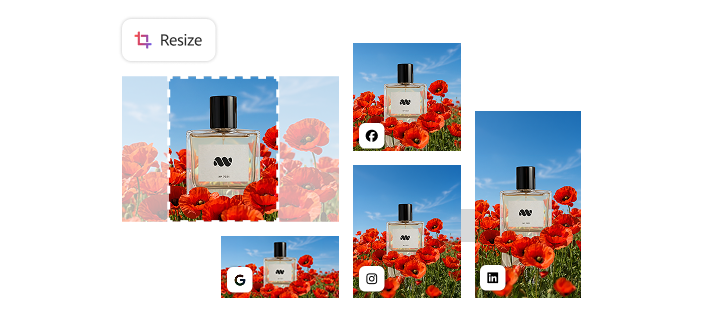
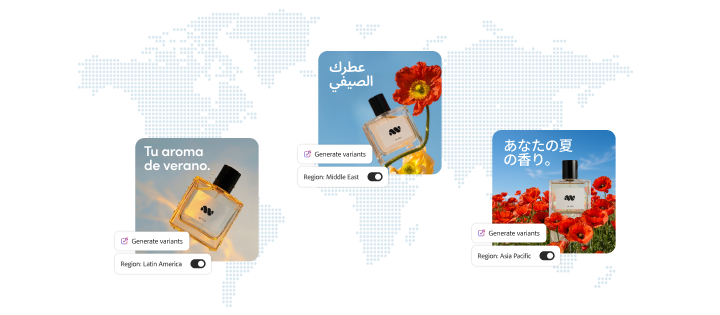
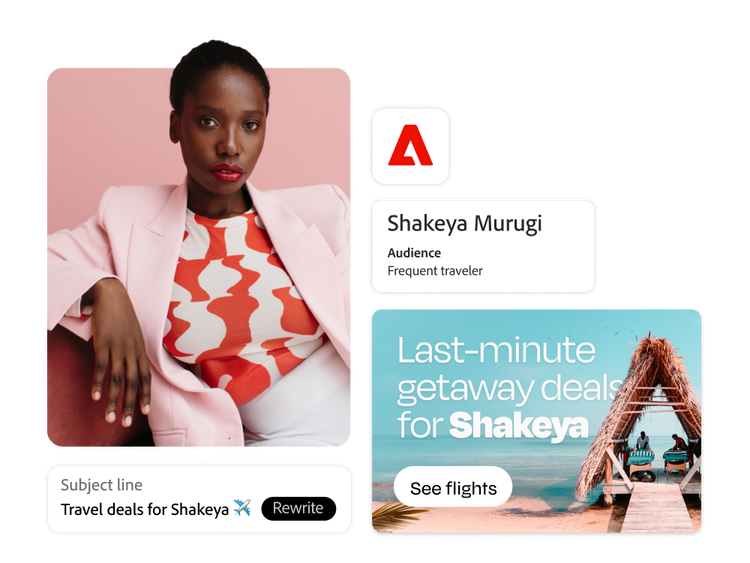
Personalisation has become an essential marketing requirement, increasing demand for a larger volume of creative variations. As a result, creative teams must produce more assets tailored to different audience segments, seasonal initiatives and regional markets. Creating and adapting campaign assets has become increasingly complex and time-intensive.
Generating these variations manually creates a production bottleneck that limits task agility. By the time creative teams produce enough variations to support personalisation, testing and localisation efforts, market conditions may have shifted. Slow variation production can limit testing opportunities and reduce a team's ability to respond quickly to changing campaign needs.
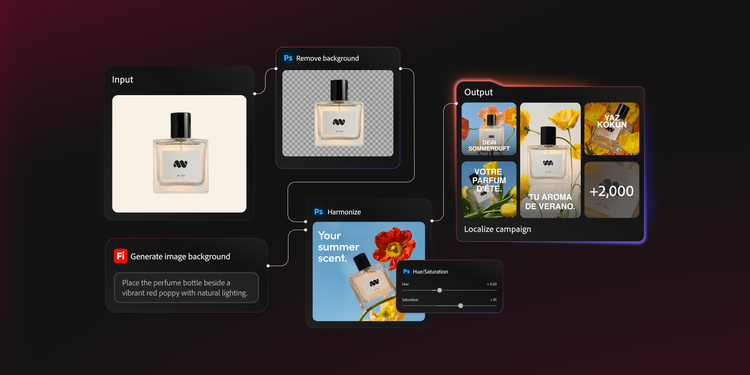
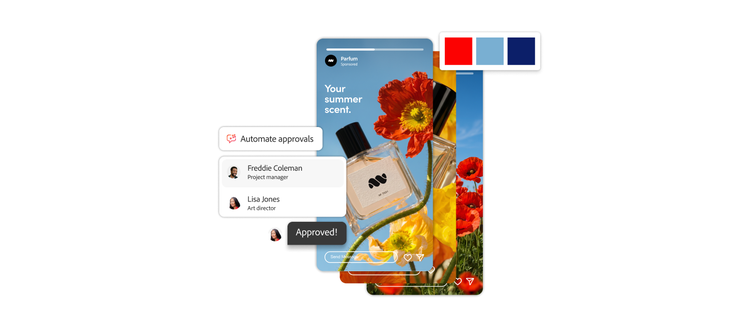
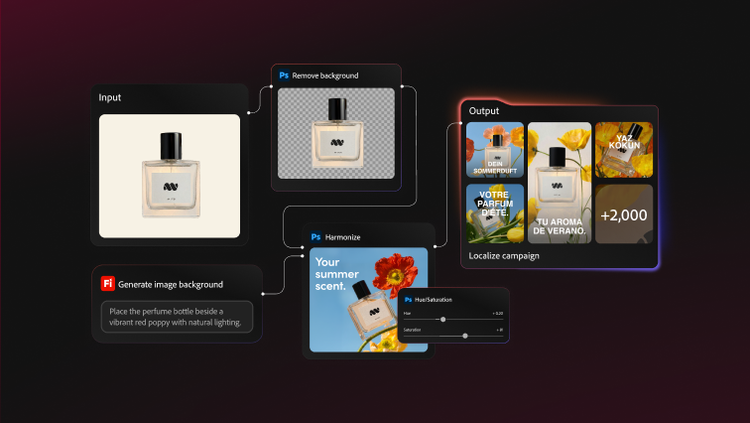
Many organisations are turning to AI-powered creative workflows to keep pace with personalised content demands. AI-powered content creation enables rapid generation of on-brand variations while maintaining human oversight over creative direction. Configuring AI systems with clear brand guidelines, including colour palettes, typography rules, imagery styles and compositional preferences, is important. These guardrails help ensure that automated outputs remain visually consistent and recognisable.
Enterprise organisations are already applying this approach at scale. For example, IBM used Adobe Firefly to automate creative production while maintaining brand integrity through structured review and approval processes.
Configuring your AI systems for brand-consistent outputs requires an upfront investment in time and resources. However, that investment pays off with every subsequent campaign produced. Here's how to build this workflow:
- Document your brand guidelines in a format the AI system can reference, including colour codes, font specifications and imagery parameters.
- Upload reference assets that exemplify your brand aesthetic and configure customised brand guidelines or models as needed.
- Create variation templates that define the types of changes permitted (colour adjustments, background swaps, element repositioning).
- Generate initial variation batches from your source creative.
- Review outputs with your creative team, providing feedback to refine AI parameters.
- Iterate on model configuration until outputs consistently meet brand standards.
- Deploy the configured workflow for ongoing campaign variation production.
By automating asset variations, creative teams can scale personalisation, accelerate testing and support more campaigns without proportionally increasing production effort.