



con-block-row-bgcolor
#000000

2026 AI and Digital Trends in Media and Entertainment

The Path to AI-Powered Customer Experiences for Media and Entertainment

Explore the top industry insights from Adobe’s 2026 AI and Digital Trends research to understand the actions brands must take now to convert AI investment into personalised, on-brand experiences across every screen, channel and audience.

Jump to the Top Trends

How Media and Entertainment Brands Are Scaling AI Across Every Audience Touchpoint

The media and entertainment industry has built a strong AI foundation — investing in unified customer data, content creation and discovery in ways that are already delivering real gains. But the industry has yet to extend that momentum into the consumer-facing and conversational workflows that increasingly drive engagement. Capturing the next wave of value will require closing the gap between a strong operational foundation and the agentic, audience-first experiences that earn lasting trust.

This overview explores the Adobe 2026 AI and Digital Trends findings across three critical areas for media and entertainment brands: building the operational foundation to scale AI, extending AI from discovery to engagement and aligning AI ambition to audience trust.

#F5F5F5
Media and entertainment imagery with an AI callout that reads “Connect workflows."

Section 1

Building the Operational Foundation to Scale AI

Media and entertainment brands are investing in unified data and generative AI for content creation, with measurable gains in production speed and content accessibility. The next opportunity is to extend those gains across more workflows with agentic AI, backed by governance strong enough to scale with it.
The industry is already strengthening the data foundation that powers intelligent, personalised customer journeys.

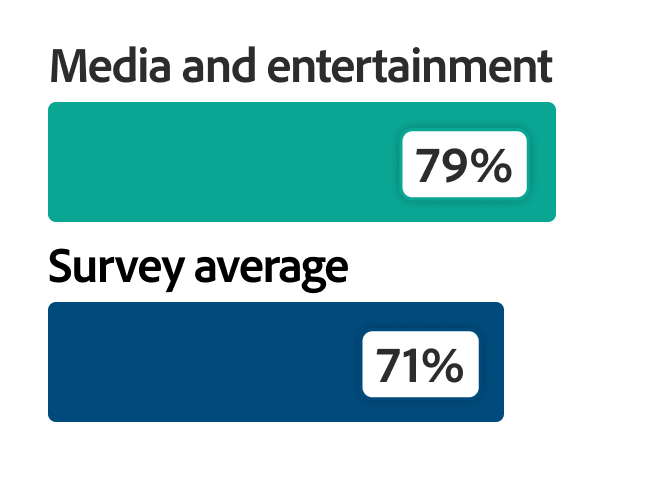
A large majority have invested in shared customer data platforms for generative AI use.
Bar chart showing 79 per cent of media and entertainment organisations, compared with a 71per cent survey average.
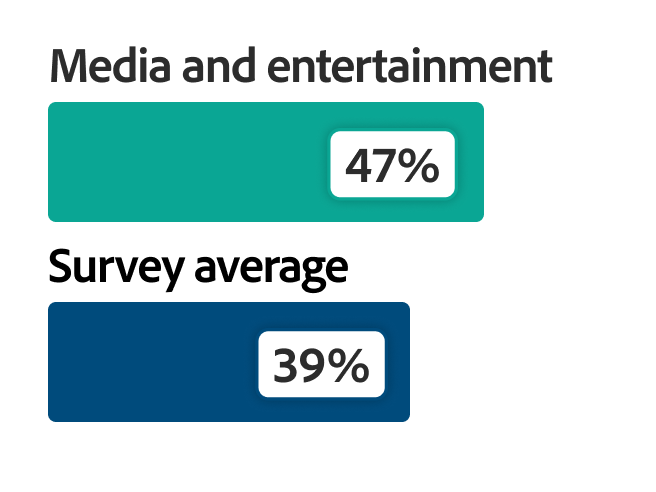
Nearly half have a unified customer data foundation that enables them to extract insights from all data created by AI agents and conversational interfaces.
Bar chart showing 47 per cent of media and entertainment organisations, compared with a 39 per cent survey average.

Generative AI is delivering early wins in content creation.

75 per cent say it has speeded up the volume and speed of content ideation and production.
73 per cent say it lets non-creative teams generate content on their own.
Yet nearly half (47%) still say their content supply chain is largely linear and resource-intensive.

In the next 18 months, organisations expect to automate internal workflows with the following agentic AI capabilities:

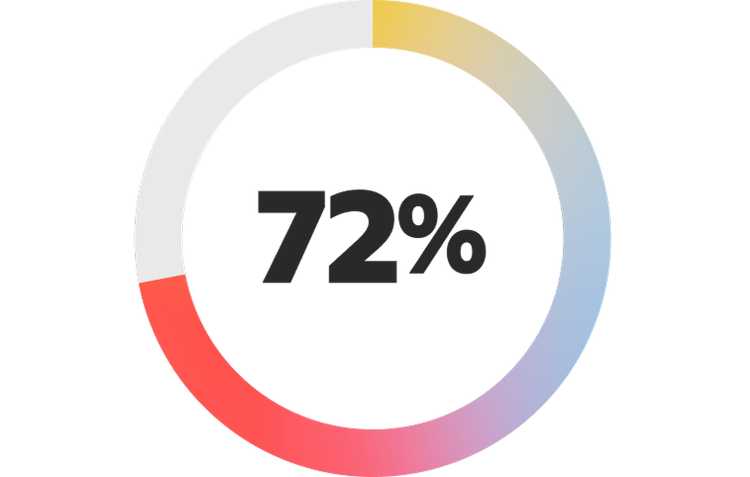
72 per cent

Assisting employees with research, insights or knowledge retrieval.
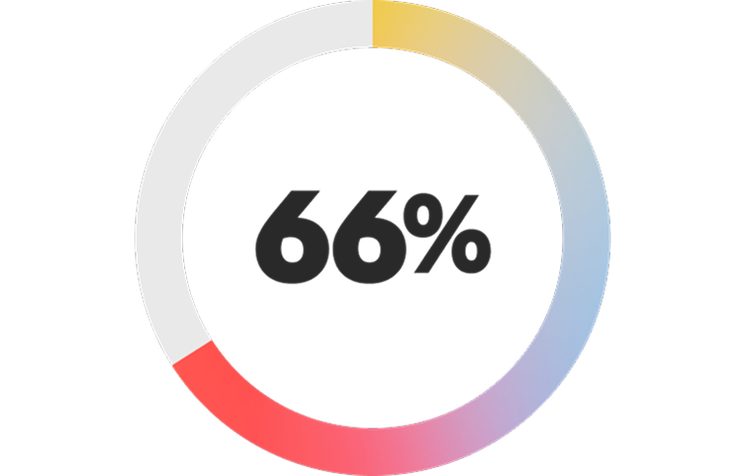
66 per cent

Optimising backend operations (e.g., supply chain, compliance, analytics).
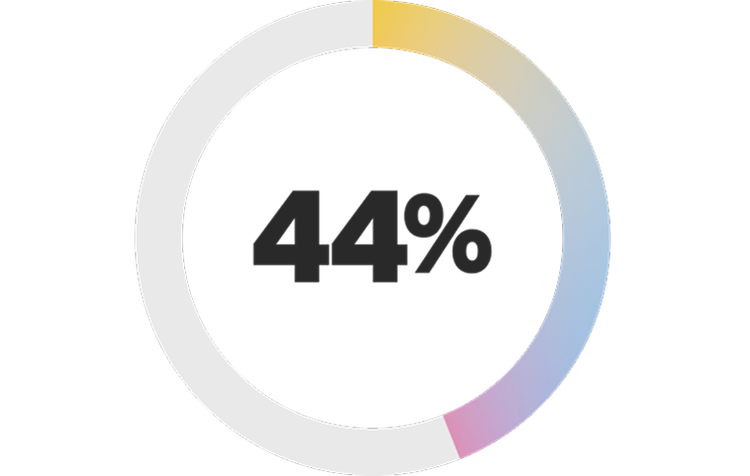
44 per cent

Creating content for marketing campaigns (e.g., original and derivative assets based on marketing briefs).

But to successfully scale agentic AI, governance must keep pace.

54 per cent

say they have strong AI governance policies in place.

48 per cent

say those policies are routinely followed.

#F5F5F5
Media and entertainment imagery with an AI callout that reads “Ask me anything…”

Section 2

Extending AI from Discovery to Engagement

Consumers are increasingly turning to AI-mediated platforms for recommendations and engagement. While the industry is making strong progress in AI-powered discovery, it has yet to bring that same momentum to customer support, conversational experiences and service automation.
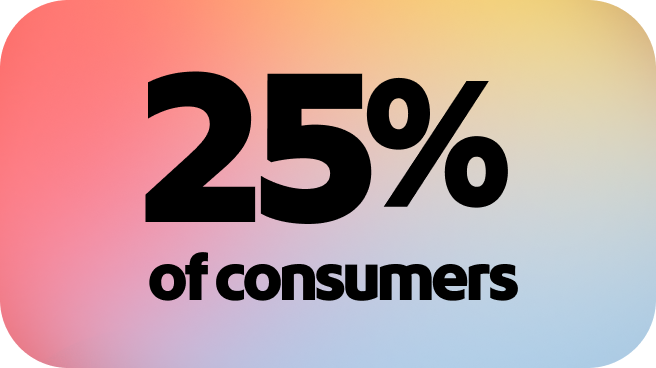

25 per cent of consumers
cite AI-powered platforms as a top source for information, recommendations and purchase decisions — ahead of brand websites and online reviews.

Consumers are already using AI to discover, evaluate and engage with content and brands.

For entertainment-related needs, such as playlist creation and video suggestions, 39% would use AI.
Chat mockup showing the message “Create a 70s hits playlist…”
Chat mockup showing the message “What are the top rated headphones?” with a “Searching the web…” response.
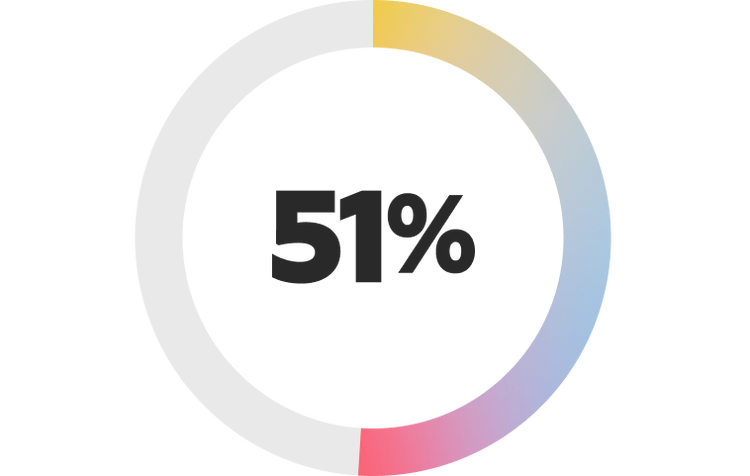
Over half (51%) “always,” “frequently” or “sometimes” use AI-powered assistants, conversational platforms or search as their primary source for advice, shopping or troubleshooting.

Brands understand that their relevance today depends on AI discoverability.

51 per cent

are preparing to optimise content for AI-powered discovery tools (e.g., structured metadata, content standards).
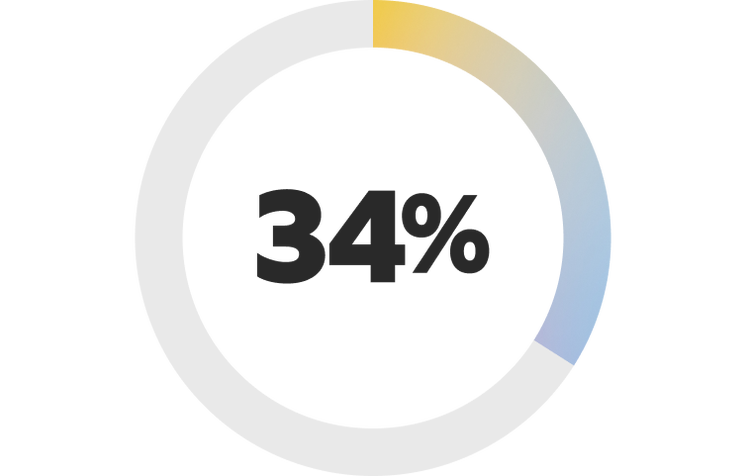
34 per cent

are using generative AI organisation-wide or across multiple functions for brand discovery and search optimisation.
The industry’s plan for agentic AI underinvests in consumer-facing experiences.

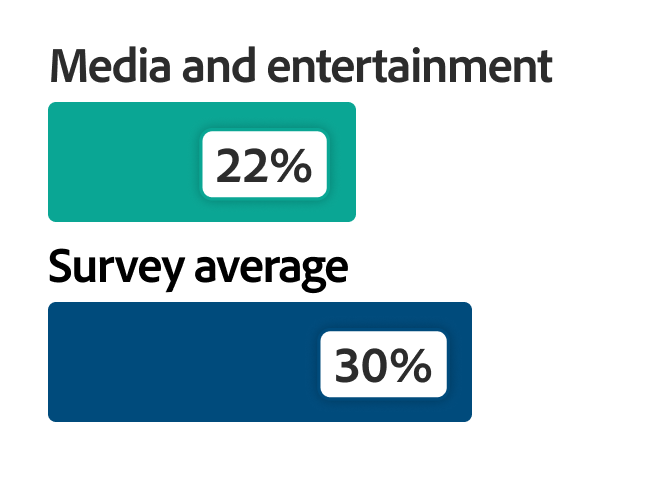
Less than a third have agentic AI embedded organisation-wide or integrated across multiple functions for customer support.
Bar chart showing 22 per cent of media and entertainment organisations, compared with a 30 per cent survey average.
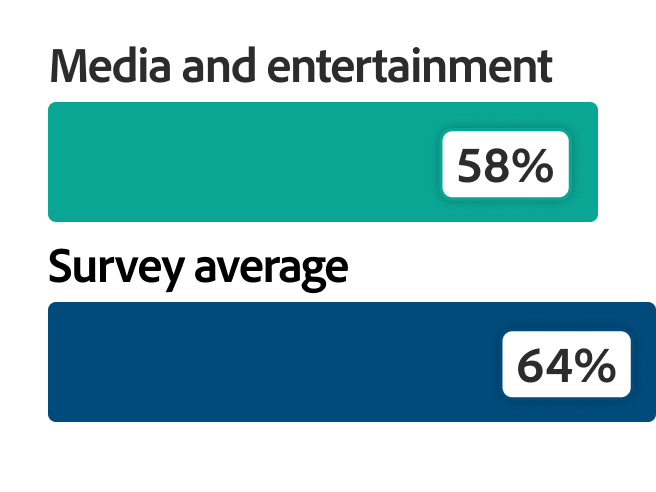
Just over half expect agentic AI to automate their routine customer service tasks like FAQs within 18 months.
Bar chart showing 58 per cent of media and entertainment organisations, compared with a 64 per cent survey average.

Conversational-first experiences trail the broader market.

Chat mockup showing the message “How can I help you?”
Over half (56%) say their future customer experiences will need to be designed as conversational first, vs. a 64% survey average.
#F5F5F5
Media and entertainment imagery with an AI callout that reads “Content labelled as AI.”

Section 3

Aligning AI Ambition to Audience Trust

Media and entertainment brands place customer experience (CX) outcomes at the centre of their AI ambitions, yet they overestimate consumer readiness for fully agentic experiences. To secure trust and capture the next wave of AI value, the industry must incorporate transparency and human support into those interactions.

The industry measures AI success by CX outcomes.

“Top” or “large” priority metrics for assessing the success of AI initiatives:

Yet retention and lead generation are lagging.

Percentage citing "significant" or "moderate" improvement in the following metrics over the past three years:
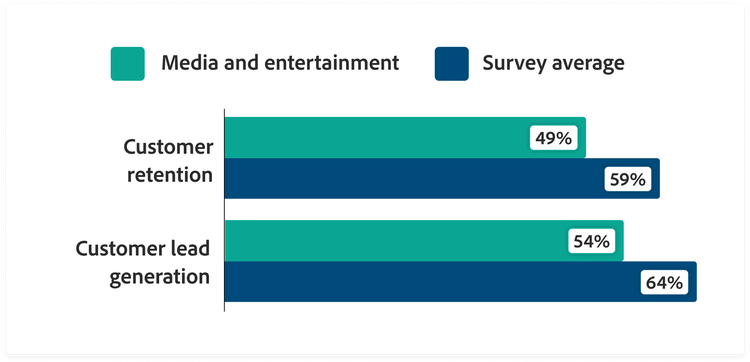
Grouped bar chart showing “significant” or “moderate” improvement in customer retention and lead generation over the past three years: customer retention at 49% media and entertainment vs. 59 per cent survey average, customer lead generation at 54 per cent media and entertainment vs. 64 per cent survey average.

The industry is overestimating current consumer readiness for fully agentic AI experiences.

Percentage agreeing with each statement:
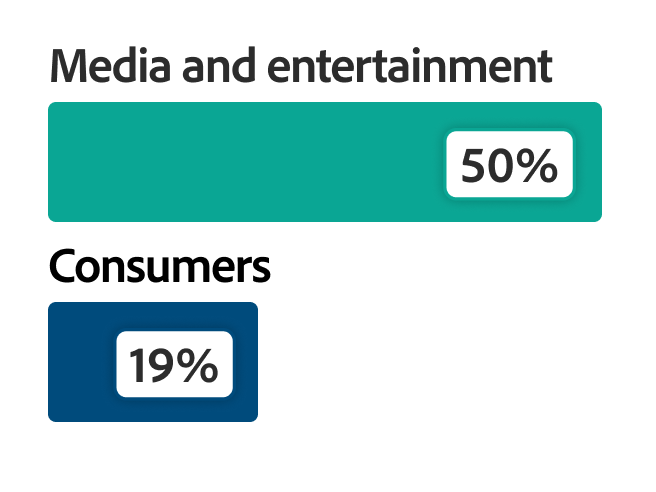
“Consumers will want AI agents to become their primary way of interacting with brands.”
Bar chart showing 50 per cent of media and entertainment organisations, compared with 19 per cent of consumers, agree.
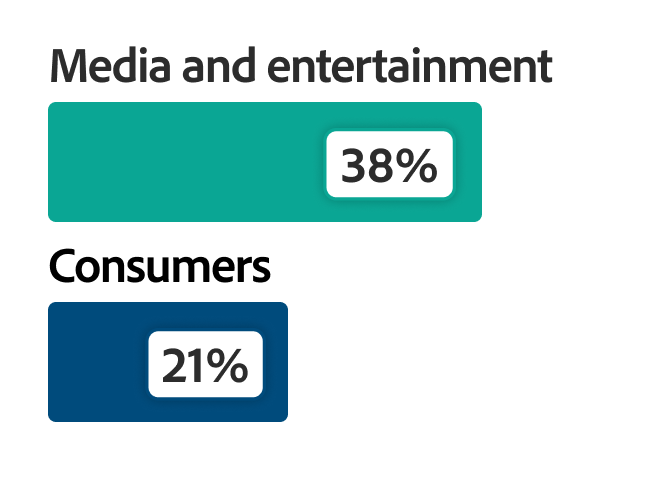
“Consumers will be comfortable letting a personal AI agent make a final decision without their intervention.”
Bar chart showing 38 per cent of media and entertainment organisations, compared with 21 per cent of consumers, agree.

On AI’s underlying value, however, brands and consumers are closely aligned.

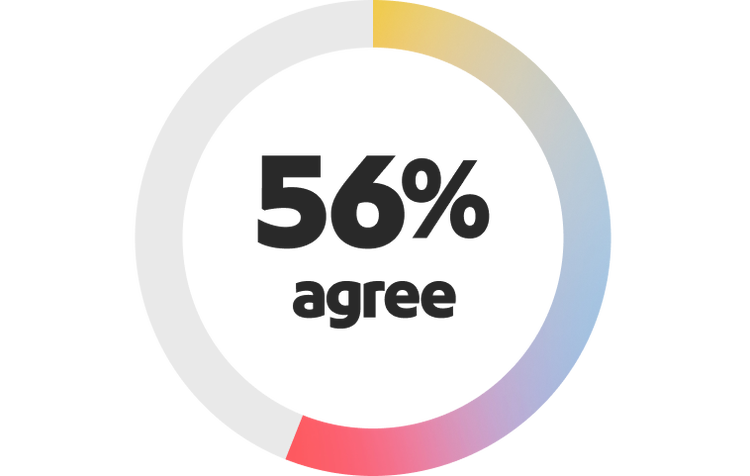
Donut chart showing 56 per cent agree

“AI will improve experiences for consumers.”
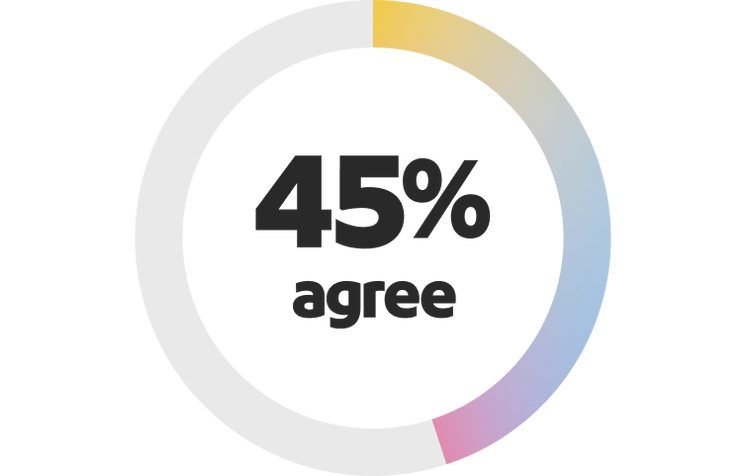
donut chart showing 45 per cent agree

“As long as their needs are met, consumers won’t care whether a brand uses AI or not.”
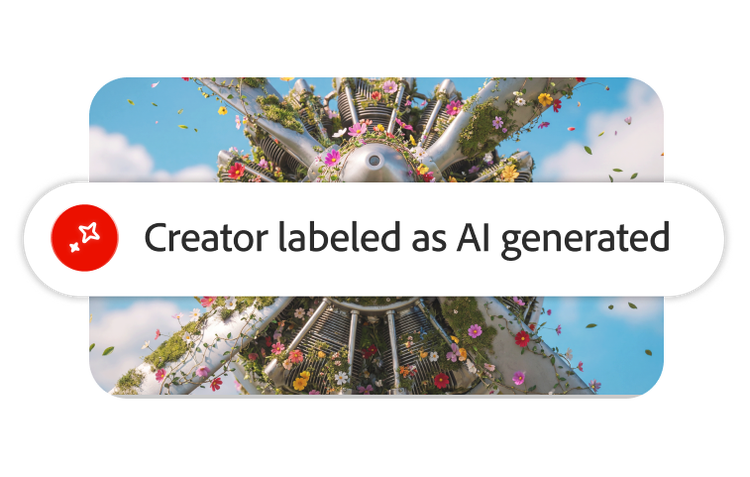
To maintain customer trust in agentic AI, the industry prioritises these three actions:
Photo showing a “Creator labelled as AI generated” chip over confetti imagery. Clear disclosure when customers interact with AI
“I’m Jane, your customer support assistant,” next to a customer photo. Easy escalation to human customer support
“Review contract,” “Fill in form” and “Send for approval.” Human-in-the-loop review and quality controls
#F5F5F5
Media and entertainment imagery with an AI callout that reads “Operationalise AI now.”

Section 4

The Bottom Line for Media and Entertainment

The path forward requires turning a solid foundation in data into trusted, audience-facing experiences.

Brands that prioritise AI discoverability, conversational engagement and consumer trust will turn early infrastructure investment into lasting customer experience advantage. Here are the top three action items for media and entertainment brands:

View more insights from the 2026 AI and Digital Trends research.

Learn more | Learn more 2026 AI and Digital Trends research

APPENDIX

Research Methodology

For Adobe’s 16th annual AI and Digital Trends research, Oxford Economics, in partnership with Adobe, conducted global surveys of 3,000 executives and practitioners and 4,000 customers to better understand how organisations are leveraging AI to capture customer interest, build brand loyalty and augment customer experience (CX) workflows — and how customers are responding to these changes. The surveys were fielded online and via computer-assisted telephonic interviewing (CATI) from October through November 2025. “Media and entertainment” refers to a global set of executives and practitioners from organisations in the media and entertainment industry. This group makes up 17% of respondents and represents a wide range of business sizes. View the 2026 AI and Digital Trends report for more on the full research methodology.

https://main--da-bacom--adobecom.aem.live/fragments/resources/cards/thank-you-collections/thought-leadership