New study by Adobe and IBM: Capturing customer intent in the Al era.
Saralyssa Gonzalez
04-30-2026
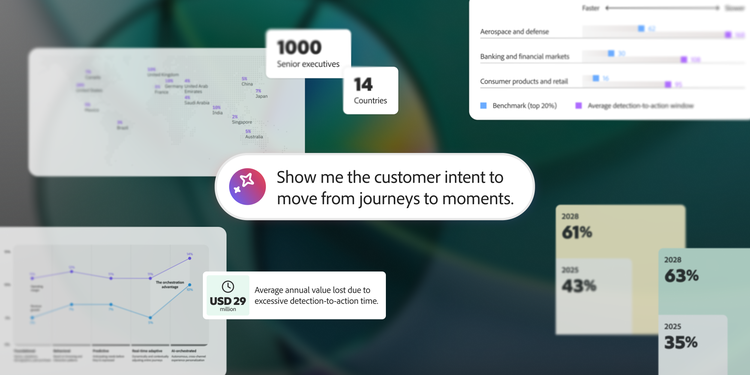
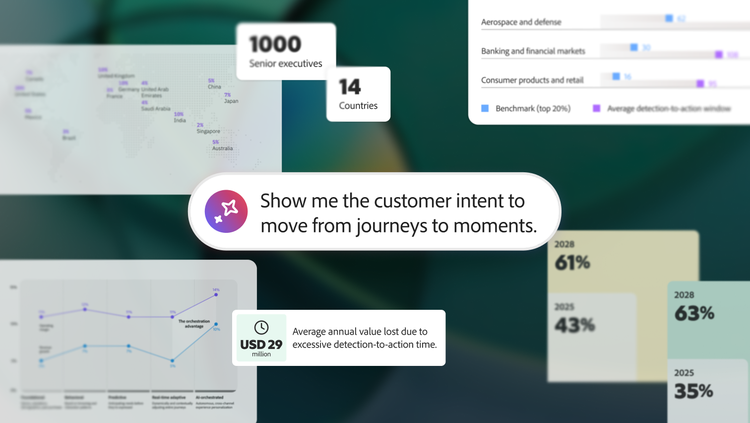
On April 16, Adobe and IBM released a new research report from the IBM Institute for Business Value — Win the moment: Reclaiming Relevance by Mastering Customer Intent — that explores a critical shift underway in customer experience: the move from journeys to moments.
This new study examines how leading organizations are adapting to a world where AI is reshaping how customers discover, decide, and engage — and why acting on intent in real time has become the new competitive advantage.
The rise of the intent economy.
Customer expectations are evolving faster than ever. As generative AI and intelligent agents reshape interactions, customers are no longer navigating traditional journeys — they’re signaling intent in real time and expecting brands to respond instantly and personally.
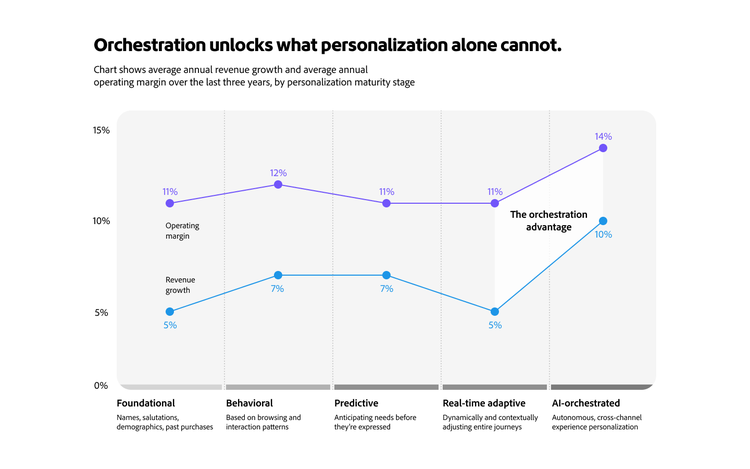
The research makes one thing clear: AI systems alone don’t win loyalty. Orchestrated experiences do.
To stay relevant, organizations must move beyond static personalization and toward dynamic, AI-powered orchestration that connects data, decisions, and actions across the entire customer lifecycle.
Key insights from the research.
Inside the report, Adobe and IBM uncover a growing gap between data potential and business impact — and what leaders are doing to close it:
- Only 34% of customer data is used to drive experience decisions, leaving many valuable insights untapped.
- Faster detection-to-action windows directly translate into measurable gains, including lower acquisition costs, higher retention, and stronger ROI.
- Agentic orchestration is emerging as the backbone of modern personalization — coordinating data, workflows, and decisions in real time.
- Leading enterprises are balancing speed, personalization, and governance to scale experiences, without sacrificing trust.
These findings highlight a fundamental shift: Success is no longer about collecting more data — it’s about activating it in the moments that matter.
From insight to action: Closing the gap.
Despite massive investments in data and AI, most organizations still struggle to act on customer signals without significant lag. Data remains fragmented across systems, decisioning is delayed, and experiences fall short of expectations.
The report introduces a critical performance metric — the detection-to-action window — the time between identifying customer intent and responding to it.
Organizations that shorten this window are seeing tangible results, including improved marketing efficiency, stronger customer satisfaction, and increased lifetime value. Those that don’t, risk losing relevance in real time.
Why agentic orchestration matters now.
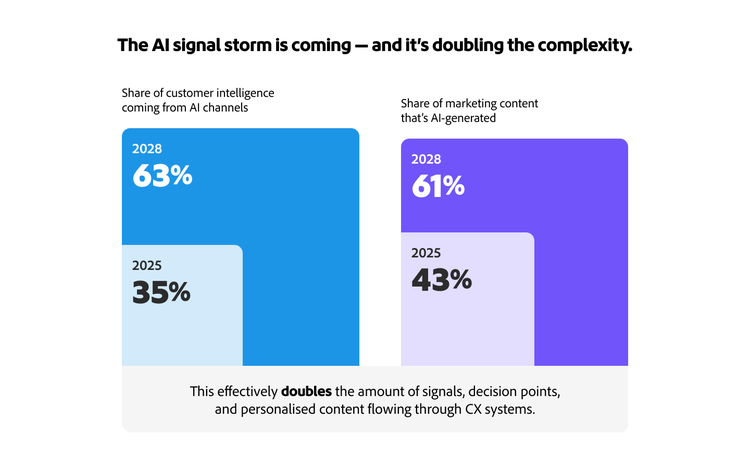
As AI-generated interactions increase, so does the volume and complexity of customer signals. Traditional approaches to personalization can’t keep pace. This is where agentic orchestration comes in.
By combining AI-driven decisioning with real-time data activation, organizations can:
- Anticipate customer needs before they’re expressed.
- Deliver seamless, cross-channel experiences.
- Continuously learn and optimize with every interaction.
In this model, AI doesn’t just generate insights — it actively coordinates actions across the enterprise.
Scaling with confidence: The role of governance.
Speed alone isn’t enough. As organizations accelerate decision-making with AI, they must also ensure transparency, compliance, and trust.
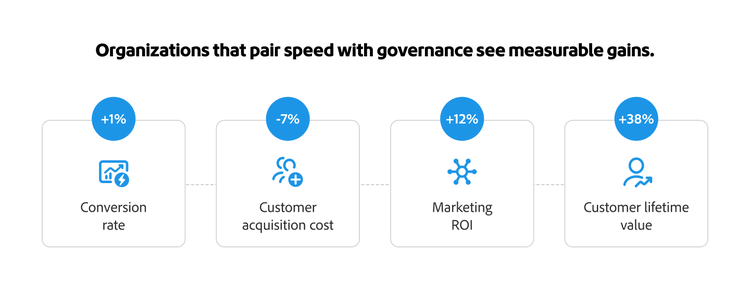
The research shows that companies that successfully balance speed with governance achieve:
- Higher marketing ROI
- Increased customer lifetime value
- Reduced acquisition costs
In other words, governance isn’t a constraint — it’s an enabler of scalable, sustainable growth.
Turning intent into impact.
To help organizations operationalize these insights, the report outlines a clear path forward:
- Collect data with intention, focusing on context — not just behavior.
- Build a unified, real-time view of the customer.
- Align teams across marketing, data, and technology.
- Invest in a flexible, composable experience stack.
- Start with high-impact use cases and scale with confidence.
A new playbook for customer experience.
The intent economy rewards organizations that can sense, anticipate, and act — faster and more precisely than ever before.
With decades of partnership, Adobe and IBM are helping enterprises do exactly that: Transform fragmented data into orchestrated experiences that drive measurable business impact.
Explore the full study from the IBM Institute for Business Value to learn how your organization can win the moments that matter — and turn customer intent into lasting advantage.
Saralyssa Gonzalez leads thought leadership and enterprise marketing initiatives for Adobe’s Creativity and Productivity business, translating emerging technologies like AI into clear, measurable business value for enterprise leaders. She works across product marketing, campaigns, and external research partners to develop ROI-driven narratives that drive demand, influence pipeline, and accelerate growth.
She connects executive storytelling, research-backed insights, and full-funnel marketing to ensure investments are focused on the highest-impact opportunities. Previously, Saralyssa spent nearly eight years at IBM leading digital transformation initiatives and advising global enterprises on marketing strategy, technology, and AI-driven innovation.