From manual to momentum: Transforming product marketing distribution with automation.
03-11-2026
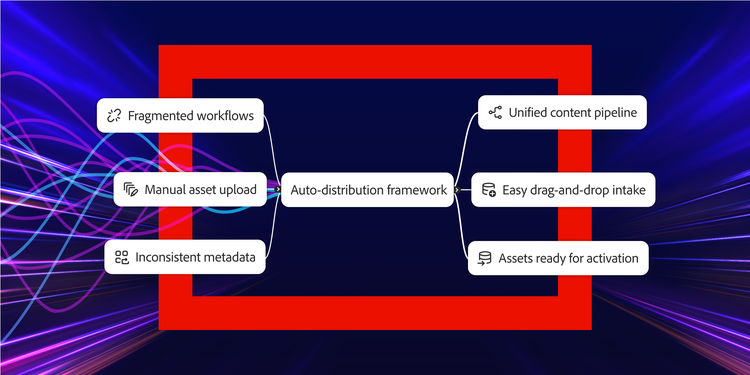
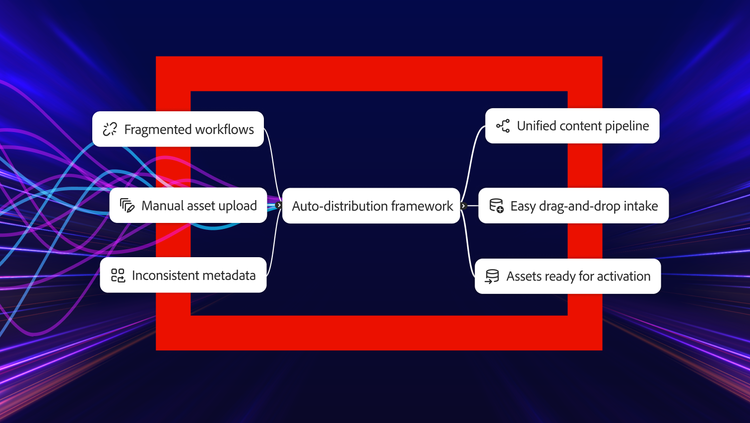
In 2024, Natixis Investment Managers in the US was navigating a product marketing distribution process defined by manual tasks, fragmented workflows, and operational bottlenecks. With over 2,500 pieces of content moving through the content supply chain annually across mutual funds, separately managed accounts, multi-assets, institutional strategies, and emerging formats like podcasts, the model was no longer sustainable for the scale and speed being demanded. Delays, inconsistent user experiences, and rekeyed metadata in multiple platforms stalled the delivery of content at critical moments when speed and accuracy mattered most. The mandate was clear: evolve from manual execution to intelligent automation.
Natixis Investment Managers partnered with Adobe Workfront — bringing together Workfront, Workfront Planning, Workfront Fusion, Adobe Experience Manager Assets, Seismic, and its own internal marketing library — to design an auto-distribution framework that shifts operational effort from manual execution to governed, automated workflows. This shift went beyond a mere technology upgrade, placing consistency, compliance, and scale at the core of marketing operations.
The turning point.
The new approach began with auditing content types and establishing standardized metadata — a single source of truth managed in Workfront Planning. Natixis Investment Managers formalized naming conventions and captured distribution destinations, formats, compliance audiences, and key identifiers, so that every asset could move predictably through the ecosystem without rekeying. Governance became easier, and downstream systems stayed in sync.
Natixis Investment Managers intentionally started small, first automating a segment, then expanding across additional product lines in subsequent quarters — proving value, building confidence, and widening adoption. The team marked success as a series of pragmatic wins: reducing manual effort, removing duplicate uploads, standardizing metadata workflows, and streamlining content request queues that used to spike during monthly and quarterly cycles. This approach created momentum without overwhelming teams.
The effect.
The drag-and-drop ingestion inside Workfront became the practical hallmark of the auto-distribution framework. Product marketers could drop one file — or dozens — into the ingestion project. Workfront Fusion then detected new content, automatically applied the correct metadata from Workfront Planning, and routed assets to the right destinations. For web-bound items, Fusion triggered a notification to the web team with the Adobe Experience Manager asset location to finalize its destination. Validation is built-in; if a file name didn’t match the standard, the submitter would be prompted to correct it, and the system admin would be alerted — maintaining quality while removing the need to rekey. The net effect was a drastic time-to-market improvement — from hours to seconds — with governance intact.
The results.
In under a year, automation coverage at Natixis Investment Managers surged from 0% to 80% with the vast majority of product marketing content now flowing through governed, automated channels powered by Adobe Workfront. Manual effort dropped significantly for both marketing operations and product marketing, and assets are now readily available when needed. The outcome was a consistent and reliable experience for internal teams and downstream consumers of content.
“This initiative exemplifies the power of experience-driven marketing operations. By automating content distribution, we’ve empowered our teams to focus on strategy, not logistics — and positioned ourselves to scale smarter, faster, and more effectively.”
Jeff Gillis
VP Integrated Marketing Technology Platforms at Natixis Investment Managers
Beyond efficiency, this shift transformed internal team culture. Freed from repetitive routing and metadata entry, teams have redirected their energy toward higher-value initiatives — strategy, creative development, stakeholder engagement, and campaign planning. Leaders gained clearer visibility through calendars and campaigns in Planning, and the organization began a roadshow to share learnings and spark adoption across adjacent groups. Champions of the new approach proved the applications’ efficacy in real workflows, earning trust and opening the door to scale.
Compliance and control improved as well. With Planning as the governance hub, Natixis Investment Managers linked key fields to other systems which reduced duplicate maintenance and ensured consistency where auditability matters most. Instead of changing the same data in multiple places, teams now change it once — and rely on automation to propagate those updates safely.
The significance.
For Natixis Investment Managers, automation is a strategic enabler. It transforms how product marketing content is created, controlled, and delivered — reducing risk, strengthening compliance, and freeing teams to focus on work that adds more value. Adobe Workfront unifies workflows, data, and destinations so that content reaches audiences faster and more consistently, at the scale that modern marketing demands.
This new approach is compelling not only because of the numbers — 80% (and growing) automation coverage and thousands of assets moving in seconds — but also because of the durable operating model it establishes.
Most importantly, this shift proves what’s possible when technology and governance work together. Natixis Investment Managers took a complex, cyclical, manual process and reshaped it into a streamlined, resilient system. The organization showed that modernization doesn’t require all-or-nothing changes. It thrives on focused wins, clear standards, and the discipline required to let automation carry the load.
This momentum invites a simple question for Jeff's team internally: What’s next? And the answer is continued expansion, broader integration, and a marketing operation ready for whatever the next quarter brings.
Looking ahead.
Natixis Investment Managers is now implementing automation in two directions:
- First, deeper metadata standardization to ensure assets don’t just move quickly but are uniformly described and discoverable across platforms.
- Second, advancing publishing in Adobe Experience Manager to move from just notifications to true auto-publish, further compressing cycle times while sustaining control.
This extends beyond content revision, and into new content creation and intake, building templates and converting requests automatically based on deliverables selected in the Workfront intake form. The adoption playbook remains the same: prove impact in a focused area, widen the footprint one segment at a time, and let visible wins attract stakeholders. It’s a scalable model that emphasizes governance and quality, not just speed.
Sonia Espejo is a Senior Product Marketing Manager for Adobe Workfront. Drawing on an international background in the consumer‑goods industry and an MBA from Columbia Business School, she focuses on practical, customer‑centric go‑to‑market strategies that drive adoption and deliver measurable value. Based in the US, Sonia currently partners closely with engineering, product, and field teams to launch new capabilities, showcase customer success, and advance work management for enterprises to be more AI‑driven, connected, and efficient.
Recommended for you
https://business.adobe.com/fragments/resources/cards/thank-you-collections/workfront