Collect and process large amounts of data more quickly and efficiently. When businesses can get insights from unified data faster, they can make more informed decisions in the moments that will be most meaningful to their customers.



Discover current data management trends, the cost of poor data practices, and how a customer data platform (CDP) and unified customer profiles can create a competitive edge for your business.
According to the Forrester report commissioned by Adobe, How to Improve the ROI of Personalization at scale in the Era of AI, 40% of consumers want personalized content and 54% of B2B buyers expect it when buying a product. Businesses need to prioritize collecting and unifying data to use it in ways that quickly create deeper, more actionable insights. Additionally, according to our 2025 AI and Digital Trends report, personalization at scale is still more of an aspiration than a reality for most organizations. 71% of consumers want brands to anticipate their needs with personalized offers, yet only 34% of brands can deliver.
Only when brands have access to these insights can they offer experiences that resonate with customers on a personal level and meet their expectations.
This guide provides a comprehensive examination of how effective data management can give enterprises a competitive edge. We’ll explore current data management trends, the cost of not using data effectively, and the data capabilities teams should prioritize, all to help organizations refine their strategy and choose the best data management tools to fit their unique needs.
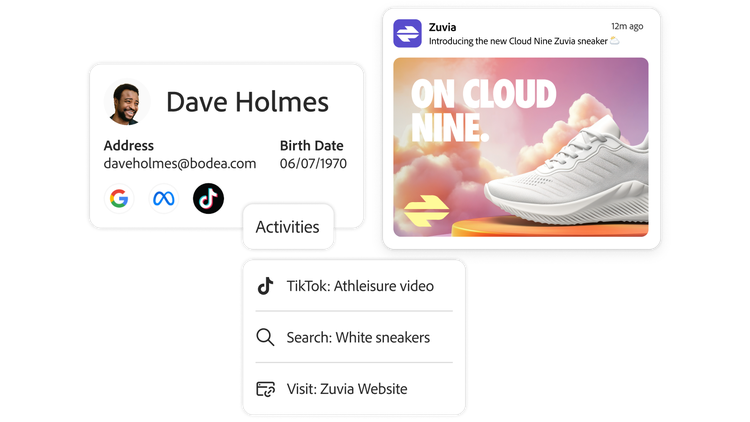
Data management isn’t just about staying relevant — it’s about moving ahead with a strong strategy.
Generative AI is transforming the way businesses approach data management and personalization. It significantly streamlines the processing of vast data signals needed to craft smarter customer segments and personalize marketing content, empowering marketers to make quicker, more informed decisions.
While business plans for generative AI vary, most organizations utilize this technology to address key focus areas, such as personalizing marketing content and enhancing digital experiences during the early stages of the buyer’s journey. According to our State of Customer Experience in an AI-Driven World report, 20% of organic search is expected to be conducted on LLMs. Overall, 67% of organizations have adjusted their keyword strategies and created new content to address the shift to LLM-based search. Additionally, 67% of organizations focus on E-E-A-T signals, 60% optimize for conversational queries, and 58% have enhanced content depth and expertise.
Brands must now create AI-native content that answers questions directly and strengthens trust signals with clear authorship, consistent branding, and analytics that track conversational discovery.
AI advancements in data management are significantly impacting the way businesses manage their data. Artificial intelligence is helping businesses get more value from their data by automating tasks, improving accuracy, and providing insights. As consumer trust and expectations continue to grow alongside AI capabilities, brands need to harness this power to exceed future customer expectations and demands.
Generative AI plays an increasingly vital role in enabling businesses to navigate and utilize data more effectively for strategic decision-making and can help:
Collect and process large amounts of data more quickly and efficiently. When businesses can get insights from unified data faster, they can make more informed decisions in the moments that will be most meaningful to their customers.

Identify data patterns and trends that can be difficult for humans to see. Businesses can discover new opportunities, anticipate risks, and make better decisions about how to allocate their resources.

Automate repetitive tasks, such as data cleaning and data integration. Free up employees to focus on more strategic tasks, such as analyzing data and making decisions.
While using data to deliver relevant, meaningful experiences is the best way to build customer trust, businesses need to use that data responsibly. In the Forrester report, we learned that buyers are wary about sharing their data — with 57% of consumers and 50% of B2B buyers preferring to remain anonymous across all interactions. However, they are willing to participate in a value exchange. Organizations must use data appropriately by prioritizing high-value, reciprocal interactions. 43% of consumers would share personal information for specific product recommendations and 46% of B2B buyers would share it for value-added experiences, compared to just 23% of consumers willing to share it for relevant ads.
The key to building trust is prioritizing privacy, security, and governance in data management and activation activities. Businesses need to implement stringent data governance and robust privacy measures, including offering the customer the ability to understand consent preferences and enforce this information across customer experiences. By securely managing customer data, businesses can also spend fewer resources maintaining low-quality, duplicate data and instead harness high-quality data in more accessible channels.

“Real-time” can’t just be a buzz phrase. It needs to be a strategy and a true capability for data management. What makes real-time data management indispensable is its ability to facilitate an immediate understanding of customer responses and then help determine which channels and messaging resonate most effectively at any given moment.
Real-time data management isn’t just about gathering information but also about using insights instantly. This approach allows businesses to deliver content and experiences that are not only meaningful but also timely — building customer loyalty and increasing revenue.
Identifying customers and audiences.
Make decisions about pricing, marketing, and product development.

Engaging customers in the moment.
Deliver more personalized and relevant customer experiences, such as recommending products based on a customer’s browsing history or offering real-time support when needed.

Responding to customers’ needs.
Respond to customer demand more quickly by identifying and stocking up on products that are selling well or offering discounts on products that are not selling well.
Data access has been restricted historically to specific teams or individuals — typically those in IT or analytics roles. Businesses now recognize that for true innovation and growth, every marketing, sales, or customer support member needs to have the information necessary to make informed decisions.
According to our 2025 AI and Digital Trends report, while organizations are stepping up investments in customer data and analytics, significant hurdles remain. Only 14% of practitioners report being able to deliver exceptional digital customer experiences that surprise and delight.
Because customer decisions often need to be made quickly, having data out of reach can lead to organizational inefficiencies and lost opportunities. Data democratization needs to bridge the knowledge gap and ensure that everyone involved in creating customer experiences has the insights necessary to succeed.
But democratizing data is more than providing access — it’s about making data easy to understand. Integrating Adobe Customer Journey Analytics and AI Assistant capabilities significantly contributes to providing personalized, actionable insights and enabling self-service customer data analysis without requiring deep technical knowledge or direct assistance from data specialists. Additionally, modern data management and visualization tools convert raw data into clear charts and actionable insights, which ensures data is accessible and truly usable for all.
CUSTOMER SPOTLIGHT

The Coca-Cola Company has a diverse portfolio of over 250 brands. Rather than marketing the same brands to everyone, the company wanted to focus on selling different consumers the drinks that they want the most. By managing their data in real time, the company is now able to deliver personalized content to billions of consumers.
The success is in the numbers:

open rate for personalized rewards emails

uplift in click-through rates with personalization
“Coca-Cola consumers interact with us everywhere. They’re scanning QR codes and exploring online content while buying their favorite beverages at stores. The ability to bring all our consumer information together — in real time — is critical to helping us engage with billions of Coca-Cola consumers around the globe.”
Keith Bartig
Senior Director of Precision Marketing Technologies, The Coca-Cola Company
Third-party cookies have traditionally been used to track users across different websites and collect data about their browsing behavior. This data has been used for a variety of purposes — including targeted advertising, website personalization, and audience measurement.
However, browsers and devices are increasingly blocking third-party cookies because of privacy concerns — making it more difficult for businesses to track users and collect data about their anonymous browsing behavior.
Half of potential customers today are beyond the reach of companies that rely heavily on third-party cookies, which still make up 49% of marketing and CX leaders.
Enterprises now need to rely on first-party data. Adopting a first-party data strategy will not only allow businesses to offer experiences tailored to customer preferences but also open avenues for integrating more durable identifiers, such as second-party data partnerships. By using first- and second-party data, companies can achieve a more comprehensive understanding of their customers — leading to higher engagement and conversion rates.
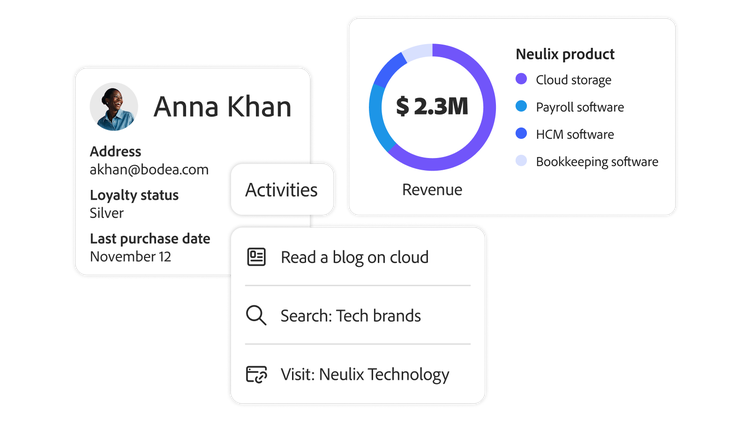
Data collaboration helps businesses overcome the challenges associated with using third-party cookies. Businesses can gain a strong understanding of their customers’ needs and preferences by using another organization’s first-party data — otherwise known as second-party data. That way, businesses can develop more targeted products and services, along with better-resonating customer experiences.
Adobe Real-Time CDP Collaboration elevates this concept by providing a no-code, privacy-enhanced data room application designed to discover, activate, and measure advertising with customer privacy at its core. It simplifies advertising collaboration between marketers and publishers without using third-party cookies. With Real-Time CDP Collaboration, businesses can identify high-value audiences for more effective campaign planning and work together seamlessly to deliver impactful campaigns across multiple channels and premium publishers.
Learn more about Adobe Real-Time CDP Collaboration
Organizations that overlook this collaborative approach will miss out on the invaluable insights and strategies that come from a more robust dataset. While it’s a major benefit, data collaboration must be done in a way that is privacy-focused and compliant with regulations.

CUSTOMER SPOTLIGHT

Virgin Atlantic is known for providing an exceptional travel experience, but its marketing technology was siloed and slow, making it challenging to deliver the personalized, real-time experiences customers expected.
The company needed a way to unify its customer data, automate journeys, and ensure customers received consistent, relevant offers across every touchpoint — from their website to the airport lounge. By integrating Adobe Experience Cloud solutions, including an integrated customer data platform (CDP), Virgin Atlantic achieved a single, unified view of each customer. This allowed them to move beyond reactive marketing to predictive personalization — automating journeys that anticipate a customer's needs, such as sending a highly relevant upgrade offer or destination package.
The success is in the numbers:

faster time to market for new campaigns

revenue uplift from personalized push and in-app messaging

increase in conversion by targeting the right customers with the right messages at the right time
“We're using the data to automate journeys and ensure that every customer receives relevant, appropriate and timely offers — the right offer to the right person at the right time. We’re already seeing success from having a single unified view of the customer.”
Michelle Brown
Head of Digital Technology, Virgin Atlantic
Investing in technology with robust data management capabilities can provide your teams with the right insights quickly and efficiently.
Consider these capabilities when evaluating data management technology:
Look for robust governance tools that help inspire customer trust and loyalty, guarantee data integrity and compliance, and allow appropriate access to teams across the organization.
A cohesive data management strategy creates efficiency and supports informed decision-making. Look for tools that promote universal access, ease of sharing, and collaboration to support a smooth, data-driven approach.
Real-time data processing and actionable insights have become indispensable. Check that the tools and technology you choose can handle data in real-time to capitalize on fleeting opportunities.

Your data management tools should seamlessly integrate with existing systems to maintain a smooth workflow and provide consistent customer experiences across multiple channels. With the flexibility of native and non-native integration capabilities, you can ensure your platform remains adaptable and relevant as your tech stack evolves.

Empower your teams by choosing technology that offers self-service features to extract insights, generate reports, or undertake other tasks without having to depend on IT teams.

Comprehensive tooling can help you achieve effective market segmentation and precise audience targeting. Instead of managing audiences in silos across various platforms, teams can centrally create new audiences or ingest existing ones from other platforms and manage them across teams.

Shifting from a nice-to-have functionality to a business operations cornerstone, AI is a crucial competitive differentiator that maximizes results and creates a scalable approach to powering personalized experiences. Marketers can improve segmentation with AI-powered predictive propensity scores, contextual customer insights, and valuable features like predictive lead scoring.

Transforming from an optional strategy into an essential facet of business growth and marketing effectiveness, data collaboration is an important element for creating targeted marketing strategies without using third-party cookies. Our tools provide a privacy-safe way to derive insights on overlapping audiences and enrich customer experiences with context and relevance.
When it comes to data management, the tools and strategies you implement today will shape your organization’s success in the future. As an industry leader, Adobe not only believes in the capabilities highlighted in this guide but also views them as the blueprint for the future — so much so that we’re paving the way with innovative solutions that encapsulate these essential trends and capabilities.
Adobe Real-Time Customer Data Platform can help you tackle data challenges head-on, helping you remain at the cutting edge of the industry. Learn how to prospect new customers, enrich down funnel experiences, and optimize your audience targeting by using third-party data with durable identifiers and second-party data collaboration tools.
2025 AI and Digital Trends Report, Adobe, 2025.
Adobe Study: Brands Make Progress Weaning Off Third-Party Cookies, Yet Feel Less Prepared Than Ever for a World Without Them, Adobe, July 2024.
How to Improve the ROI of Personalization at Scale in the Era of AI, Forrester and Adobe, May 2025.
The Ongoing Evolution of Customer Experience, Adobe, 2025.