Content as a Service v3 - generative-ai - Tuesday, 15 July 2025 at 11.21
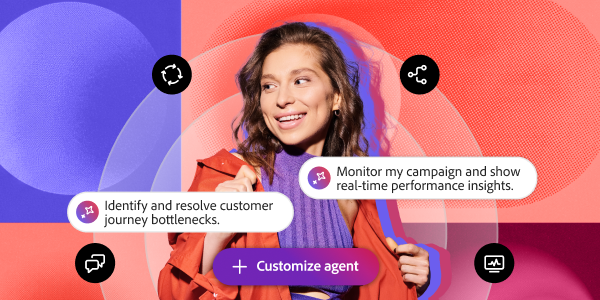
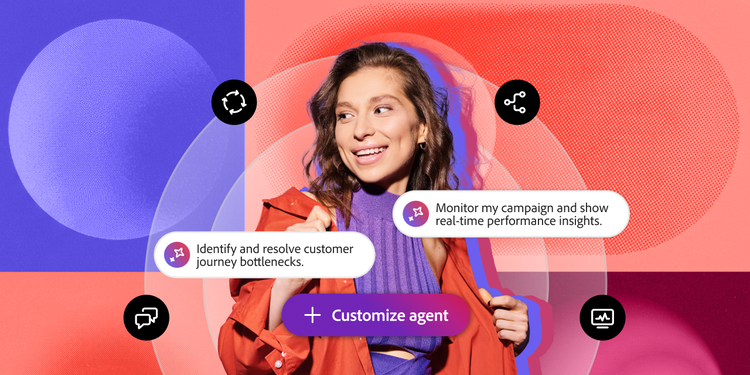
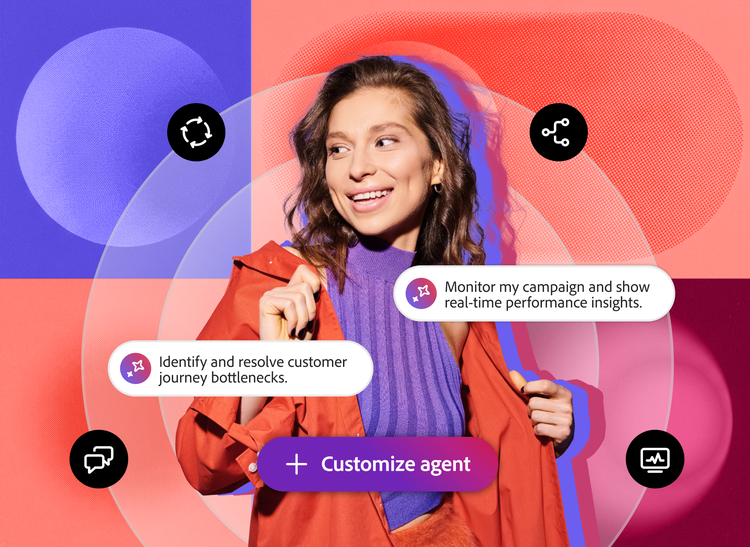
Agentic AI transforms enterprise marketing with real-time, scalable execution.
Agentic AI integrates seamlessly into marketing workflows, driving efficiency, personalisation and measurable results across the customer journey. Brands that use agentic AI will be able to deliver experiences that feel more personal, timely and intelligent.
This guide explains what agentic AI is, why it matters for enterprise marketing and how to adopt it strategically. We'll explore how agentic AI builds on generative AI capabilities, where it creates value across the marketing lifecycle and what a practical adoption framework looks like for enterprise teams.
The move from generative AI to agentic AI.
Marketing teams have moved past the question of whether AI matters. The new challenge is making it work at scale, integrated across tools, teams and workflows in ways that drive measurable growth. Agentic AI is quickly emerging as the answer to that challenge.

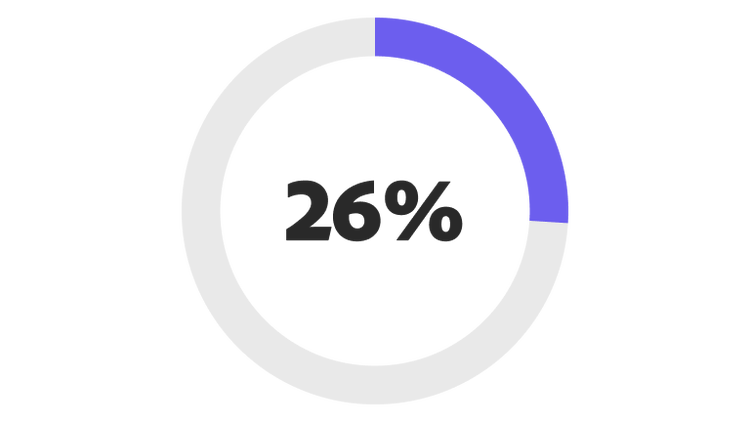
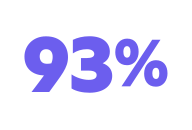
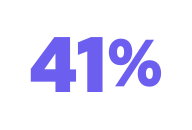
of executives report AI-powered personalisation drives growth.

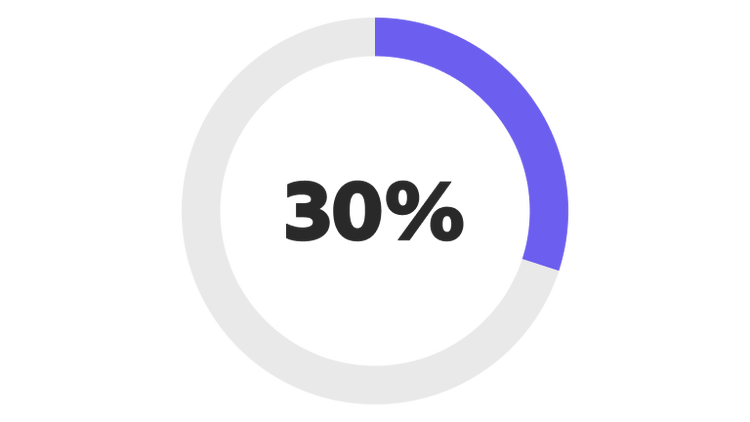
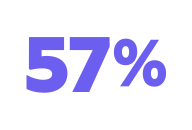
see measurable efficiency gains from AI use1.
In recent years, generative AI has transformed how enterprise marketing teams operate, helping organisations create content faster, analyse data more effectively and generate insights that used to take days or weeks. But generative AI still requires humans to spend time managing content workflows and acting on insights that drive impact.
In contrast, agentic AI doesn't stop at creation or analysis. Autonomous AI agents can plan a campaign, make decisions about targeting and timing, co-ordinate across multiple systems and execute complex workflows. It doesn't just tell you what to do. It does it, with human oversight and approval at key moments.
For marketing leaders, this represents a fundamental shift. Most marketing teams know what good personalisation looks like. They understand their customers. They have the data. What they haven't got is the operational capacity to act on all of it at scale. Agentic AI removes that constraint by handling the repetitive, complex co-ordination work that slows teams down and prevents great ideas from reaching customers quickly.
As a result, the brands that learn how to deploy agentic AI strategically will be able to deliver experiences that feel more personal, timely and intelligent because AI agents can adapt and respond in real time across every customer touchpoint.
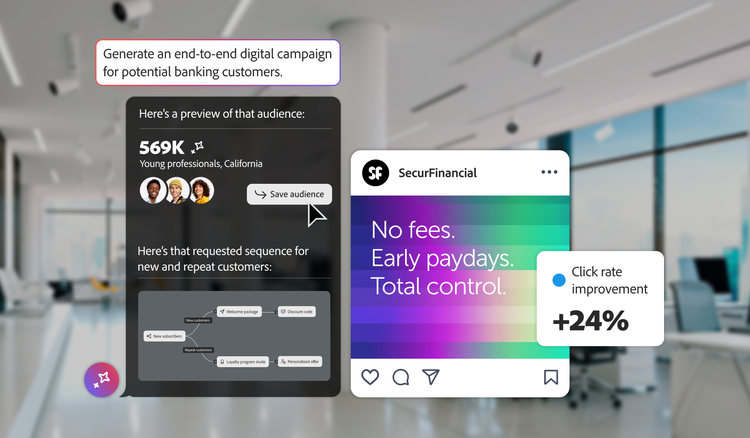
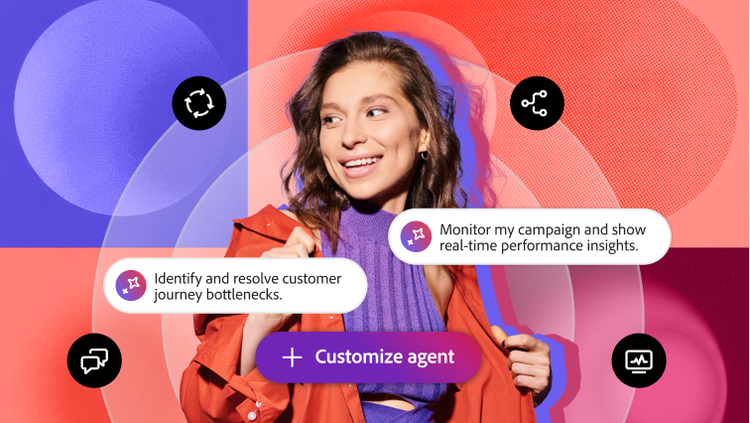
Agentic AI refers to intelligent systems composed of autonomous agents that can reason, act and adapt to achieve goals with or without human oversight. Unlike generative AI, which focuses on content creation, agentic AI drives action, co-ordination and decision-making across enterprise workflows. These agents don’t just respond to commands — they understand goals, take initiative, monitor dashboards, trigger workflows, follow up on outstanding tasks, collaborate across functions and surface relevant insights in real time.
How agentic AI works.
In order to deliver real value at scale and maintain the trust of the people it supports, an AI agent must demonstrate three essential capabilities:
- The ability to interact: An AI agent should be able to interpret intent, respond intelligently and often support multi-modal communication such as natural language text, speech and imagery. Whether embedded in customer support, content creation or marketing operations, the ability to communicate clearly and intuitively is foundational.
- The ability to reason: AI agents must be able to “think” through problems. They should make independent decisions based on contextual information and data surrounding the problem, rather than following pre-determined steps or rigid rules. This reasoning layer allows an agent to move beyond fixed workflows and deliver dynamic, personalised outcomes.
- The ability to take action: AI agents must be able to act to achieve specific outcomes, either independently or in partnership with a user or another agent. This could mean triggering a workflow, generating content, optimising a campaign or surfacing recommendations, all while guided by human direction.
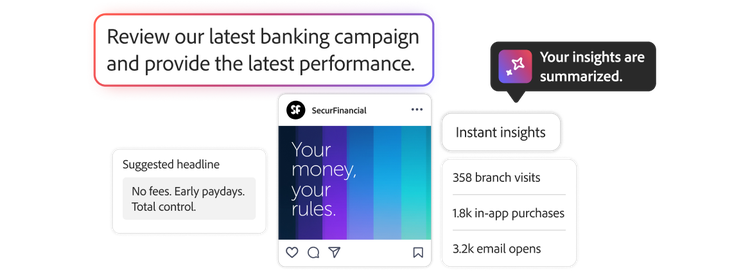
For enterprise marketing, this can be transformative. It turns AI from a passive tool into an active collaborator that can plan campaigns, execute workflows, track performance and optimise results in real time.
How agentic AI works in marketing.
In today’s experience-driven economy, customers expect more than simple personalisation. They want brands that truly understand their needs, respond in real time and provide value on their own terms. The right AI agents can help marketers make this kind of real-time customer engagement feasible at scale.
For example, what if:
- A customer drops off mid-journey? An AI agent can detect the disengagement and instantly adjust the path to re-engage the customer.
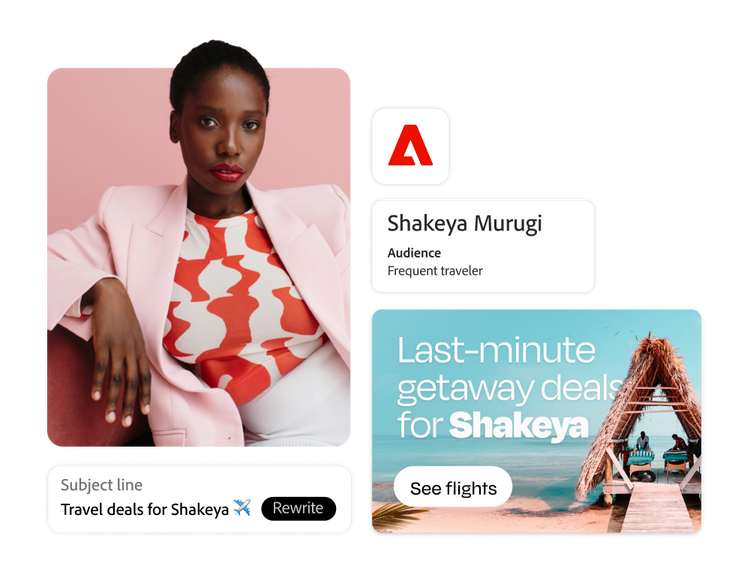
- Need to launch a new campaign? Just describe the desired outcome and AI agents can work together to build the right audience, journey and channel materials.
- New customer data signals emerge? AI agents can adjust content sequencing and next-steps to match intent — no rebuild or redesign required.
Unlock value across the entire marketing lifecycle with autonomous agents.
With agentic AI orchestrating campaigns from start to finish, its impact goes far beyond a single project or customer journey. True value emerges when these intelligent agents are embedded across every stage of marketing operations, helping teams plan smarter and engage audiences more effectively.
Let’s look at how agentic AI tools that are built for marketers’ needs can unlock value across their processes:
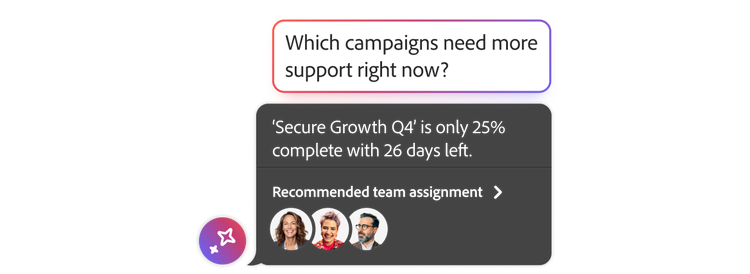
Planning and support
Agentic AI can help teams make campaign plans based on past project timelines and performance. Because agents can synthesise information from multiple sources, this means they’re equipped to identify bottlenecks in workflows and optimise resource allocation.
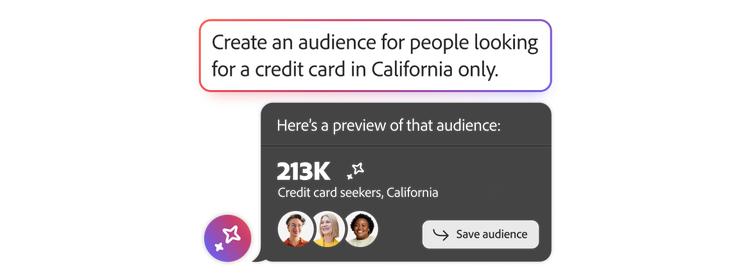
Audience management
Both B2C and B2B marketing teams can create, manage, test and optimise audiences with greater granularity using agentic AI. This helps in revealing not just who the customers are but what they need in the moment. By analysing customer behaviour in real time and inferring intent, AI agents dynamically adjust targeting as conditions change.
Here's what AI agent collaboration could look like in practice.
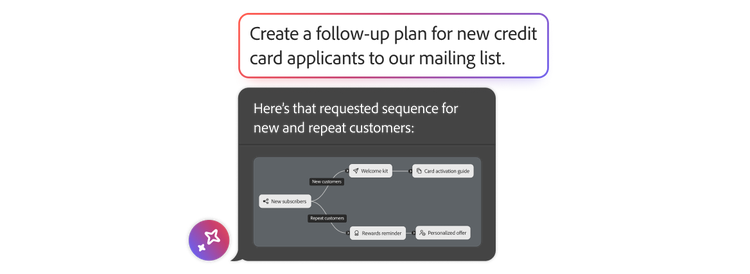
Let’s say you want to build a campaign to launch a new product targeting young adults aged 20 to 30. Typically, a flagship campaign like this gets bogged down in complexity. Instead of kicking off a cross-functional workflow with briefs and meetings, you can start with a simple prompt: “Help me to create a campaign to support the launch of a new credit card product. It should target 20- to 30-year-olds.”
From there, the right AI agents can begin the process:
- An AI agent pulls performance data from a past product launch campaign, identifying the right audience for the product category.
- It then refines the target segment, optimising for conversion potential based on recent engagement trends.
- Once you confirm the audience, another AI agent designs a tailored customer journey, identifying the right channels, touchpoints and timing.
- Finally, a set of AI agents helps generate personalised messaging and creatives for each step in the journey, tuned to both the audience and the product focus.
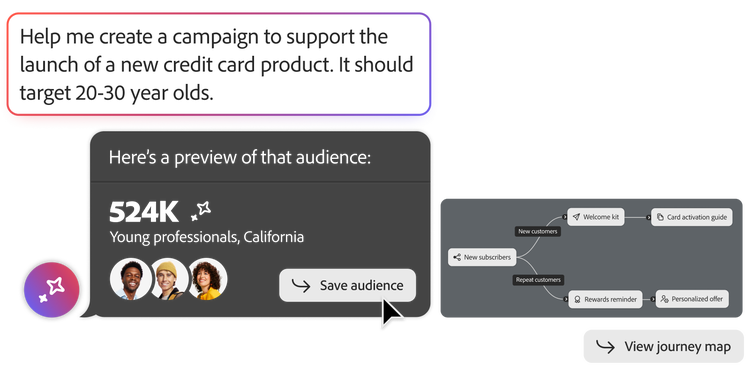
All of this happens in hours, not weeks, with marketers still reviewing, approving and refining as needed. Freed from routine tasks, they can focus on insights, storytelling and shaping the broader campaign vision. This further helps them move from using AI for day-to-day execution and start leveraging agentic AI to guide crucial marketing decisions as well.
Adobe in action
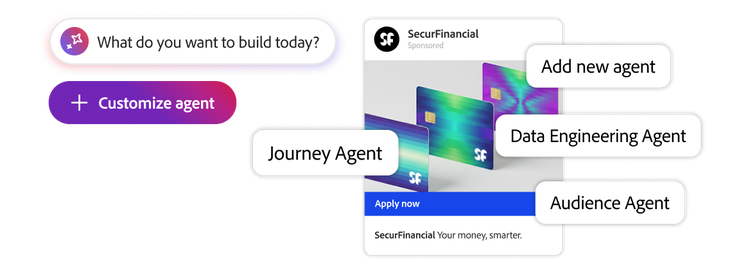
Adobe Experience Platform Agent Orchestrator serves as a central hub for integrating and managing multiple AI agents to support end-to-end marketing workflows. It streamlines operations and co-ordination, ensuring marketers stay in charge of customer experience, creative direction and brand identity.
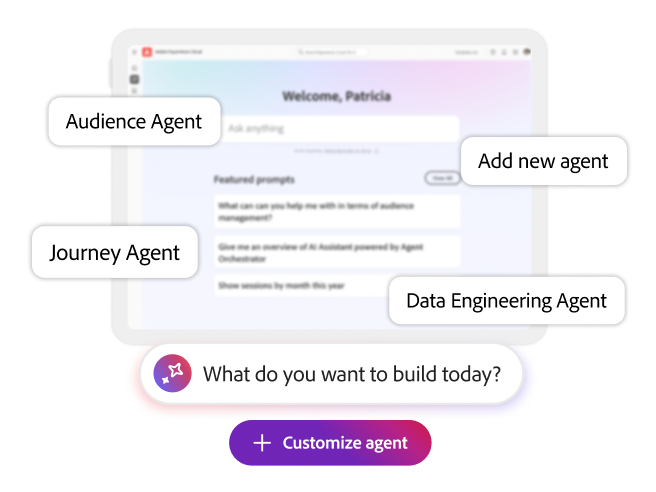
How agentic AI drives strategic marketing decisions.
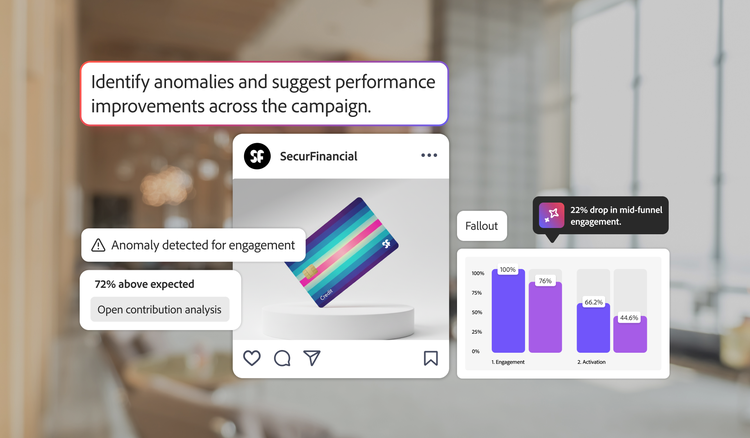
From your customer’s standpoint, the best outcome isn’t just quicker responses or greater efficiency. It’s fewer problems in the first place. They expect organisations to anticipate issues, fix root causes and continually improve, so every interaction feels seamless. To meet this demand, marketers need clarity, critical thinking, curiosity and creativity to keep content on-brand, compliant and high-quality.
Agentic AI supports this by removing repetitive, slow and fragmented blockers, allowing teams to focus on strategic insights. Most organisations already recognise this potential. In a recent Adobe AI survey3, enterprise leaders identified the top areas in their marketing structures where they plan to implement agentic AI first:
AI-powered customer support

Automated content tagging and organisation
Smart customer segmentation
Intelligent content optimisation
These priorities reveal a clear pattern — organisations are investing in AI tools that streamline operations, organise data intelligently and provide actionable insights. This empowers teams to make decisions faster, with more agility and without losing control. And the best part, they work across all industries.
Here are three business scenarios to underline how agentic AI can deliver measurable impact across different industries.
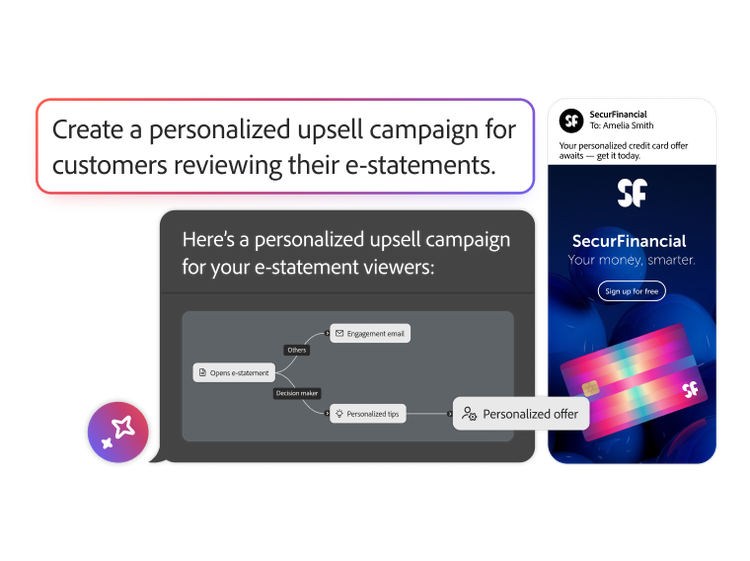
1. Agentic AI in financial services
A credit card company launching pre-approved upsell offers.
Traditional approach:
Batch emails with generic, poorly timed offers lead to low engagement and limited uptake.
Agentic AI approach:
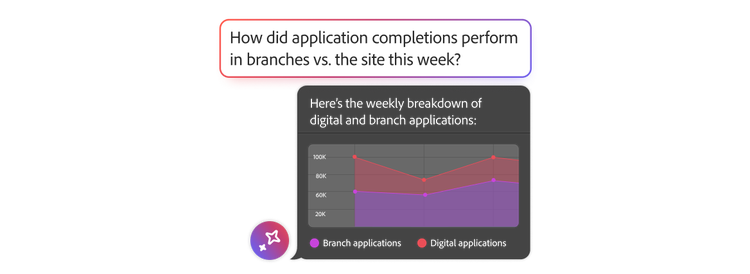
Prompt: “Create a personalised upsell campaign for customers reviewing their e-statements.”
AI agents:
- Analyse behaviour data to identify likely responders.
- Refine micro-segments by spend and engagement.
- Time messages to match customer interactions.
- Generate compliant, personalised messaging.
Benefits and outcomes: Higher upsell rates, more auto-pay activations and faster campaign cycles.
2. Agentic AI in retail
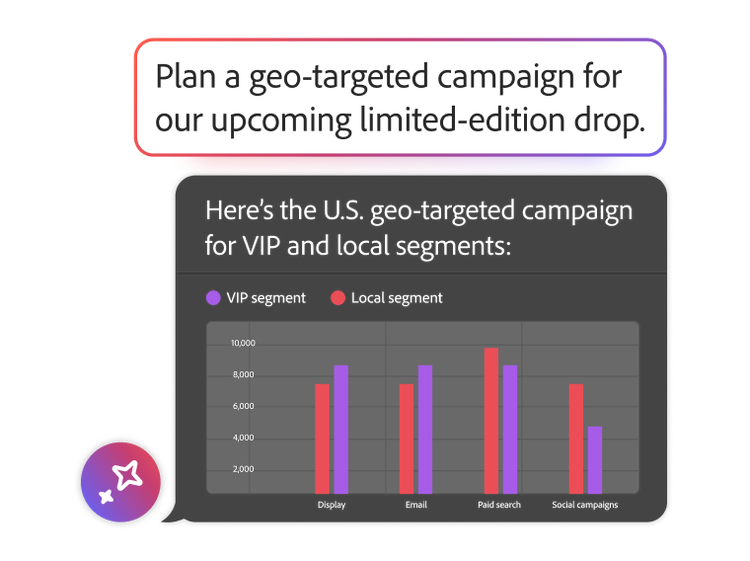
A retailer launching a geo-targeted limited-edition drop.
Traditional approach:
Disjointed communication causes stockouts, missed notifications and frustrated customers — leading to lost revenue and brand complaints.
Agentic AI approach:
Prompt: “Plan a geo-targeted campaign for our upcoming limited-edition drop.”
AI agents:
- Identify VIP and local segments most likely to convert.
- Design staggered releases with early access and timed reveals.
- Create personalised, consistent messaging across channels.
Benefits and outcomes: Higher engagement, improved conversions and increased average order value.
3. Agentic AI in travel and hospitality
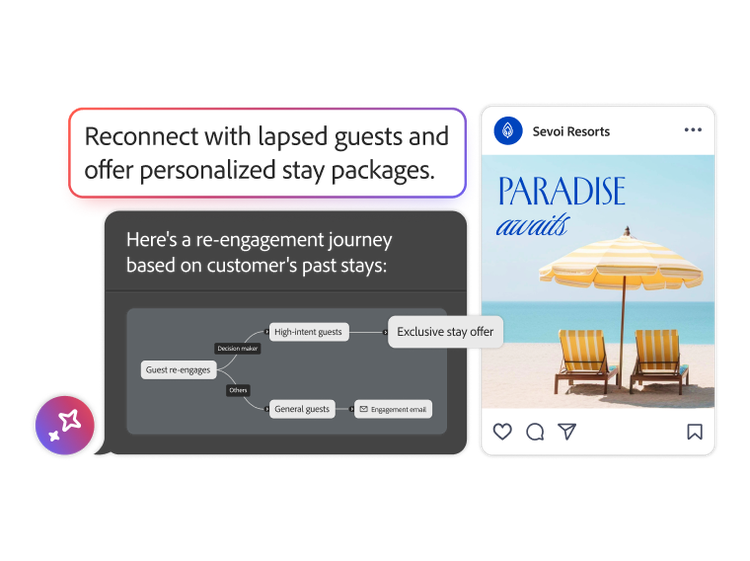
A hotel re-engaging past guests with personalised stay offers.
Traditional approach:
Lapsed guests receive generic batch emails; limited staff capacity prevents true personalisation.
Agentic AI approach:
Prompt: “Reconnect with lapsed guests and offer personalised stay packages.”
AI agents:
- Analyse past stays and booking patterns.
- Build micro-cohorts (families, business travellers, weekend visitors).
- Develop tailored packages and automate seasonal outreach.
Benefits and outcomes: Increased rebooking, stronger loyalty participation and reduced discount waste.
For enterprises, adopting agentic AI is a natural step in evolving from reactive operations to strategic foresight. AI agents don’t just help teams take decisions faster, they give them room to improve under pressure, adapt and explore new opportunities.
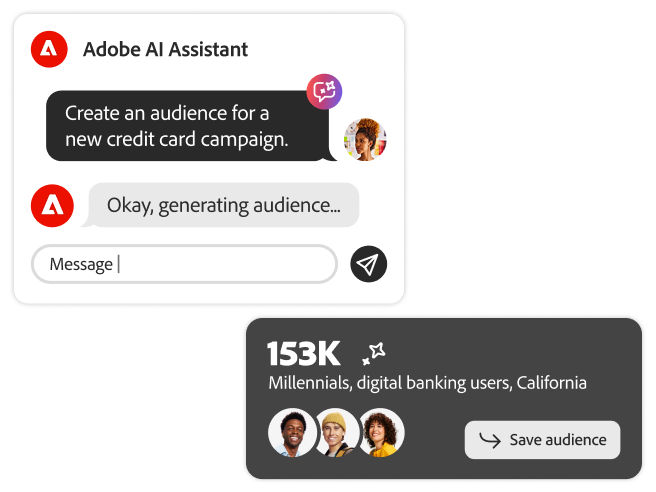
Adobe in action
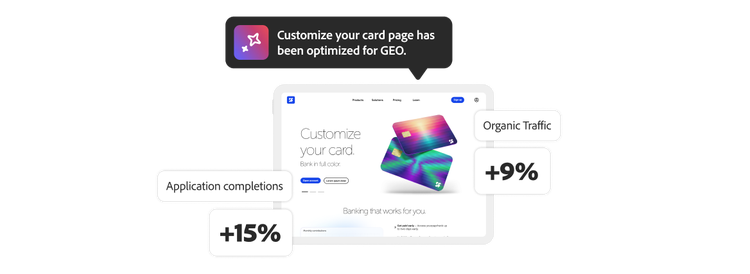
Adobe Experience Platform Agents can be accessed through a conversational interface such as Adobe AI Assistant. Some AI-first products, such as Adobe Brand Concierge and Adobe Brand Visibility, are powered by a number of agents to support specific needs and use cases without a prompt.
Building a smart agentic AI adoption curve for enterprises.
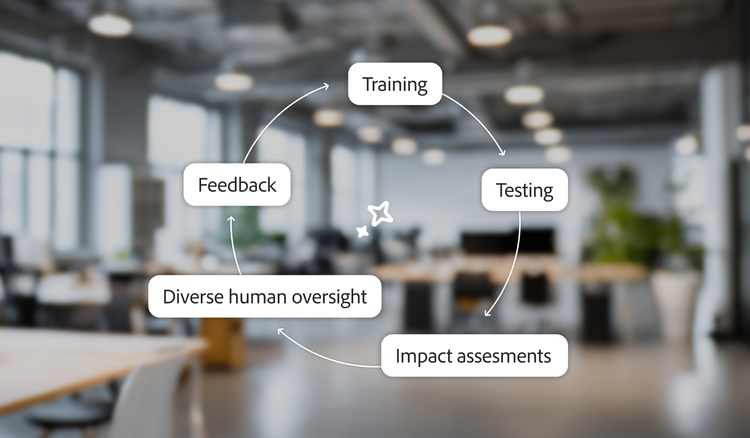
After seeing agentic AI in action across industries, it can be easy to want to move straight into full-scale deployment. But the on-ground reality is more nuanced: For AI to deliver real, lasting value, trust must be built first.
Employees using AI agents need to understand how AI works, how data is used and what control they have over it. Explainability and clear governance are essential, but so are open feedback channels. Giving employees space to question, shape and improve how AI is used isn’t just good practice — it’s how organisations build confidence and long-term value. However, trust remains one of the biggest hurdles to adoption among enterprises.
A recent survey of employees in the US and Europe revealed that only one in four employees4 said they always verify the outputs generated by AI.
This gap between trust and critical awareness can be addressed with firm alignment across teams, a strong data foundation and a willingness to rethink how work flows throughout the organisation. Adoption, therefore, is about moving deliberately along a curve across different operations.
Here are a few strategic steps to guide the adoption journey:
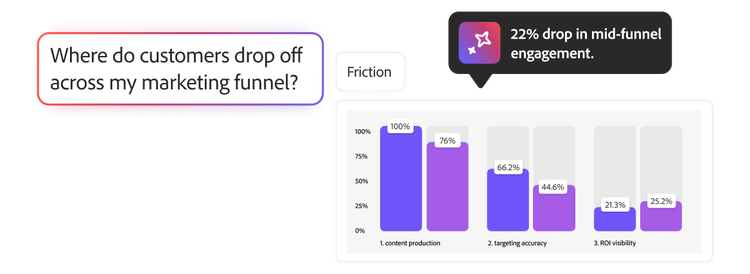
Start with clarity.
Get specific about the problems you’re trying to solve. What are the pain points in your marketing strategy? How will you know it’s working? Too often, teams launch AI pilots without clear, measurable objectives and end up unsure if anything improved.
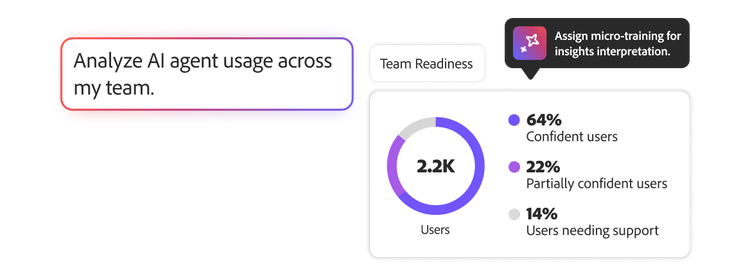
Get your teams ready.
Agentic AI isn’t just a technology shift; it’s a role evolution. Invest in training, create space to experiment and give your teams the confidence to use these agents.
Adopting agentic AI is not about instant transformation. Its value emerges gradually, as teams experiment, adapt and learn which capabilities truly add value. Human judgement remains central. AI is a tool, not a replacement.
Putting people first in an AI-assisted ecosystem.
An AI system that bypasses human judgement may accelerate activity, but it can also amplify errors and systemic fragility.
It’s important to remember that tools are only an extension of the expertise and talent in the organisation. To preserve human oversight, users need to stay informed with task statuses and phase updates across complex, multi-step goals to manage campaigns and workflows. Importantly, the AI system must allow traceability so employees can revisit and modify decisions to evaluate their choices.
The right AI tools enable humans to guide priorities, validate logic and ensure trust continues to build. Controls must allow human reviews to detect issues AI may miss, while explainability features can help teams interpret decisions and maintain accountability.
Together, these guardrails — human expertise, progress tracking and traceability — ensure a balanced and iterative approach to decision-making where humans and AI complement each other.
Discover additional best practices for designing and implementing enterprise AI initiatives in The AI Inflection Point guide.

Setting the standard for transparent and ethical AI governance.
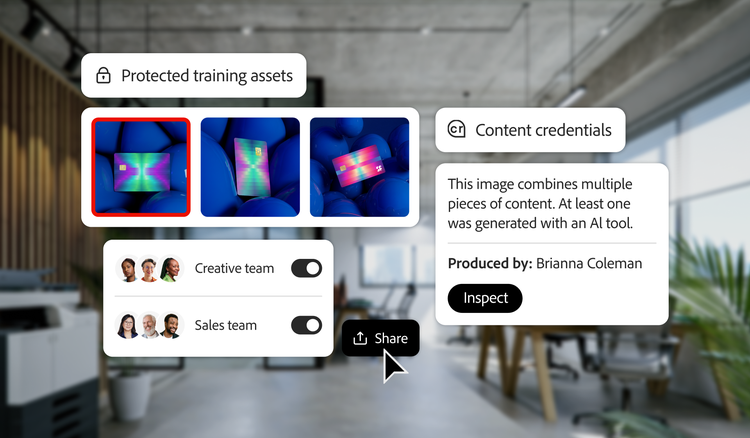
Enterprises today demand clarity and rigour in how their data is used before organisations even begin using agentic AI features. According to Stanford’s AI Index Report5 , while AI has moved well beyond the experimental phase, public confidence in its safety, fairness and accountability remains fragile. The first and most critical concerns are often around customer data sharing, governance and security.
When running marketing or operational campaigns at scale, organisations seek AI solutions that assure compliance and commercial integrity through defined review and approval processes. Agentic AI built for enterprises manages these concerns through techniques like encryption and access controls. Yet transparency remains essential — particularly around how models are trained and how customer data is protected from exposure to other clients or third parties.
AI agent collaboration you can trust.
Ensuring reliability in enterprise AI demands accountability — from the responsible handling of data to consistent human oversight. True user confidence is earned through transparency and accountability. AI agents must be designed with a privacy-first architecture and comply with strict global regulations such as GDPR and HIPAA, giving organisations the confidence that their data remains protected and controlled.
Core principles for building trustworthy AI include:
- Training and customer data sharing: Customer data should not be used to train foundational AI models without consent. Models should be fine-tuned for specific business needs and use only approved, permissioned data.
- Human oversight: Humans should remain in control through configurable review processes, approval mechanisms and intervention points, ensuring accountability in AI-driven outcomes.
- Explainability by design: AI systems should be able to understand intent, assess scope, avoid falsifying information and provide clear, interpretable outputs for those overseeing decisions.
- Access control: Organisations should retain full control over whether and how they enable generative or agentic AI capabilities for every user within their environments.
- Enterprise-grade quality: AI frameworks should include human feedback loops, annotation tools, error monitoring and safeguards to prevent bias, misinformation and performance drift.
- Governance and security: End-to-end protections should cover data collection, storage and usage, leveraging enterprise-grade security, privacy and governance controls to uphold brand trust and compliance standards.
Adobe in action
AI development is guided by the core principles of accountability, responsibility and transparency. These values inform every stage of the development process, ensuring AI capabilities are both powerful and trustworthy for enterprises of any scale. Learn more about how Adobe approaches these principles on our Responsible AI for Business page.
The future of enterprise AI marketing.
Agentic AI today is more than a glimpse of the future. It’s a working model for how modern marketing gets done. No more chasing data, jumping between tools or waiting on handoffs. Agentic AI acts as an extension of your team — planning, creating, personalising and optimising — all while staying aligned with your strategy and under your direction.
Adobe delivers enterprise-ready AI that integrates seamlessly into workflows, enhances creativity, preserves brand standards and keeps humans in control. Built with transparency, security and responsible AI practices at its core, it represents a new model for marketing. The tools are ready and the brands that move with clarity, purpose and control will define what comes next.
Sources
- Adobe 2025 Digital Trends Report
- Adobe State of Customer Experience in an AI-Driven World Report
- Adobe State of Customer Experience in an AI-Driven World Report
- CCS Insight Survey: Employee Workplace Technology, 2024
- Stanford University Human-Centred Artificial Intelligence (HAI) 2025 AI Index Report
cardTitle
What is agentic AI?
CardDescription
Empower marketing teams with AI agents to streamline operations, boost efficiency and improve customer experiences.
cardDate
2026-01-30
cardImage
primaryTag
caas:content-type/guide
Tags
caas:content-type/guide, caas:products/brand-concierge, caas:products/brand-visibility,
caas:products/cx-enterprise-coworker
Let’s talk about what Adobe can do for your business.