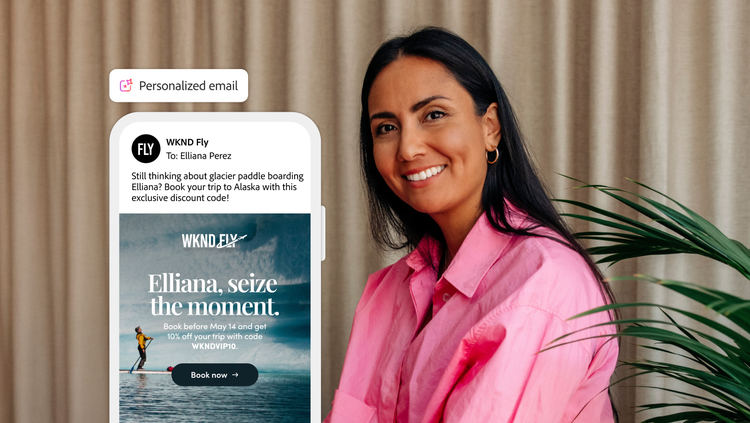
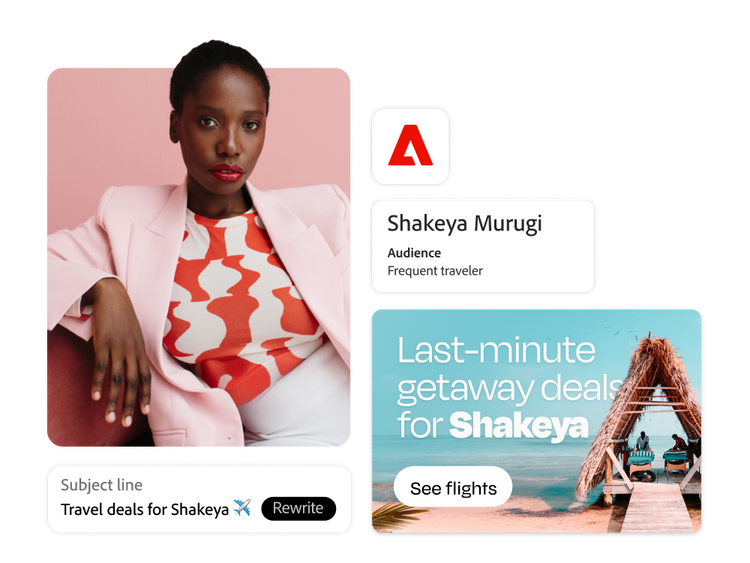
Now that you’ve gathered all the customer data you need, it’s time to put it to work to create personalised and memorable customer experiences. Here are a few of the best strategies for effectively using customer data to personalise your marketing emails:
Segment your audience.
Segmentation is an important tool for refining your marketing strategy. It’s also a crucial first step to sending effective personalised emails to your customers.
To get started, separate your customers into distinct groups that share a common characteristic. The actual groups you use will vary depending on your business needs and marketing goals. However, some common examples that can be used to create these potential target groups include gender, age, location and industry.
Dividing your customers into these groups will help you to identify which specific factors to target in your email communications. It will also help you to decide what content is most relevant and which dynamic fields should be utilised in your email copy.
Use dynamic content.
Dynamic fields are specific fields in your subject line or email copy that can be changed automatically based on the person receiving the email. A great example of this is a dynamic first name field, which ensures that every recipient sees their own name written in the subject line. Using dynamic content prioritises sending relevant content to customers rather than the old-school, one-size-fits-all emails that businesses used to send.
Segmentation and gathering as much data as possible from your customers are key to utilising dynamic fields and content in your emails. Without segmentation, you wouldn’t know which fields are most likely to resonate with your chosen audience. Without data to fill those fields, your efforts to create personalised emails will fall short. That’s why both elements are so important.
When these strategies are used effectively, you can personalise emails tailored to specific audiences.
Personalise the subject line.
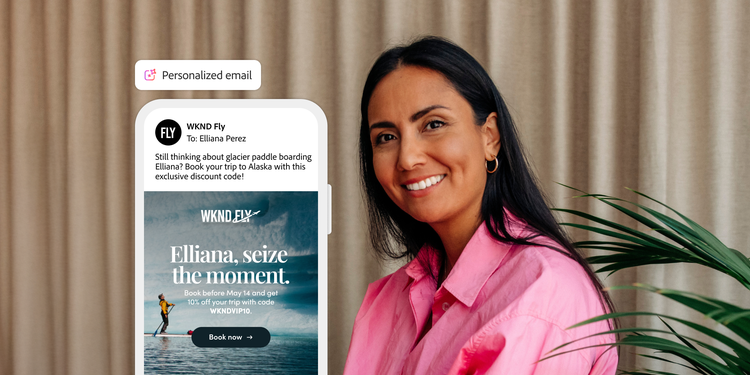
If you could only make one change to your current email templates, it should be to personalise the subject line of your emails. Although it’s a minor change, this adjustment is one of the most effective personalisation techniques — and it often has a significant impact on the recipient, as this is the first element of your email they will see.
Personalising the subject line could include adding a dynamic name field, using specific language tailored to your audience or even changing the “sender” field to show as being sent from a specific person instead of the company or brand name. When the sender is a specific person, it helps customers feel valued — and they become more likely to open the email and engage with its content. After all, someone at the company took the time to keep in touch to them personally with suggestions and offers.
Send triggered emails.
Triggered emails are a must-have in email marketing. These automatic emails are created with a built-in alert that triggers them to be sent in response to specific customer actions. Some common trigger actions are leaving items in the basket, signing up for an account or subscribing to your email list.
You can also use trigger emails to remind customers when their subscription is about to expire, allowing them to reactivate it, which is a great way to stay on top of renewals. Many companies will also use triggered emails to provide additional suggestions to customers based on their browsing history or after a purchase when there’s an opportunity to cross-sell similar products they may like.
Remember anniversaries.
Another easy way to build relationships with your customers using personalised emails is to send a birthday or anniversary email celebrating the customer’s special occasion. Sending these celebratory emails shows them that you care and can endear you to customers as they see that you took the time to remember their special day.
Create personalised email content.
This strategy seeks to make the entire email appealing to the recipient. It goes beyond creating subject lines that encourage customers to open the email and takes it a step further by ensuring that, once they do open the message, everything within that email is relevant to the customer and tailored to their interests or preferences.
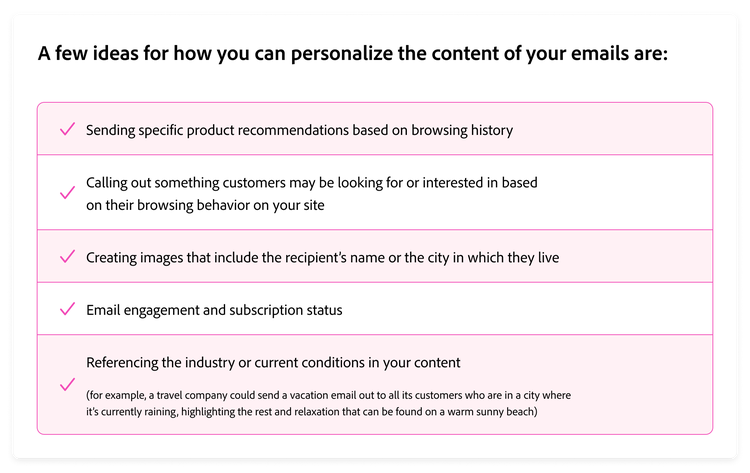
A few ideas for how you can personalise the content of your emails are:
- Sending specific product recommendations based on browsing history
- Calling out something customers may be looking for or interested in based on their browsing behaviour on your site
- Creating images that include the recipient’s name or the city in which they live
- Referencing the industry or current conditions in your content (for example, a travel company could send a holiday email out to all its customers who are in a city where it’s currently raining, highlighting the rest and relaxation that can be found on a warm sunny beach)
Be creative and utilise all your available resources.
Focus on re-engagement.
Re-engagement refers to any marketing tactic that revitalises the interest of a past customer or quality prospect. A prime candidate for retargeting is a customer who hasn’t purchased anything in a while. This individual may have enjoyed your product but lost sight of your brand. Sending this person an email could remind them how much they liked their last purchase and encourage them to make another.
Alternatively, you could re-engage a previous subscriber who recently hit the unsubscribe button and has been inactive. You could target this individual with relevant blog content or send them news about your latest deals and sales.
One of the most popular types of re-engagement involves targeting prospects who either viewed an item or added it to their basket but didn’t make a purchase. You can track these prospects with first-party cookies and send them follow-up emails.
Salvage those abandoned baskets.
Abandoned baskets represent one of the best uses for personalised email marketing. Customers who have almost reached checkout are highly interested in your products. They have also provided you with plenty of information you can use for email personalisation.
Utilise this data to recover those abandoned baskets. The customer might have just got distracted and needed to be reminded of their pending purchase.
Sometimes, a lack of free delivery or other price-related issues might have spurred basket abandonment. This gives you the opportunity to make the sale happen by sending the prospective customer a tailored deal for the product they were interested in. It also helps you learn more about how to improve the customer experience and buyer’s journey.