Website personalisation — what it is and why it matters.
Adobe for Business Team
12-09-2022
Today, reaching your audience is only half the battle. The true key to success is a website that greets every visitor with an experience so precise it feels like it was built just for them. Personalisation is now something people expect. They want online experiences that feel just as relevant and intuitive as an in-person interaction.
For ecommerce and digital-first brands, website personalisation is a core part of how you build trust and stay competitive. When you tailor the experience to match a user’s intent, you turn generic visits into more meaningful interactions that drive results.
Whether you’re refining your current approach or starting to explore more advanced, AI-driven strategies, this guide will help you navigate what modern website personalisation really looks like today.
Website personalisation refers to the process of providing each site visitor with a unique, customised experience rather than giving everyone a generic, one-size-fits-all interaction with your brand.
Effective website personalisation creates more relevant, engaging experiences that build trust and increase conversions. Elements such as content, images, product recommendations and pop-ups can all be adjusted based on user behaviour and preferences.
Web personalisation is most effective when you customise each of these elements and provide curated content to your site’s visitors. It ultimately provides a better user experience and increased conversion rates.
The benefits of website personalisation.
Anchor
the-benefits-of-website-personalization
Presenting visitors with personalised websites offers many advantages to your business.
More accurate product recommendations.
Product recommendations are a key component of website personalisation. Presenting additional products that are relevant to a customer’s current purchase can increase average order value and improve the overall shopping experience.
Irrelevant suggestions can frustrate shoppers and create friction in the purchasing process. For example, if a customer adds two coffee mugs to their basket, recommending unrelated items like bedroom décor is unlikely to drive additional sales.
Instead, suggesting complementary products, such as sugar containers, stirrers or travel mugs, can encourage add-on purchases and raise awareness of other relevant offerings, ultimately boosting both immediate sales and long-term customer engagement.
Customised landing pages.
Getting a prospective customer to click your Google Ad, open a marketing email or select your brand from a list of organic search results is a huge win. Once you’ve directed them to your landing page, you have a great opportunity to nurture this lead or potentially drive a conversion.
By leveraging consumer data, landing pages can dynamically highlight products or services aligned with a visitor’s interests. For example, if a user searches for AC maintenance, directing them to a page focused on furnace services may cause them to disengage. Showing content specific to their AC maintenance needs, however, keeps them engaged and increases the likelihood of conversion.
Increased site visit time.
Even the most valuable digital content has limited impact if visitors don’t engage with it fully. Website personalisation helps ensure users see and interact with the content most relevant to them, using targeted pop-ups, banners and calls-to-action to maintain attention.
The longer visitors stay on your site, the higher the likelihood of conversion. Combining personalisation with a seamless user experience (UX) amplifies engagement, strengthens brand perception and drives measurable business results.
Targeted CTAs increase conversion.
Calls-to-action (CTAs) are a critical component of on-site experiences, guiding users toward the next step in their journey. The most effective CTAs align with both the content being viewed and the visitor’s level of intent.
By delivering context-aware CTAs and continuously refining them through techniques like A/B testing, businesses can improve engagement, reduce friction and increase conversion rates while guiding users more effectively toward desired outcomes.
Personalised lead nurturing at scale.
Personalisation improves customer engagement by nurturing leads. By using a visitor’s browsing data and interaction history, your marketing team can provide curated educational content directly on your site.
For example, if a lead frequently visits "advanced features" pages, the website can automatically pivot to show case studies or white papers that address their specific technical concerns. This keeps the lead engaged within your ecosystem longer, effectively "warming" them up for a sales conversation or final purchase without manual intervention.
By leveraging website personalisation, you can cultivate positive feelings toward your brand — increasing the likelihood of converting visitors into customers and boosting sales.
How to personalise your website.
Anchor
how-to-personalize-your-website
The right technology is essential for website personalisation, but it’s only a starting point. To align with customer interests, organisations must also address several key factors that drive relevance and engagement.
Segmentation.
Audience segmentation is essential to the success of your website personalisation efforts. It is the process of dividing your customer base into specific groups. First-party data allows you to group users into segments that make personalisation more relevant and effective. First-party data— including demographics, on-site behaviour and engagement patterns— is collected directly from your audience, ensuring your insights are both accurate and actionable.
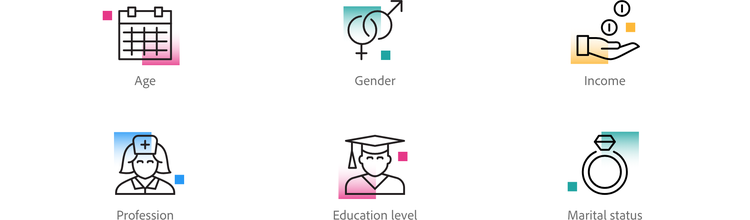
The number and type of segments will depend on the diversity of your products or services. Attributes commonly used to differentiate audiences include age, gender, income, profession, education level and other relevant behavioural or demographic factors.
Once segments are defined, the next step is to develop buyer personas. Each persona captures the key goals, challenges and preferences of a segment. Personas enable your team to create targeted messaging and content that resonates with each group. This structured approach ensures personalisation efforts are precise, consistent and aligned with both business objectives and customer expectations.
Location.
Location data plays a role in shaping the messaging, offers and experiences presented to site visitors. By using geographic insights, you can tailor content to reflect a user’s region, city or state, making your messaging feel more relevant and contextually aware.
Beyond personalised messaging, location data also enables improved targeting of promotions and campaigns. For example, you might surface weather-appropriate products, such as swimwear for users in Florida or highlight region-specific offers that align with local demand and conditions. Using location strategically ensures that your website delivers experiences that are both timely and meaningful.
Technology, device context and cross-device personalisation.
When discussing website personalisation, it’s easy to focus solely on tailoring content to a user’s interests or browsing history. While that is important, modern personalisation goes further by adapting to both the user’s technical context and their journey across devices.
Device type is still an important factor. Screen size, browser capabilities and connection speed all influence how content should be presented. Mobile users often need a streamlined navigation and faster load times, while desktop users may engage more deeply with detailed content or complex workflows.
However, personalisation shouldn’t reset every time a user switches devices. Today’s customer journeys cross different devices. Someone might discover a product on their phone, research it later on a laptop and complete the purchase on a tablet. Effective personalisation connects these touchpoints, ensuring that preferences, activity and intent carry over seamlessly.
By combining device-aware optimisation with cross-device continuity, businesses can create experiences that feel consistent, relevant and intuitive, no matter where or how users choose to engage.
Behaviour and time spent.
Understanding how users interact with your site is key to effective personalisation. Engagement signals, like time spent on a page or navigation patterns, reveal a visitor’s intent and readiness to act.
For instance, a user reading a detailed article may be ready for a CTA like “Request a Demo,” while someone browsing quickly might respond better to “Watch an Overview Video.” By aligning content and CTAs with user behaviour, you guide visitors naturally through their journey while improving conversions.
Predictive personalisation powered by AI.
AI has allowed website personalisation to shift from reactive to predictive. By using AI, websites can now go beyond swapping pre-made banners. AI can dynamically generate unique headlines, product descriptions and imagery in real-time that specifically resonate with an individual’s current search intent.
Predictive modelling complements this by analysing historical and behavioural data to anticipate customer needs before they arise. Instead of showing a user what they just bought, predictive personalisation anticipates what they are likely to need next, such as a restock of a consumable product or a complementary accessory, before the customer even begins their search.
The challenges of website personalisation.
Anchor
the-challenges-of-website-personalization
Website personalisation is a highly effective strategy for engaging with prospective customers, increasing sales and boosting revenue. However, as with any marketing strategy, you must overcome several challenges in order to use this tactic effectively.
Navigating the evolving privacy landscape.
The digital ecosystem has shifted significantly toward privacy-first data practices. While the timeline for phasing out third-party cookies continues to evolve, broader changes, such as Apple’s App Tracking Transparency (ATT) and regulations like GDPR and CCPA, have made cross-site tracking increasingly limited. As a result, relying on third-party data is no longer a sustainable foundation for personalisation.
In response, organisations are shifting toward first-party data strategies, focusing on information collected directly through their own digital properties. This approach not only supports compliance but also enables more accurate and meaningful personalisation. To encourage user opt-ins, businesses must lead with clear consent practices. They should also highlight the personal benefits for the user, such as receiving more relevant content and highly tailored experiences in exchange for their data.
Combining first-party data with zero-party data voluntarily shared by users creates a more transparent, privacy-conscious foundation for personalisation while strengthening long-term customer relationships.
Disconnected platforms make integrating data difficult.
Many organisations still rely on a combination of disconnected platforms that make it difficult to share and unify customer data. This fragmentation limits your ability to build a complete view of the customer, ultimately hindering effective website personalisation.
To address this, businesses are increasingly adopting customer data platforms (CDPs) that centralise and unify data across systems. By consolidating customer information into a single, accessible source, organisations can create more accurate profiles and deliver consistent, personalised experiences.
With real-time data access and activation, these platforms enable more precise targeting and timely engagement, ensuring that personalisation efforts are both relevant and scalable across the customer journey.
Personalising websites at scale requires the right tech.
Personalising websites at scale is a tech-dependant task. While transitioning from ageing technologies to a modern CDP represents a step in the right direction, you’ll also want to use artificial intelligence (AI) and other advanced technologies to effectively scale your personalisation efforts.
Solutions like Adobe Target enable organisations to automate key personalisation workflows, deliver tailored experiences at scale and continuously optimise performance through capabilities such as A/B testing. By combining centralised data with intelligent automation, businesses can streamline execution and deliver consistent, high-impact personalisation across the customer journey.
Website personalisation examples.
Anchor
website-personalization-examples
Every element of your digital shop front, from banners to search results, can be tailored to create a more relevant experience. By aligning content, product suggestions and navigation with a user’s interests, you move beyond a one-size-fits-all approach to a more optimised journey.
The following brands illustrate how these strategies translate into measurable results and more meaningful customer connections.
1. Amazon
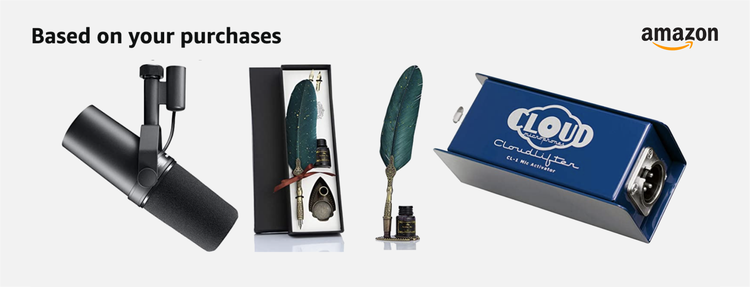
Amazon is a leading example of website personalisation at scale, using data-driven insights to maximise revenue and drive repeat purchases. Beyond simple retargeting, the company tailors landing pages based on browsing behaviour, purchase history and real-time trends, while its recommendation engine surfaces products aligned with individual preferences.
Amazon also leverages personalised placements and prompts to encourage immediate action, whether through timely purchase suggestions, basket additions or curated lists that support future transactions. Together, these capabilities create a highly effective, end-to-end personalisation strategy that continuously drives engagement and conversion.
2. Spotify
Spotify demonstrates how personalisation can drive engagement in the music streaming space. By analysing listening behaviour, the platform curates experiences tailored to each user, highlighting favourite artists, surfacing new releases and recommending content aligned with individual preferences.
A core example is its Daily Mix playlists, which are dynamically generated based on recent listening activity and genre affinity. By consistently delivering relevant, personalised content, Spotify ensures users can easily discover music that matches their tastes, strengthening engagement and long-term retention.
3. Netflix
Moving from music to TV and films, the Netflix platform remains the premier streaming option for millions of users around the globe despite strengthening competition. Netflix is constantly reworking its website personalisation capabilities to improve its user experience.
The more customers use the platform, the better its algorithm becomes at personalising their experience. Long-time Netflix subscribers enjoy customised suggestions based on their recent history, with the platform automatically highlighting content that aligns with users’ viewing trends and habits.
4. Target
Target is unique from the previous examples, as the retailer offers both online and brick-and-mortar purchasing opportunities. Target leverages website personalisation strategies to provide users with customised digital experiences based on past online and in-store purchases. The retailer gathers in-store purchase data via its various ordering services and membership programme.
This omnichannel approach allows Target to create a unified customer profile. By syncing in-store transactions with online browsing, the platform can suggest restocks of household essentials or highlight 'available nearby' items in real-time. This seamless integration of physical and digital data ensures that whether a customer is in an aisle or on their sofa, the experience feels tailored to their specific shopping habits.
Get started with website personalisation.
Anchor
get-started-with-website-personalization
If you’re ready to get started with website personalisation and differentiate your brand from competitors, Adobe Target is the ideal tool that’s here for you.
With Adobe Target, you can tap into the power of web personalisation to generate more leads, increase customer engagement and enhance sales revenue. Adobe Target includes AI technologies, testing tools and automation solutions so that you can scale your website personalisation campaign. Use Adobe Target to deliver customer experiences that are personalised and precise.
Website personalisation — what it is and why it matters.
CardDate
2022-12-09
CardImage
CardImageAltText
A woman executive uses her phone to improve her customer's experience by using website personalisation. card image
CardDescription
Website personalisation provides a unique experience to all of your website’s visitors. Explore benefits, challenges and examples of web personalisation.