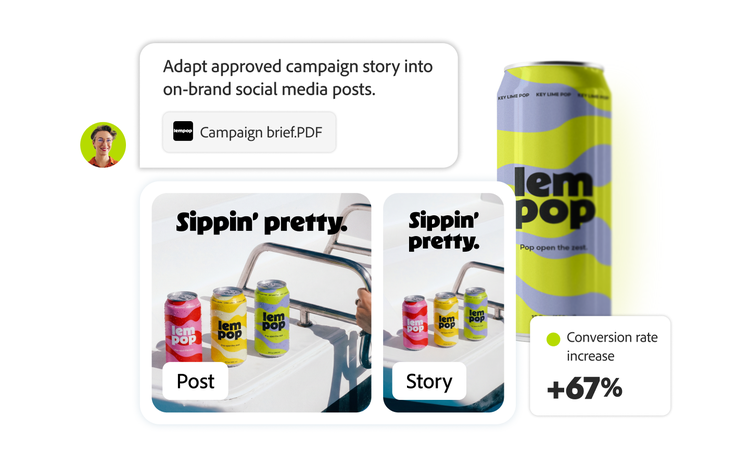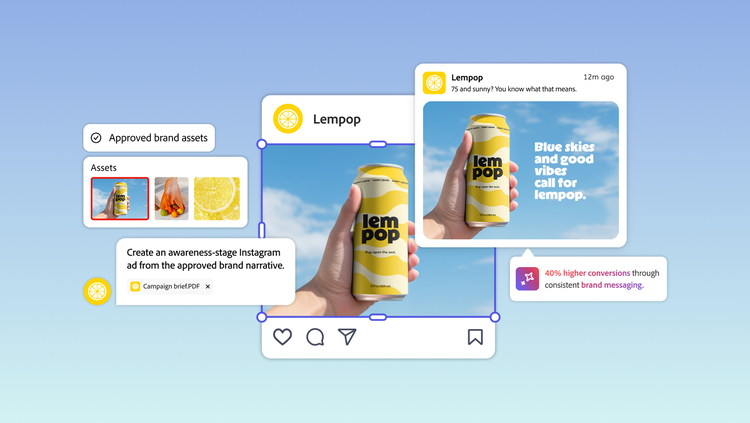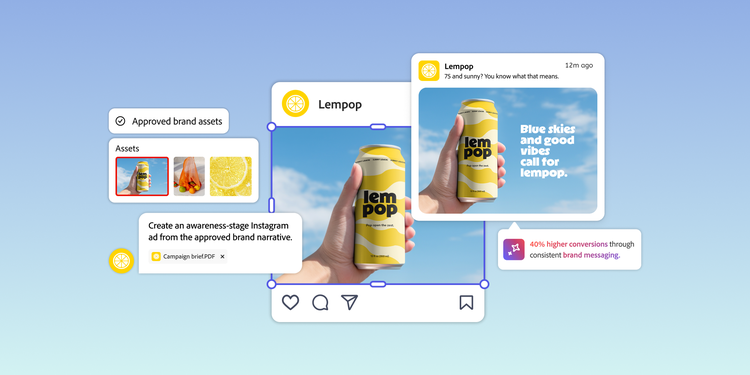
Your brand narrative guides every campaign and audience interaction, shaping the stories you tell and helping ensure each one reinforces your unique identity. A consistent narrative makes your brand more memorable and trustworthy because people are naturally drawn to what feels familiar. Consistency doesn’t mean repeating the same message everywhere. As buyers move from awareness to consideration and decision, the questions they ask and the proof they seek evolve. Your brand storytelling should also change with them, while staying grounded in a familiar narrative.
Today, B2B buyers want to navigate their journey independently, with 67% preferring a rep-free experience. Brands need to deliver the right content at the right moment to influence decisions and build lasting connections. What enables this is effective storytelling that transforms a single brand narrative into experiences that resonate with buyers at each stage.
In this context, generative AI presents both opportunities and risks. While it enables marketing teams to produce content variations at extraordinary speed and scale, it can lead to narrative drift. As digital channels multiply, one of the biggest opportunities is to adapt the core narrative for countless touchpoints without losing the brand's essence.
To understand how generative AI can be used to adapt content without compromising narrative integrity, let's explore the following key areas:
- What is brand storytelling across the content marketing funnel?
- How the brand story changes across the funnel
- How to create a shared messaging foundation before adapting the narrative
- How generative AI helps scale funnel storytelling
- How content variation becomes narrative drift
- How to adapt a brand story without creating narrative drift
- Building a scalable full-funnel story