An enterprise martech vendor wants to improve visibility for the query "what is marketing automation." The company creates a dedicated page with a clear, concise definition positioned near the top of the page, immediately after the H1 (title). The definition uses simple language, answers the query directly and is followed by supporting sections that explain how marketing automation works, common use cases and related terms.
The page is structured with descriptive headings, a self-contained answer block, internal links to related resources, BreadcrumbList schema mark-up to allow users to navigate to previous sections of a site and Article and FAQPage schema to give search engines additional context for the page.
Potential outcome: Search engines can more easily identify the page’s direct answer and supporting context, increasing its eligibility for answer-style SERP features such as featured snippets or PAA results. Thus, users searching for the query may see the company’s explanation prominently displayed, improving brand visibility even when the search does not lead to a click.
A Fortune 500 analytics and insights enterprise wants to be recognised as a trusted source on e-commerce trends. Instead of publishing a general trends article that repeats information already available across the web, it creates a research-led report using proprietary data, expert analysis and a clear methodology.
The report includes specific findings, context to help readers understand the data and clear takeaways for enterprise marketing and commerce teams. Each claim is supported by evidence, making the content easier to evaluate, reference and attribute.
Potential outcome: When AI-driven search experiences generate responses on e-commerce trends, the report is more likely to be cited as a supporting source because it offers original information and a clear point of view. The brand gains visibility not just by answering a query, but by contributing evidence that helps shape a detailed, synthesised response.
A global B2B software brand creates a comprehensive guide on data governance. The page opens with a concise definition of data governance that can stand alone as a direct answer. Below that, the guide expands into frameworks, implementation steps, expert commentary, common challenges and examples tailored for enterprise teams.
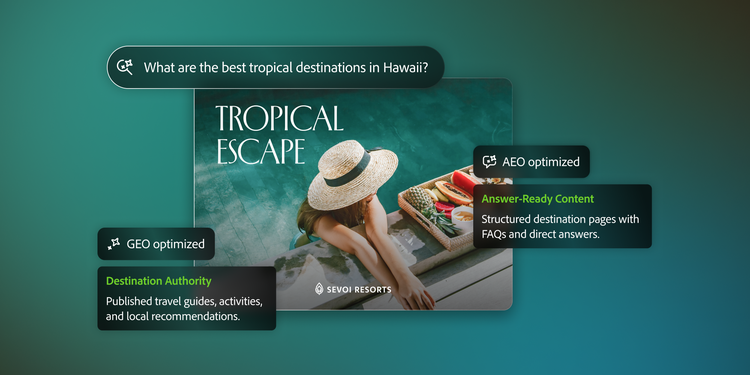
The opening section supports AEO by making the core definition easy to extract. The deeper sections support GEO by providing more context, evidence and an expert perspective to reference when answering complex questions about data governance strategy.This extra context and evidence improve the likelihood that a brand will be cited in AI-generated responses.
Potential outcome: The same asset can support different search behaviours. A user asking, "What is data governance?" may encounter the concise definition in an answer-style search result, while someone asking a more complex question about building a process to govern user data may encounter the brand within a broader AI-generated response. This approach enables the content to serve both immediate answer needs and more in-depth research journeys.