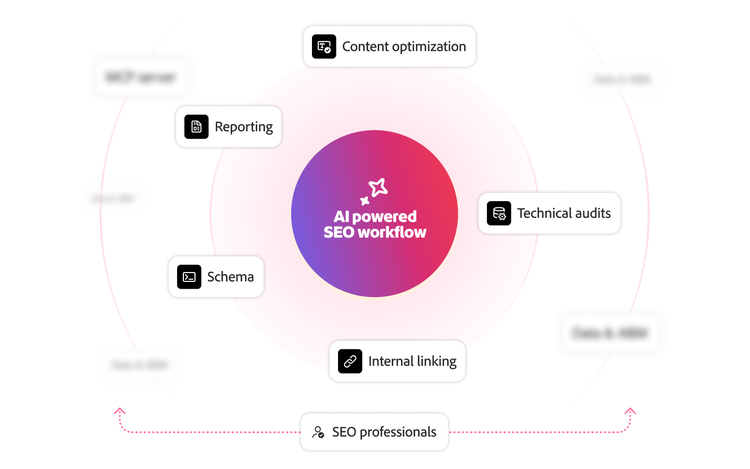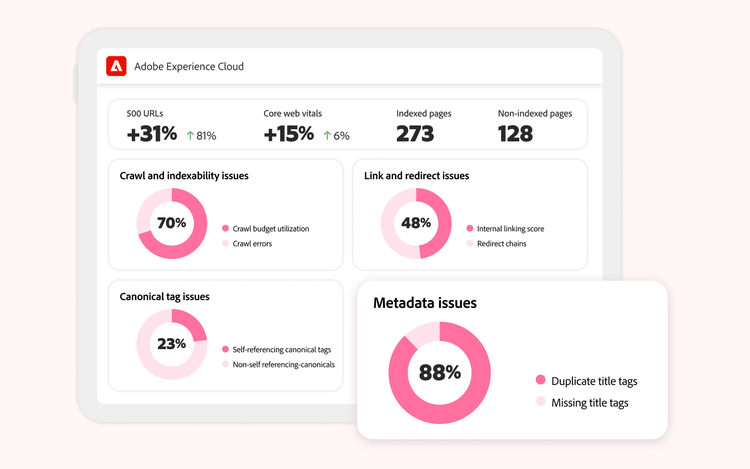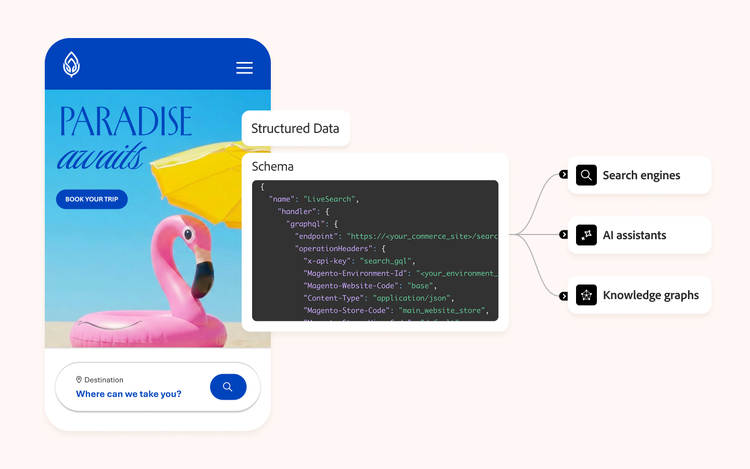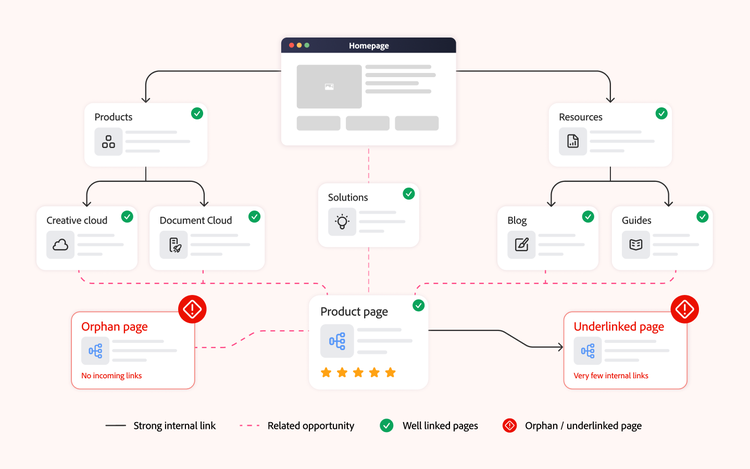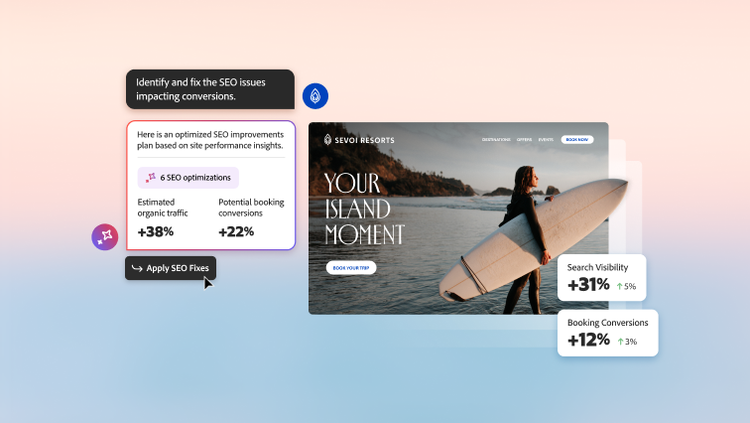
Enterprise SEO teams are under pressure to manage a growing volume of operational SEO work across large, complex websites while still making time for strategy. Technical audits, recurring performance reports, metadata reviews across regional properties, internal linking analysis and schema validation all play an important role in search performance. Together, they can consume time that would otherwise go toward content optimisation, strategic planning and identifying new opportunities to improve visibility.
AI for SEO helps reduce that burden by taking on repetitive, rule-based tasks, so SEO teams can move faster without replacing the expertise required for strategic decision-making. For organisations managing distributed workflows, multiple CMS environments and ongoing reporting cycles, AI improves consistency, reduces manual effort and gives SEO and content teams more capacity to focus on higher-impact work.
This article will cover:
- What is AI for SEO?
- Automate on-page SEO tasks
- Enhance technical SEO audits and monitoring
- Automate SEO reporting and anomaly detection
- Use AI for keyword mapping
- Accelerate content optimisation audits
- Streamline structured data and schema quality assurance
- Improve internal linking
- SEO teams should lead AI task adoption and final QA