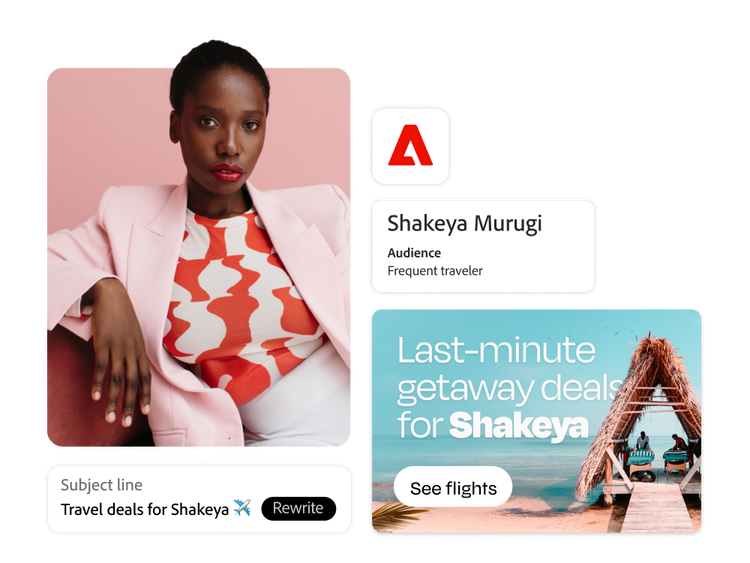
When customer data is scattered across inboxes, spreadsheets, and disconnected tools, opportunities slip away quietly. For Australian organisations scaling beyond founder-led sales or managing multi-state operations, the cost of that fragmentation compounds fast in lost deals, inconsistent service, and compliance risk.
Customer relationship management: what it is, how it works, and why it's important for your organisation
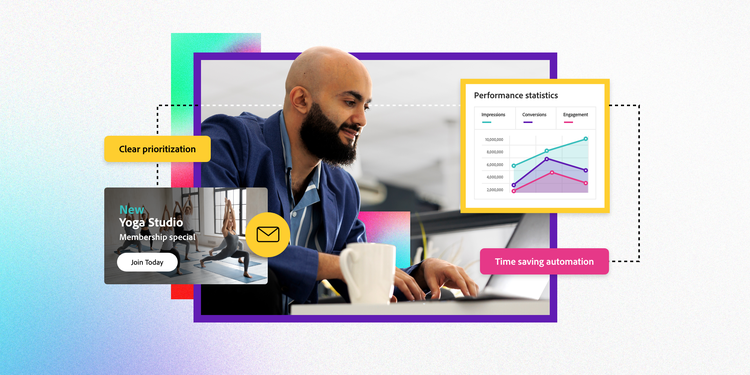
What is customer relationship management?
Many organisations already practise customer relationship management without calling it that. A sales rep tracking leads in a spreadsheet, a service team logging calls in a shared document: these are CRM activities, just inefficient ones.
CRM is both a business strategy for managing every interaction with current and potential customers and a category of software that operationalises that strategy. It spans marketing, sales, customer service, and operations, not just the sales floor, which is a misconception that leads to under-adoption across departments.
For Australian organisations with distributed teams or multi-state operations, CRM becomes essential the moment customer data lives in more than one system or more than one person's inbox. In practice, that threshold arrives when a business moves past 10-15 active accounts per rep, which is the point where memory and manual tracking reliably fail.
Why does your business need a CRM?
Without a centralised system, organisations face fragmented customer histories, inconsistent follow-up, and revenue leakage from leads falling through cracks. This scenario is common in Australian mid-market firms transitioning from a single founder managing all relationships to a team-based selling model across Sydney, Melbourne, or Perth offices.
A CRM addresses these pain points by delivering:
- Unified customer view: every interaction across channels consolidated into one record, so no team member starts a conversation blind.
- Improved lead conversion: structured pipelines ensure leads progress through defined stages rather than stalling in someone's inbox.
- Faster service resolution: service teams see full customer history instantly, reducing average handling time.
- Data-driven forecasting: pipeline visibility replaces gut-feel revenue predictions with evidence-based projections.
- Reduced compliance risk: centralised records make it easier to respond to data access requests and meet obligations under the Privacy Act 1988.
The common thread is visibility. When every customer-facing team works from the same data, handoffs between marketing, sales, and service stop being friction points and start being moments of continuity.
What are the different types of CRM systems?
Not all CRM platforms solve the same problem. Choosing the wrong type leads to expensive shelfware, meaning software that technically works but doesn't address the organisation's actual bottleneck.
Type
Primary function
Best for
Example use case
Operational
Automates sales, marketing, and service workflows
Organisations whose primary pain is manual process overhead
A retail chain with 50+ stores needing consistent lead routing and follow-up across locations
Analytical
Data mining, reporting, and customer segmentation
Organisations with large data volumes needing pattern identification
A financial services firm analysing churn risk across customer segments to prioritise retention efforts
Collaborative
Shares customer information across departments and external partners
Organisations with complex service ecosystems
A logistics provider coordinating between sales, dispatch, and third-party carriers to maintain service continuity
The trade-off is straightforward: operational CRMs prioritise efficiency, analytical CRMs prioritise insight, and collaborative CRMs prioritise coordination. Many enterprise platforms blend all three, but understanding which capability matters most prevents over-investment in features your teams won't use.
What does a CRM system actually do?
Day-to-day, CRM software performs four core functions that replace manual effort with structured, repeatable processes.
Contact and account management centralises every interaction (email, call, meeting, purchase) into a single timeline. The business implication is that any team member can pick up a conversation without the customer repeating themselves, which matters acutely when staff turnover or leave disrupts continuity.
Pipeline and deal tracking visualises sales stages so managers can forecast revenue and identify bottlenecks. For a mid-market Australian firm, this replaces the weekly pipeline spreadsheet circulated by email, a format that's outdated the moment it's sent.
Marketing automation integration triggers personalised campaigns based on CRM data such as lifecycle stage or purchase history. When combined with AI-powered content creation, campaign production accelerates because content variants can be generated from the same customer signals the CRM already captures.
Reporting and analytics surfaces patterns in customer behaviour that inform strategic decisions: which segments are growing, where churn concentrates, and which channels deliver the highest lifetime value. Pairing CRM reporting with dedicated data analysis tools extends this capability from operational dashboards into deeper strategic insight.
How do you choose the right CRM for your organisation?
The most common CRM failure mode is not poor technology. It's poor adoption driven by misalignment between the platform's strengths and the organisation's actual needs. A decision framework based on organisational conditions prevents this.
If your organisation has fewer than 50 users and a single sales channel, a lightweight operational CRM suffices. Prioritise ease of use and fast onboarding over feature depth.
If you operate across multiple states with complex compliance needs (for example, obligations under the Privacy Act 1988 and Australian Privacy Principles around customer data handling), prioritise platforms with strong data governance maturity and Australian data residency options.
If your channel complexity is high (customers interacting via web, app, in-store, call centre, and partner networks), you need a platform that unifies profiles across touchpoints in real time. Adobe Experience Platform and its Real-Time CDP capabilities serve this enterprise tier, building complete customer profiles across marketing, sales, and service for organisations where fragmented data across channels is the core problem.
Implementation considerations remain consistent regardless of tier: plan for data migration (deduplicate before you move), invest in training (not just technical training but workflow training), and assign internal champions. Change management determines adoption more than feature sets do.
How are Australian organisations using CRM today?
Multi-state professional services: A firm with offices in Sydney, Melbourne, and Brisbane uses CRM to coordinate client relationships across locations, eliminating duplicate outreach when two partners unknowingly contact the same prospect and ensuring consistent service quality regardless of which office the client reaches.
Government digital transformation: A state agency tracks citizen interactions across web, phone, and in-person channels through CRM, improving response times and meeting public sector accountability requirements. The unified record means a citizen who starts an enquiry online and follows up by phone doesn't need to re-explain their situation.
Mid-market retail: A retailer integrates CRM with e-commerce data to personalise post-purchase communications and identify high-value customers for loyalty programmes. This integration depends on data normalisation, which means ensuring product codes, customer identifiers, and transaction formats are consistent between systems so the CRM record is clean and actionable.
These scenarios share a common thread: CRM delivers value not as a standalone database, but as the connective layer between teams, channels, and systems.
Ready to unify your customer data across every channel? Explore how Adobe Experience Platform helps Australian organisations build complete customer profiles and deliver personalised experiences at scale. Get started with Adobe Experience Platform.
Recommended for you
Title
Customer Relationship Management: What It Is & Why It Matters
CardDescription
Learn what customer relationship management is, how CRM systems work, and why CRM is important for Australian businesses looking to improve sales, service, and retention.
cardDate
2026-09-09
cardImage
primaryTag
caas:content-type/blog
Tags
caas:content-type/blog, caas:topic/trends, caas:blog-author/adobe-for-business-team