What is data management?

Adobe for Business Team

09-17-2025

Targeted advertising using data from loyalty memberships and high-value customer segments.

Data management is the process businesses follow to collect, organise, and put data to work. The goal is to strike the right balance between efficiency, security, and cost savings across the organisation.

A sound data management approach puts formal policies and workflows in place, rather than leaving information handling to individual employees or departments. This builds a consistent standard across the business and ultimately lets organisations use their data at scale.

Key components of a data management strategy

  1. Collection: This involves gathering data from both internal (e.g., CRM systems, transactional databases) and external sources (e.g., social media, market research, IoT devices). Data can be structured or unstructured, and the collection process must ensure that relevant, high-quality data is available.
  2. Organisation: Covers structuring and categorising data to make it easy to access and analyse. This typically involves building databases, using data lakes, and applying taxonomies and metadata to improve data retrieval and processing efficiency.
  3. Storage: Keeping data stored securely to maintain its availability and integrity. Options include traditional databases, data warehouses, cloud-based solutions, and data lakes, chosen based on the data type and access needs.
  4. Protection: Using security features such as encryption, access controls, firewalls, regular security audits, and backup systems to safeguard data against breaches, loss, or corruption.
  5. Utilisation: Setting up the right tools and processes for data access, processing, and analysis helps organisations uncover insights that inform decision-making, improve operations, and enhance digital customer experience. It can also surface trends, patterns, and anomalies.
  6. Data Governance: This means putting policies in place to manage data consistently and in compliance. Data governance gives you control over who can access, modify, and use data. It ensures data quality, accuracy, and regulatory compliance, reducing the risks that come with poor data management.

This post will cover:

Benefits of data management

Without data management processes, there’s no framework to help you make sense of your data. Your business risks wasting time, resources, and critical data that could otherwise improve operations.

Effective data management lets companies transform raw data into actionable insights, getting more value from their data with less effort. Businesses that invest in data management can count on a range of benefits, including:

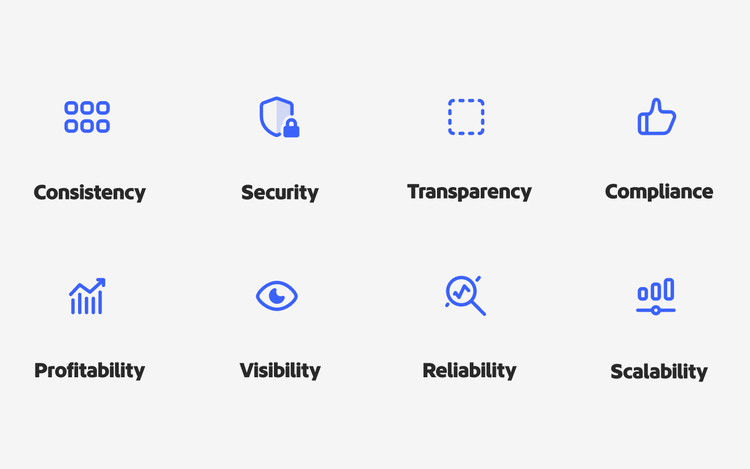
  1. Visibility: What information is available across your business? Data management processes bring all data sources together into a single feed, giving you comprehensive visibility and control in one unified, big-picture view.
  2. Reliability: With effective data management, there’s no need to have employees sift through information to work out what’s accurate. It ensures reliability and reduces time to value.
  3. Security: Unmanaged data is a significant security risk. Data management processes help protect your information from unauthorised access by bringing it under control — one of the most effective ways to avoid the costly fallout of data breaches.
  4. Scalability: The good news is that your business doesn’t have to manage data manually. Data management solutions enable automated, scalable data handling, ensuring consistency and security across your enterprise.
  5. Profitability: Data can make your business more profitable — but only when it’s mobilised effectively. Data management strategies help you uncover valuable insights and make better-informed, more profitable decisions. They can eliminate data redundancies and errors that lead to costly mistakes, and optimise storage resources to cut unnecessary expenses.
  6. Transparency: Research shows that 70% of consumers trust companies they do business with to protect their data. Building that trust takes time, but being upfront about how you use customer data makes a real difference. Sharing your data policies clearly helps customers feel confident engaging with your brand. An effective customer data management strategy gives organisations a clearer picture of customer behaviour, preferences, and needs. For example, a retail company could use analytics to track purchasing trends and refine its marketing strategy to drive sales.
  7. Consistency: Inconsistent information leads to misunderstandings. With effective data management processes, everyone gets a unified, centralised view of your raw data in one place.
  8. Compliance: Businesses must give consumers control over their data. Data management helps you stay compliant with GDPR, CCPA, and other data privacy regulations — reducing the risk of costly regulatory fines and strengthening customer relationships.
Diagram illustrating the key benefits of effective data management.

Data management challenges

Data management delivers real benefits, but putting it into practice is no simple task. The ongoing growth in available personal and customer data makes it increasingly difficult to interpret and utilise when building actionable targeting strategies.

Here are some of the most common challenges to consider:

Data management best practices

Data management comes with its challenges, but businesses can reduce their impact by following a few key best practices. For example:

Data management best practice
Description
Clearly identify your business goals
Set clear business goals that your data management efforts can directly support. For example, if your goal is to reduce customer churn, focus on collecting and analysing the data most relevant to that outcome. This helps prioritise what matters and make the most of your time and resources.
Create your data management processes
Develop documented processes that guide how your business collects, organises, uses, and analyses data. Bring in relevant stakeholders to make sure your practices are efficient, compliant, and secure.
Focus on the quality of data
Make sure the data you collect is accurate, relevant, and useful. Set clear standards for data quality and use verification tools to maintain consistency and accuracy. Avoid unnecessary or irrelevant data that could pull the team off focus.
Find the right software
Invest in data management software that supports your strategy. This could include platforms that provide real-time visibility into cross-channel customer profiles, making data management more efficient and actionable for businesses of all sizes.
Store your data
Organise and store your data in a structured system – whether that’s a data warehouse, data lake, or Cloud storage. Backup and disaster recovery measures are essential, so consider storing data both On-Premise and in the cloud.
Allow the right people to access the data
Put access controls in place to ensure only authorised personnel can access sensitive data. Proper Access Management helps maintain security and data integrity, making sure data is accessed appropriately for each role.
Establish strict file-naming and categorising standards
Set up a clear, standardised file-naming and categorisation system. Use descriptive, consistent names to keep files easy to find, and choose file formats that support long-term access.
Try using metadata for datasets
Use metadata to describe the key attributes of your data – including content, structure, and access permissions. This makes data easier to find and use down the track. Without proper metadata, accessing your data in the future can become difficult.

Types and examples of data management

Every business is different, so data management methods vary. Organisations can mix and match practices to suit their needs, but these techniques are the most common:

Data pipelines

A data pipeline is a channel that lets businesses automatically transfer information between two or more different systems. For example, you might connect your sales enablement software to your website analytics to enrich your lead profiles. During the exchange process, the pipeline may modify or enhance the data – or leave the raw data unchanged.

Example: A retail company uses a data pipeline to automatically transfer sales data from its CRM system into a cloud-based data warehouse. This lets the company generate real-time sales reports without manual data entry.

ETL/ELT (Extract, Transform, Load/Extract, Load, Transform)

These are specific types of data pipelines used for data integration. ETL involves extracting data from source systems, transforming it into a suitable format, and then loading it into a target system – often a data warehouse. ELT reverses the order of the last two steps, loading the raw data first and then transforming it within the target system.

Example: A healthcare provider extracts patient data from multiple clinics (extract), cleans and formats it to comply with privacy regulations (transform), then loads it into a central data warehouse for analysis (load).

For ELT, a social media platform might extract user activity data (extract), load it into a data lake (load), then process the data to generate user engagement insights (transform).

Data architecture

This involves designing the overall framework for how data flows through an organisation’s systems – covering everything from data storage and usage to compliance. A well-defined data architecture ensures information is managed efficiently and consistently.

Example: A financial institution designs its data architecture to store customer transactions securely and meet industry regulations. Data is held in a secure data warehouse, with defined access control policies for each department.

Data modelling

This technique uses visual diagrams to map the structure of data and the relationships between data elements – within a single system or across multiple systems. Data models help teams understand how data flows and is organised, supporting more effective data management and analysis.

Example: A logistics company creates a data model to visualise the relationship between warehouses, inventory items, and shipping routes. This helps the company optimise inventory management by giving clearer visibility into how products move through the system.

Data catalogues

These act as inventories of an organisation’s data assets, with metadata that makes essential information searchable and easy to find. For instance, a data catalogue can store information about the location, format, and quality of various datasets.

Example: A large university maintains a data catalogue, giving researchers easy access to datasets across a range of academic fields. The catalogue includes metadata such as dataset descriptions, formats, and usage restrictions.

Data governance

This covers the rules, policies, and procedures an organisation follows to standardise data – maintaining its quality, security, and compliance. Data governance typically involves setting up a dedicated team to oversee data policies and uphold accountability.

Example: A pharmaceutical company puts data governance practices in place to keep clinical trial data accurate, consistent, and compliant with regulatory standards. A dedicated team oversees these practices, enforcing proper documentation and audit trails.

Data security

The core goal of data security is to protect an organisation’s information from breaches, theft, and unauthorised access. This IT function typically involves creating and enforcing policies covering software, access controls, backups, and storage.

Example: An e-commerce company encrypts sensitive customer data – such as credit card numbers – and applies two-factor authentication for employees accessing the system, so only authorised individuals can retrieve the data.

Data life cycle management

This means monitoring and managing data across its entire lifecycle – from creation or collection through to deletion or archiving. Setting clear policies for each stage ensures data is handled appropriately, stays relevant, and remains secure.

Example: A government agency sets a policy to archive old citizen data after 10 years. The goal is to keep active data readily accessible while minimising the storage costs of older, less-relevant data.

Data processing

This is the process of converting raw data into a usable, actionable format. Data processing can involve cleaning, transforming, and integrating data to draw out meaningful insights.

Example: A media company collects raw data from multiple video streaming platforms, processes it to filter out irrelevant information, and structures it in a database to deliver personalised recommendations to viewers.

Data integration

This process pulls together data from multiple disparate sources into a single, unified view. It’s essential for businesses that rely on a range of systems across different operations, giving them a complete understanding of their data.

Example: An airline brings together data from its booking system, customer service platform, and social media channels. The aim is to deliver a unified, complete view of each customer’s interactions and preferences – improving both customer service and overall marketing efforts.

Data migration

This covers transferring data between different systems or platforms – typically when upgrading to a new database solution or moving data to the cloud. The aim is to shift existing information to a new solution with minimal errors or formatting issues.

Example: A retail chain migrates its inventory data from an on-premises database to a cloud-based system. This supports real-time tracking and better scalability as the business grows.

Data storage

Data storage is a core part of data management — it involves securely saving data in a chosen location, whether on physical servers or in the cloud. Choosing the right storage solution comes down to factors such as data volume, access frequency, and security requirements.

Example: A media company stores video files on high-capacity cloud storage, making it easy to scale as content production grows. Data is backed up regularly to guard against data loss.

Master data management (MDM)

Master data management ensures that core business data — such as customer or product information — is accurate, consistent, and shared across the organisation. This reduces duplication and errors, giving the business a single source of truth for critical data

Example: A global retailer uses MDM to maintain a single, consistent record of all products across its stores. This reduces errors in product listings and improves inventory management worldwide. 

Big data management

As data volumes continue to grow, big data management techniques become essential for handling and analysing vast amounts of data from a wide range of sources — often including unstructured or semi-structured data. This typically involves technologies such as data lakes and specialised processing frameworks.

Example: A tech company uses big data management tools to analyse user behaviour across millions of devices. Processing the data in a distributed manner gives the company insight into user preferences and helps improve product recommendations.

Cloud data management

As more organisations shift their data to the cloud, cloud data management has become a critical area. This involves managing data within cloud-based environments, taking full advantage of the cloud’s scalability, flexibility, and cost-effectiveness.

Example: A startup uses cloud data management to store and process large volumes of customer data in real time. This allows the company to scale up cloud computing resources during peak demand and keep operational costs low during off-peak periods.

Managing data with Adobe Real-Time CDP

Businesses that don’t adapt to new practices risk falling behind as data becomes an increasingly critical asset. A solid data management strategy keeps data organised, secure, and positioned to deliver real value for informed business decisions. Data management evolves as fast as data technology, so businesses need a clear plan for handling large volumes of data.

Rather than simply collecting more and more information, use data management to take control and generate value from it. Effective data management helps you build a strategy for collecting, analysing, and using information to benefit your business.

When you’re ready to get started, check out the advanced features of Adobe Real-Time Customer Data Platform. Adobe Real-Time CDP collects B2C and B2B data, unifying it into real-time profiles ready for activation across any channel.

Watch the Adobe Real-Time CDP overview video.

https://business.adobe.com/fragments/resources/cards/thank-you-collections/rtcdp