Getting started with vendor managed inventory.
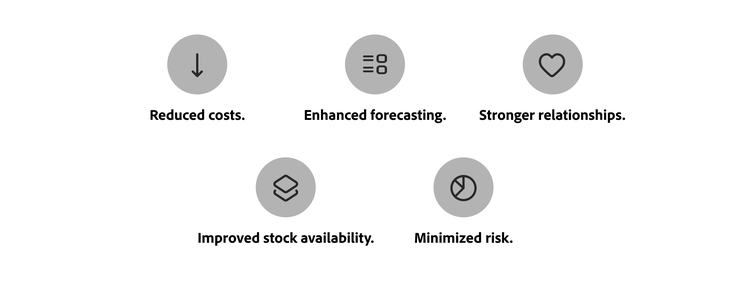
Vendor managed inventory can significantly reduce costs, improve efficiency and foster stronger vendor-retailer relationships. To get started:
1. Choose the right vendor.
- Assess potential vendors' data proficiency, analytics capabilities and reliability.
- Look for vendors with experience managing similar products or working in your industry.
2. Invest in technology.
Implementing the right technology is critical to the success of a vendor managed inventory system. Modern ecommerce platforms like Adobe Commerce go beyond basic inventory management, offering tools that integrate real-time insights, advanced analytics and customer journey optimisation.
- Ecommerce-specific analytics with Adobe Product Analytics
Dive deeper into ecommerce performance with detailed product-level insights. Track which products are driving sales, analyse purchasing patterns and identify underperforming inventory, empowering smarter decisions about stock levels and replenishment.
- Customer journey maps with Adobe Journey Optimizer
Understand how customers interact with your brand across touchpoints. Map the customer journey to identify pain points and optimise interactions, ensuring that inventory aligns with customer expectations at every stage.
3. Monitor and refine.
- Track performance metrics regularly and adjust strategies based on analytics insights.
Vendor managed inventory transforms traditional inventory management by creating a collaborative framework that benefits both vendors and retailers. By aligning priorities, improving forecasting and reducing risks, VMI enables businesses to operate more efficiently and effectively.
With advanced tools like Adobe Commerce, you can unlock the full potential of VMI, integrating AI-powered insights and seamless workflows to streamline inventory processes.
Learn more about Adobe Commerce's VMI capabilities. Schedule a product tour or request a demo today.