Enterprise marketing libraries store approved imagery, manage that imagery, preserve institutional knowledge and support reuse across teams. But those archives also function as training and configuration resources for customised AI models.
Past marketing images show how a brand communicates visually in campaigns, with audiences, in channels and in different formats. Instead of treating archived work as a historical record, teams should use it as a structured set of examples to train and configure customised AI models.
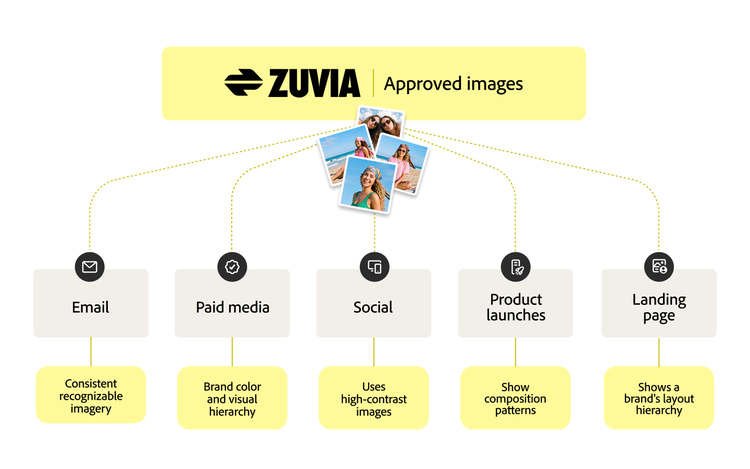
Different asset types teach different parts of a brand’s visual identity:
- Images from campaign product launches, seasonal campaigns and recurring programmes show how the brand communicates consistently over time. These images reveal repeated patterns in composition, colour, subject treatment and layout.
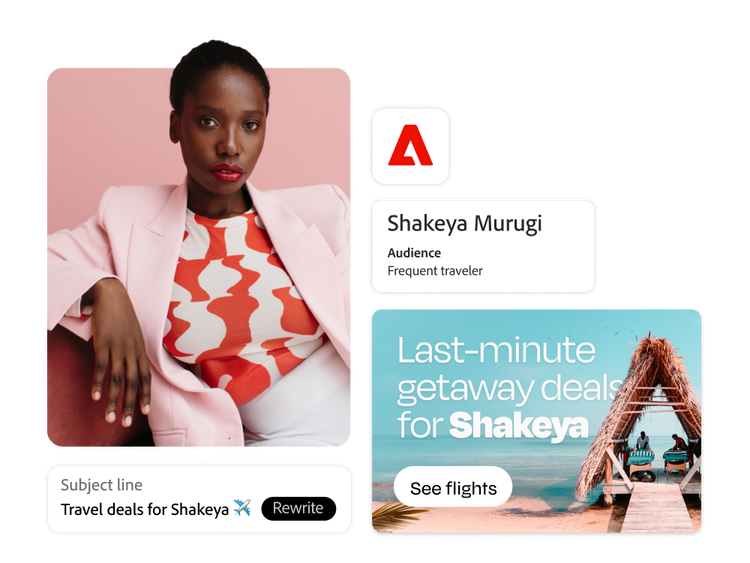
- Email imagery shows how the brand carries its visual system into a small, constrained space, keeping colour, type and imagery recognisable immediately.
- Paid ad imagery shows how the brand illustrates its narrative through a single image quickly, with a strong focal point, brand colour and a clear visual hierarchy.
- Landing page imagery shows how the brand builds a hero visual and layout hierarchy that structures the page.
- Social media imagery may use eye-catching, high-contrast images to stand out from competitors across platforms, audiences and cultural moments without losing its core identity.
- Sales enablement images in sales decks, one-sheets and pitch materials, shows how the brand explains value in buyer conversations.
- Charts that show customer success exhibit how the brand connects its value to real outcomes.
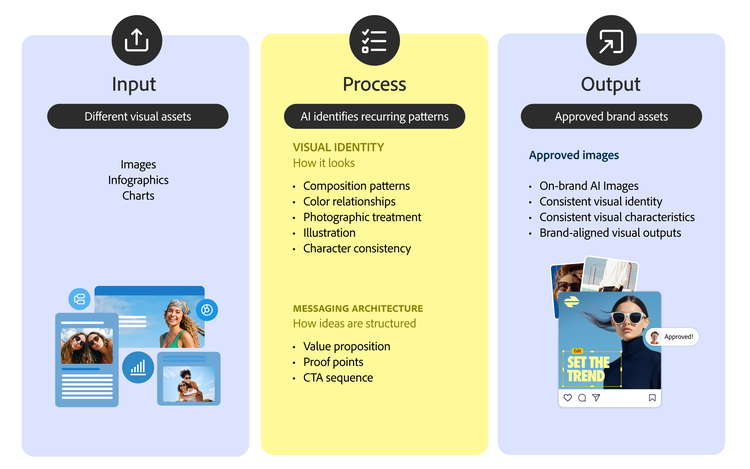
Visual assets provide the same kind of evidence for creative identity. Approved campaign imagery, photoshoot libraries, icon systems, illustration styles and other branded assets show how the brand uses colour, composition, lighting, subject treatment and visual hierarchy.
The most useful training examples for customised AI models are current, relevant and aligned with the brand. Rather than pulling from the full archive, teams should prioritise the assets that best reflect how the brand should communicate now.