An annual business plan maps out where a company and its people are headed over the coming year. It sets milestones and breaks them into smaller, achievable goals – all building towards a broader vision of where the business aims to be by year’s end.
Businesses use annual plans to allocate resources, lift performance, and hit specific targets over the coming year. Think of annual planning as your strategic guide for the year ahead – it’s the process of turning a long-term vision into a clear, actionable plan for the next 12 months.
Whether working from a template or starting from scratch, businesses review the previous year’s performance to build an annual plan. This gives everyone in the organisation a clear picture of where they’re headed and how they’ll get there.
In this guide:
Why annual planning is crucial for businesses
An annual business plan gives teams a clear framework to set specific business goals grounded in the company’s overarching strategy. It also holds teams accountable for meeting those goals – which naturally supports progress tracking. The annual plan ties directly to where a company wants to be in three to five years, and defines what’s critical to achieve in the next 12 months to stay on track.
A well-structured annual plan also keeps internal teams aligned and working together, incentivising greater productivity. Additional benefits of an annual business plan include:
- Providing a stronger connection to the strategic plan.
- Putting the organisation’s mission into daily practice.
- Giving team members a clear sense of direction in their roles and departments.
Aligning teams and departments towards a common goal strengthens communication and camaraderie – but equally important, it sets short-term expectations. Clear short-term expectations give teams direction without getting lost in the complexity of five-year plans.
Annual planning also keeps you adaptable. With ongoing planning, you can respond to unforeseen events, re-evaluate your approach, and handle changing circumstances – all while keeping your longer-term goals in view.
From strengthening team direction and adapting to market shifts, to tackling unforeseen challenges and sharpening strategic execution – writing an annual plan is essential for businesses of every size.
Creating an annual plan: A step-by-step guide
Before building an annual plan, there are a few steps teams should work through to set themselves up for success. Start by reviewing historical data to establish a baseline for goal-setting. Assessing previous annual plans and their outcomes gives your team a solid foundation for the year ahead.
Before creating an annual plan
- Step 1: Analyse past performance. Before you start building an annual plan, analyse past performance to set realistic goals, respond to any market shifts, and confirm your direction. Don’t focus only on areas for improvement – look at your achievements too, and how everything connects back to your business objectives. Use data to inform your decisions, as the choices you make here will flow through the entire plan.
- Step 2: Identify your goals. Once you’ve analysed your past performance, use that data to identify your goals. As you define them, consider whether they’re realistically achievable within the timeframe. With past data to draw on, you’ll have a much clearer sense of what it takes to hit your targets compared to the previous year.
- Step 3: Determine your budget. To put together an accurate annual plan, you need to know your budget upfront. Don’t worry about allocating it just yet – simply knowing what you have to work with will help you define which objectives are within reach.
- Step 4: State your core values. These are the principles, beliefs, and philosophies that define your company’s culture and underpin your vision for the future. Make sure your goals align with your core values. Annual plans are valuable, but if you’re constantly reacting to immediate demands, you risk drifting from your long-term direction or values. When deciding on your annual plan, revisit your core mission statement or vision statements to stay grounded.
- Step 5: Consider key problems and issues. By understanding what went wrong the previous year and the challenges you faced, you can build practical solutions into your annual plan to improve future outcomes.
Creating an Annual plan
- Step 1: Define goals and objectives. A solid annual plan starts with clear goals. Once defined, break them down into actionable objectives – turning your plan from a concept into something tangible and achievable. Consider using goal-setting frameworks such as SMART goals or stretch goals to keep you on track.
- Step 2: Develop strategies and initiatives. Work out how you’ll achieve your goals. If you want more foot traffic in your store, what specific steps will get you there? Build out strategies, initiatives, and actionable steps that move you closer to each goal.
- Step 3: Allocate resources and assign responsibilities. Distribute your budget, assign roles, and make sure there’s clear accountability at every step. Ideally, responsibility sits with those directly tied to specific goals. Skip the budget review and this step gets much harder – and the results you’re after may not follow.
- Step 4: Implement and communicate the plan. Once you’re satisfied with your goals, objectives, initiatives, and how resources and responsibilities are allocated, it’s time to bring everyone on board. Roll your plan out across the business using clear communication channels. Build momentum early – don’t rely on the occasional email. Bring teams together, communicate goals clearly, and make sure everyone knows where accountability lies.
- Step 5: Monitor, evaluate, and adjust. Rolling out your annual plan isn’t the finish line. Check progress regularly, review KPIs, and be ready to adapt – it rarely goes exactly as planned.
Key components of an effective Annual plan
There are plenty of annual business plan templates to help shape your plan. Here are the key components that make up an effective annual plan:
- Performance review: Effective annual planning demands data-backed decisions and goals. Reviewing the previous year’s wins and setbacks – supported by data and reports – gives you a clear, unbiased picture of what needs to change, free from gut instinct or assumption.
- Goal frameworks: Putting together an annual plan is one thing – delivering on it is another. Goal setting frameworks keep you on track and help ensure you meet your targets. They also break goals down into manageable objectives, which sharpens both direction and accountability.
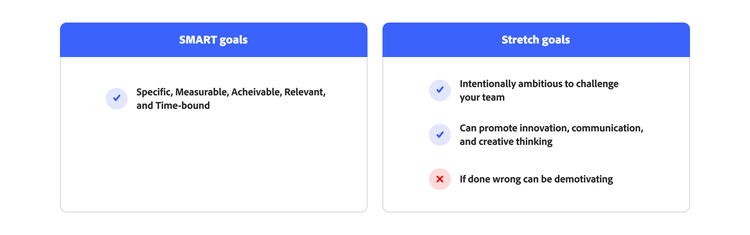
- SMART goals: SMART goals are a goal-setting framework built around objectives that are specific, measurable, achievable, relevant, and time-bound.
- Stretch goals: Stretch goals are deliberately ambitious targets designed to push your team further. Done well, they drive innovation, communication, and creative thinking. Done poorly, they risk demotivating your team. Used alongside other goal-setting frameworks, they can be highly effective.
- OKR: OKR stands for objectives and key results. The OKR framework works by setting a goal (your objective), defining the results that drive it (key results), then tracking progress. The outcome is clear, measurable results that connect to the bigger picture.
- KPI: KPI is short for key performance indicator(s). KPIs are a form of performance measurement – a way to evaluate areas such as revenue, profit margins, customer satisfaction and client retention, among others.
- Strategic action plan: The strategic action plan is your operational roadmap – a set of specific actions needed to deliver your annual plan. It moves beyond the idea to answer: 'How do we get there?'
- Resource management: Resource management is about planning the budgets, people, and tools needed to reach your goal. To do it well, you need a clear goal and a solid understanding of how you plan to get there.
- Milestones and checkpoints: To get your business where you want it in a year, break your larger goals into smaller ones tied to specific timelines. When setting deadlines, include metrics to measure how effectively you’re achieving each goal.
- Contingency and buffer plans: What if your company’s cash flow hits trouble? Build emergency financial reserves before you need them — maintaining a cash buffer or keeping capacity in a line of credit are both sound contingency measures. Compare your actual financial results against your projections throughout the year, so you can catch problems before they get out of hand.
Putting together an annual plan is easier with the right tools. These include an annual business plan template to organise your planning efforts, plus a wide range of software solutions for drafting business and strategy plans and tracking goals.
Annual plan vs. strategic plan
In the strategic planning process, an organisation defines or reaffirms its mission, sets a vision for the years ahead, and establishes strategic priorities to bring that vision to life.
The strategic plan and the annual business plan work hand in hand. The strategic plan sets out the overarching vision for what the company wants to achieve, while the annual plan covers the practical details of the work needed over the coming year.
The annual business plan draws on the strategy to set its priorities, while the strategy relies on the annual plan to put its ideas about the organisation’s vision, mission, purpose, and goals into action. Logistics, projects, resource allocation, and timing are all covered in the annual plan.

Getting started with annual planning
Putting together an annual plan is easier with the right tools. These include an annual business plan template to organise your planning efforts, plus a wide range of software solutions for drafting business and strategy plans.
When putting your annual plan into action, it also pays to rely on a work management platform with strategic planning tools that let your team collaborate effectively, create content, allocate resources, track milestones, and manage complex processes. With features like Workfront’s scenario planner, you can simplify the annual planning process, adapt to market shifts through continuous planning, compare scenarios for risk and effectiveness, and stay ahead of the competition. Workfront Goals lets you share, enact, and monitor goal-setting frameworks and results.
With the right tools, plans, and processes in place, you can develop a well-conceived annual business plan that ensures the year ahead meets your expectations.
Recommended for you
https://business.adobe.com/fragments/resources/cards/thank-you-collections/workfront